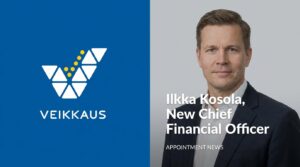
Finnish state-owned gambling operator Veikkaus has named Ilkka Kosola as its next chief financial officer, with the appointment set to take effect later this year. The move comes as the company continues navigating a period of structural change in Finland’s gambling market, where a transition from monopoly to a licensed multi-operator system is underway. Kosola’s arrival signals a deliberate effort to strengthen financial leadership during what may prove to be the most consequential phase in Veikkaus’s modern history.
What Kosola’s Appointment Means for Veikkaus
Before diving into the specifics, it’s worth framing why a CFO hire at a state-owned operator matters beyond the boardroom. The role carries outsized weight at a company preparing for competitive market conditions it has never faced before.
- Financial stewardship during market liberalisation: Finland’s shift toward a licensing model means Veikkaus must prepare for revenue pressure from new entrants while maintaining its obligations to the state.
- Strategic cost discipline: A new CFO typically brings a mandate to reassess capital allocation, and Kosola will likely oversee how Veikkaus invests in technology, compliance infrastructure, and product development.
- The timing suggests the board wants financial leadership locked in well ahead of the licensing regime’s full implementation.
- Stakeholder confidence: For regulators and government shareholders, a strong CFO appointment reinforces the message that Veikkaus is taking the transition seriously, at least on paper.
Who Is Ilkka Kosola?
Details on Kosola’s prior career trajectory remain limited in public disclosures, though his selection for the role indicates experience aligned with the demands of a large-scale operator managing both public accountability and commercial performance. Veikkaus, Finland’s national gambling company, has historically drawn its senior leadership from a mix of public-sector and corporate backgrounds, reflecting its dual identity as both a government instrument and a consumer-facing business.
What remains less clear is whether Kosola’s mandate extends beyond traditional financial oversight into broader strategic territory. In organisations undergoing fundamental market shifts, the CFO often becomes the second most influential voice in the room after the CEO (a distinction that formal org charts rarely capture).
Finland’s Gambling Market: The Bigger Picture
The appointment doesn’t exist in a vacuum. Finland has been moving toward dismantling its gambling monopoly structure, a process that will reshape how revenue flows between operators, the state, and beneficiary organisations that have long depended on Veikkaus-generated funding. The Finnish government’s plan to open the market to licensed operators introduces competitive dynamics that Veikkaus has never had to contend with domestically.
That shift matters because Veikkaus currently channels significant portions of its revenue to Finnish sports, arts, science, and youth organisations. A multi-operator market could dilute those funding streams unless the licensing framework includes robust channelisation mechanisms. For Kosola, managing this financial balancing act will be central to the job.
And while other Nordic markets like Sweden and Denmark have already transitioned to licensed systems, each country’s experience has been distinct enough that Finland cannot simply copy a template. Sweden’s 2019 re-regulation, for instance, brought initial channelisation challenges that took years to stabilise.
How Leadership Transitions Shape Organisational Readiness
From a behavioural and strategic perspective, the way organisations handle leadership transitions during periods of disruption often determines their long-term resilience. Neuro-linguistic programming principles suggest that internal communication framing during such changes significantly affects organisational alignment. When a company like Veikkaus introduces a new CFO, the narrative constructed around that appointment shapes how employees, partners, and regulators perceive the company’s direction.
Anchoring the appointment to specific strategic goals rather than generic corporate language creates cognitive clarity across stakeholder groups. If Veikkaus frames Kosola’s role explicitly around market-readiness and fiscal discipline, it establishes a mental model that cascades through the organisation. People respond to specificity. Vague announcements about “strengthening the leadership team” accomplish far less than tying the hire to a concrete challenge everyone already understands.
Rapport-building across departments also matters. A CFO entering during transformation needs to establish trust quickly with operational leaders who may view financial oversight as a constraint rather than an enabler. The most effective transitions occur when the incoming executive demonstrates genuine curiosity about existing processes before proposing changes. Resistance to new leadership often stems not from disagreement on strategy but from a perceived lack of respect for institutional knowledge.
Still, no amount of internal framing substitutes for execution. The market will judge Kosola on numbers, not narratives.
Frequently Asked Questions
When does Ilkka Kosola officially start as CFO of Veikkaus?
The appointment is confirmed for later this year, though an exact start date has not been publicly specified.
Why is this CFO appointment significant?
Finland is transitioning from a state gambling monopoly to a licensed multi-operator market. Veikkaus needs strong financial leadership to navigate the competitive and regulatory pressures this shift will bring. The stakes extend well beyond the company itself, given how deeply Finnish civil society organisations depend on gambling-derived funding.
Will Finland’s gambling market liberalisation affect Veikkaus’s revenue?
Arguably, yes. New market entrants will compete for player spend that Veikkaus currently captures almost entirely. How much revenue shifts depends on the licensing framework’s design and enforcement.
Is Veikkaus still state-owned?
Yes. Veikkaus remains fully owned by the Finnish state, and its profits fund public-benefit activities across multiple sectors.



