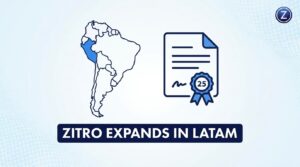
Zitro, the Spain-headquartered gaming technology supplier, has obtained regulatory certification for 25 new game titles in Peru, strengthening its position across one of Latin America’s most active gaming markets. The certifications cover a range of products within the company’s existing Peruvian portfolio, signaling a deliberate push to deepen market penetration rather than simply maintain presence. Peru’s regulated gaming sector continues to attract international suppliers, and this latest batch of approvals positions Zitro to compete more aggressively for operator floor space in the country.
What Zitro’s Peruvian Expansion Signals for the Region
The certification of 25 titles is not a routine administrative milestone. It reflects a calculated commercial strategy in a market where regulatory approval directly determines which products reach casino floors. For operators evaluating their next hardware and software refresh cycles, a supplier with a broader certified catalog holds a distinct advantage.
- Scale of certification: 25 new titles in a single market represents a significant content injection, giving Peruvian operators more variety without switching suppliers
- Zitro’s Latin American strategy appears to prioritize depth over breadth, concentrating certified offerings in markets where it already holds a foothold
- Competitive positioning: A larger certified portfolio reduces operator dependency on competing suppliers for content diversity
- Peru’s regulatory framework, which requires individual title-level certification, means each approval carries real commercial weight
- Timing matters: the certifications arrive as Peru’s gaming industry continues post-pandemic recovery, with operators actively refreshing their gaming floors
Peru’s Gaming Market: Why Suppliers Keep Investing
Peru ranks among the more structured gaming jurisdictions in Latin America, with a regulatory environment that (at least on paper) balances market access with consumer protection. The country’s Dirección General de Juegos de Casino y Máquinas Tragamonedas oversees licensing and certification, and suppliers must navigate a formal approval process before any product reaches an operator.
That process is neither fast nor cheap. Yet suppliers continue to invest in Peruvian certifications because the market offers something increasingly rare in the region: a stable regulatory framework paired with genuine operator demand. Casinos across Lima and other major cities have been upgrading their offerings, and international suppliers see Peru as a gateway to broader Latin American credibility.
Zitro has been building its presence in the region for several years. The company’s multigame and standalone cabinet lines have gained traction with operators seeking alternatives to the dominant North American and Australian suppliers. Still, whether 25 new certifications translate into proportional floor placements remains a question the next few quarters will answer.
How Title-Level Certification Shapes Supplier Strategy
In jurisdictions like Peru, certification operates at the individual game level. This is a fundamentally different dynamic from markets where platform-level approval covers an entire content library. Each title must be tested, reviewed, and formally approved before deployment.
The practical consequence: suppliers must be selective. Certifying 25 titles means Zitro made deliberate choices about which games to push through the process, likely based on operator feedback, performance data from other markets, and competitive gap analysis. It also means the company absorbed the cost and timeline associated with each submission.
| Factor | Impact on Supplier | Impact on Operator |
|---|---|---|
| Title-level certification | Higher cost per market entry; forces prioritization | Guaranteed regulatory compliance per installed title |
| Batch certification (25 titles) | Demonstrates sustained investment and market commitment | Wider selection from a single supplier reduces procurement complexity |
| Regulatory timeline | Delays between submission and approval require forward planning | New content availability depends on supplier certification pipeline |
| Competitive landscape | Certified catalog size becomes a differentiator in operator negotiations | More certified suppliers means stronger bargaining position for operators |
The Broader Latin American Context
Zitro’s Peruvian certifications sit within a wider pattern of supplier expansion across Latin America. Markets like Colombia, Argentina, and Mexico have all seen increased activity from international gaming technology firms. But Peru occupies a particular niche: it is large enough to justify dedicated investment, yet not so saturated that new entrants face insurmountable barriers.
Arguably, the real test for Zitro is not whether it can get titles certified, but whether those titles perform well enough on operator floors to justify continued investment. Certification is the entry ticket. Revenue share, player engagement metrics, and operator renewal rates are the scoreboard.
And while the company has not disclosed specific performance figures tied to its Peruvian operations, the decision to certify 25 additional titles suggests the existing portfolio is generating sufficient returns to warrant expansion. Suppliers rarely double down on underperforming markets.
Frequently Asked Questions
What does game certification mean in Peru?
Each individual gaming title must be tested and approved by Peru’s regulatory authority before it can be installed on a casino floor. This ensures compliance with technical and fairness standards specific to the jurisdiction.
Why is 25 titles significant?
In a market requiring title-level certification, 25 approvals in a single batch represents a substantial commercial commitment. It gives operators a meaningfully wider selection from one supplier, which can influence procurement decisions during floor refresh cycles.
How does this affect Peruvian casino operators?
Operators gain access to more certified content without needing to onboard new suppliers. A deeper catalog from Zitro could also strengthen their negotiating position, since they have more options within a single vendor relationship. The practical benefit depends on how well these titles perform with players.
Is Zitro expanding in other Latin American markets?
Zitro has maintained an active presence across several Latin American jurisdictions. Peru is one of several markets where the company has pursued regulatory certifications, though the pace and scale of expansion varies by country.



