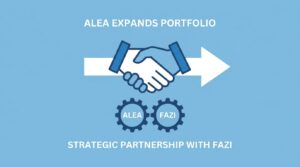
Alea, the growing iGaming platform provider, has entered into a content distribution agreement with FAZI, a Serbia-based game development studio known for its proprietary slot and table game portfolio. The deal gives Alea’s operator partners access to FAZI’s catalogue of titles, which spans classic slots, video slots, and virtual table games. It marks another step in Alea’s broader aggregation strategy, which has accelerated noticeably over recent quarters.
What the FAZI Deal Signals for Alea’s Aggregation Push
Content partnerships in iGaming are rarely headline-grabbing on their own. But the cumulative effect of multiple integrations tells a clearer story about a platform’s trajectory. Before unpacking the specifics, here’s what matters most from a strategic standpoint:
- Broader game variety for operators: FAZI’s portfolio includes over 100 titles spanning slots, roulette, and other virtual table games, giving Alea-powered casinos a wider content shelf without additional integration overhead.
- Geographical relevance: FAZI holds certifications across several regulated European markets, which aligns with Alea’s own licensing footprint and reduces compliance friction for mutual clients.
- The partnership reinforces Alea’s positioning as a one-stop aggregation layer, a model that mid-tier operators increasingly prefer over managing dozens of direct supplier relationships.
- Competitive differentiation: In a crowded aggregator space, the depth and diversity of a content library often determines which platform wins an operator’s business. Each new supplier added shifts that calculus, even if marginally.
FAZI: A Quiet Force in Game Development
Founded in Serbia, FAZI’s game development operation has built a reputation for reliability rather than flash. The company produces land-based gaming terminals alongside its digital portfolio, a dual-channel approach that gives it a somewhat unusual perspective on player behaviour across formats. Its digital catalogue leans toward classic gameplay mechanics with modern visual treatments, a combination that tends to perform well in Southern and Central European markets.
What sets FAZI apart from many mid-sized studios is its vertical integration. The company manufactures its own hardware, develops its own random number generators, and controls its certification pipeline end to end. That kind of self-sufficiency is rare among studios of comparable scale (a distinction that arguably makes them a more stable long-term integration partner than studios reliant on third-party infrastructure).
How Platform Aggregation Shapes Operator Economics
The economics of content aggregation in iGaming deserve more attention than they typically receive. Operators face a genuine tension: players demand variety, but every direct API integration carries engineering cost, compliance overhead, and ongoing maintenance. Aggregators like Alea resolve this by absorbing the integration burden, offering operators a single connection point to dozens of studios.
Still, not all aggregation is equal. The value of a platform depends on three variables: the breadth of its content library, the quality of its technical infrastructure, and the speed at which new suppliers go live. Alea has been investing across all three dimensions. Each new partnership, including this one with FAZI, compounds the platform’s attractiveness to operators evaluating their technology stack.
And while the revenue share models in aggregation deals are rarely disclosed publicly, the general structure is well understood. Aggregators take a margin on the gross gaming revenue generated through their platform, which means their incentive is directly tied to player engagement with the content they distribute. More titles, more engagement, more revenue. The math is straightforward even if the execution is not.
Regulated Market Alignment and Compliance Considerations
One practical dimension of this collaboration worth examining is regulatory alignment. FAZI’s games carry certifications from testing laboratories recognised across multiple European jurisdictions. For Alea’s operator clients, this means FAZI content can be deployed in regulated markets without requiring separate certification processes, at least on paper.
Regulatory fragmentation across Europe remains a persistent challenge for content distributors. A game certified in Malta may need additional testing for the Romanian or Danish market. Suppliers that maintain broad certification coverage reduce the friction for aggregators and, by extension, for operators. Whether FAZI’s current certification footprint fully overlaps with Alea’s target markets has not been publicly detailed, but the strategic logic of the partnership suggests meaningful alignment.
The Broader Competitive Landscape
Alea operates in a segment where scale matters but isn’t everything. Larger aggregators like SoftSwiss, EveryMatrix, and Digitain command significant market share, yet mid-tier platforms continue to carve out viable positions by focusing on service quality, faster onboarding, and niche content curation. The FAZI integration fits this pattern: it’s not about landing the biggest studio name, but about assembling a library that serves specific operator needs across specific geographies.
Whether this partnership moves the needle for Alea in measurable terms will depend on how effectively FAZI’s content performs with Alea’s existing operator base. Player engagement data over the coming quarters will be the real test.
Frequently Asked Questions
What types of games does FAZI provide through this partnership?
FAZI’s portfolio includes video slots, classic slots, virtual roulette, and other table game formats. The catalogue exceeds 100 titles, with a design philosophy rooted in proven gameplay mechanics rather than experimental features.
How does this benefit operators already on Alea’s platform?
Operators gain access to FAZI’s full game library through their existing Alea integration. No additional technical work is required on the operator side, which is precisely the value proposition of aggregation.
Is FAZI content available in regulated European markets?
Yes. FAZI maintains certifications across several European jurisdictions, though the specific markets covered under this partnership have not been individually confirmed by either party.
Does this change Alea’s competitive position significantly?
No single integration reshapes a platform’s market standing overnight. But cumulatively, partnerships like this one strengthen Alea’s content offering and make the platform incrementally more attractive to operators weighing their options.