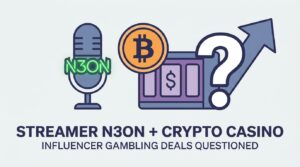
Controversial livestreamer N3on, known for his provocative content and rapid audience growth across platforms, has entered into a collaboration with a crypto casino. The deal places him among a growing roster of high-profile content creators monetising their reach through gambling partnerships. While specific financial terms of the arrangement have not been disclosed, the move signals continued appetite from crypto gambling operators for influencer-driven acquisition channels, even as regulatory scrutiny of such deals intensifies across multiple jurisdictions.
What N3on’s Crypto Casino Deal Signals for the Industry
Influencer-gambling partnerships are not new, but each fresh signing reshapes the risk calculus for operators, platforms, and regulators alike. Before unpacking the broader implications, here are the strategic takeaways from this latest collaboration:
- Audience demographics matter more than reach. N3on’s viewership skews young, which amplifies both the commercial value and the regulatory exposure of any gambling partnership tied to his brand.
- Crypto casinos continue to outspend traditional operators on influencer deals, leveraging the relatively lighter regulatory framework that governs cryptocurrency-based gambling in many markets.
- The deal underscores a persistent gap between platform content policies and actual enforcement, particularly on livestreaming services where gambling content remains loosely policed.
- For competing streamers, N3on’s signing raises the floor on what crypto casinos are willing to pay for access to large, engaged audiences.
The Influencer-Gambling Pipeline Keeps Expanding
N3on joins a lineage of streamers who have signed similar arrangements. Figures like Adin Ross, Trainwreck, and Drake have all engaged with crypto gambling platforms in deals reportedly worth millions. The pattern is consistent: operators target creators whose audiences are large, loyal, and digitally native. That combination makes influencer channels arguably more efficient than traditional advertising for customer acquisition in the crypto gambling space.
But efficiency and responsibility don’t always travel together.
What distinguishes this latest signing is timing. Regulators in the UK, Australia, and parts of the EU have sharpened their focus on gambling advertising standards over the past 18 months. The UK Gambling Commission, for instance, has tightened rules around social media promotions, and Australia’s proposed gambling ad ban could reshape how operators engage with content creators entirely. Whether crypto casinos operating offshore fall neatly within these frameworks remains, at least on paper, an open question (a distinction regulators have been slow to enforce).
Why Crypto Casinos Favour Streamer Partnerships
Traditional licensed operators face advertising restrictions that limit their ability to work with influencers, particularly those whose audiences include minors. Crypto casinos, many of which hold licences from jurisdictions like Curaçao, operate under less restrictive advertising regimes. This regulatory arbitrage gives them room to pursue aggressive influencer strategies that would be difficult or impossible for operators licensed in stricter markets.
The economics are straightforward. A streamer with 500,000 concurrent viewers gambling live on camera generates exposure that no banner ad or TV spot can replicate. The parasocial dynamic between creator and audience converts attention into deposits at rates traditional marketing channels struggle to match. Operators know this. Which is precisely why the deals keep getting larger.
A Closer Look at Recent Influencer-Casino Deals
| Creator | Platform Type | Reported Deal Structure | Audience Profile |
|---|---|---|---|
| Trainwreck | Crypto casino | Revenue share + flat fee | 18–34, predominantly male |
| Adin Ross | Crypto casino | Sponsorship + affiliate | 16–28, high engagement |
| Drake | Crypto casino (Stake) | Equity + promotional deal | Broad demographic, global reach |
| N3on | Crypto casino | Not publicly disclosed | Young, digitally native, fast-growing |
Reframing Risk: How Audiences Process Gambling Content
Understanding how viewers internalise gambling content from trusted creators requires looking beyond surface-level engagement metrics. From a cognitive standpoint, audiences process information from familiar figures differently than from anonymous advertisements. When a streamer they follow and admire sits down at a virtual blackjack table, the implicit endorsement carries weight that bypasses the critical filters most people apply to traditional ads.
This phenomenon ties into well-documented principles around social proof and authority bias. Viewers don’t simply watch the gambling; they model the behaviour. The streamer’s wins feel shared. Their losses get minimised or reframed as entertainment. Over time, repeated exposure normalises the activity, particularly for younger viewers who may lack the financial literacy or impulse control frameworks that older audiences bring to the table. Still, not every viewer converts into a depositor, and the actual behavioural impact varies widely across demographics and individual psychology.
Operators investing in these partnerships understand this dynamic intuitively, even if they rarely articulate it publicly. The value proposition isn’t just eyeballs. It’s trust transfer. And that transfer is most potent when the audience perceives the streamer’s gambling as authentic rather than sponsored, which is why disclosure practices in this space remain a persistent concern. Anchoring the experience in perceived authenticity makes the promotional message land harder than any scripted advertisement ever could.
For regulators attempting to intervene, the challenge is that these cognitive effects are difficult to quantify in enforcement actions. Measuring harm from a single streamer’s gambling broadcast is not like measuring the alcohol content of a drink. The effects are cumulative, diffuse, and deeply personal.
What Platforms Haven’t Resolved
Twitch banned unlicensed gambling streams in late 2022, but enforcement has been inconsistent, and creators have migrated to platforms like Kick, which has built much of its early identity around gambling content from high-profile streamers. YouTube’s policies remain similarly ambiguous in practice. The result: a market caught between two frameworks, one that restricts and one that accommodates, with creators choosing the path of least resistance.
N3on’s collaboration will likely play out primarily on platforms where gambling content faces fewer restrictions. And that itself tells a story about where the industry’s centre of gravity is shifting.
Frequently Asked Questions
Who is N3on?
N3on is a livestreamer who has built a substantial following through provocative and high-energy content across multiple platforms. His audience skews young and highly engaged, which makes him an attractive partner for brands targeting digitally native demographics.
Are crypto casino sponsorships legal?
Legality depends on jurisdiction. Many crypto casinos operate under offshore licences that permit influencer marketing arrangements. However, the advertising of unlicensed gambling services to audiences in regulated markets like the UK or Australia may breach local advertising standards, even if the operator itself sits outside that jurisdiction’s direct reach.
Why do crypto casinos target streamers specifically?
Live gambling content generates real-time engagement and trust transfer that pre-recorded or static advertising cannot replicate. The format turns a marketing spend into entertainment, blurring the line between promotion and content in ways that drive higher conversion rates for operators.