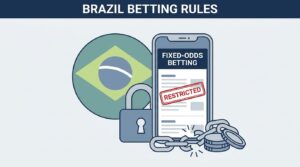
Brazil’s Ministry of Finance is drafting regulations that would bar citizens enrolled in federal debt renegotiation programs from placing fixed-odds sports bets. The measure, still under development, represents one of the most targeted interventions any Latin American government has attempted at the intersection of gambling regulation and consumer debt policy. If enacted, the rules would apply to participants in programs like Desenrola Brasil, the government’s flagship initiative for helping low-income Brazilians settle outstanding debts.
What the New Betting Restrictions Signal for Brazil’s Gambling Market
The proposed framework arrives at a moment when Brazil’s regulated sports betting sector is scaling rapidly, drawing both investment and scrutiny in near-equal measure. Before examining the details, it’s worth framing the strategic implications for operators, regulators, and the millions of Brazilians who now bet regularly on licensed platforms.
- Operators licensed under Brazil’s new fixed-odds regime may face mandatory integration with federal debt databases to enforce exclusions
- The restriction targets a specific, economically vulnerable demographic already flagged by government social programs
- Compliance costs for betting platforms could rise substantially if real-time verification against renegotiation registries becomes required
- This signals a broader regulatory posture: Brazil’s Finance Ministry views gambling not just as a tax revenue source but as a consumer protection concern tied to household financial health
- Regional precedent is thin, giving Brazil outsized influence over how other Latin American markets approach similar questions
How the Restriction Would Work in Practice
The mechanism under discussion would reportedly link betting operator systems to databases maintained by federal programs managing debt renegotiation. When a user attempts to register or place a wager, the platform would cross-reference their identification against these registries. A match would trigger a block.
That sounds straightforward on paper. In practice, the technical and legal architecture required is anything but simple. Brazil’s data protection law, the LGPD (Lei Geral de Proteção de Dados), imposes strict conditions on how personal financial data can be shared between government agencies and private companies. Operators would need to navigate consent frameworks, data minimization principles, and purpose limitation rules simultaneously.
Still, the Brazilian Ministry of Finance’s gambling oversight division has shown willingness to push through complex regulatory infrastructure before. The licensing framework for fixed-odds betting, finalized in late 2023 and early 2024, required operators to meet capitalization thresholds, establish local legal entities, and submit to ongoing compliance audits.
Desenrola Brasil and the Scale of Potential Impact
Desenrola Brasil, launched in 2023, has enrolled millions of citizens carrying debts ranging from utility bills to bank loans. The program offers renegotiated terms, reduced interest rates, and in some cases partial debt forgiveness. By mid-2024, the government reported that over 15 million people had benefited from some phase of the initiative.
Restricting this population from betting platforms would remove a significant slice of potential customers from the market. Whether operators view this as a material revenue threat depends on the overlap between Desenrola participants and active bettors (a data point the government has not publicly released, though internal studies are believed to exist).
One question lingers without a clean answer: does restricting access actually reduce gambling harm, or does it push vulnerable consumers toward unlicensed offshore platforms that offer no protections at all?
A Regulatory Philosophy Taking Shape
What makes Brazil’s approach distinctive is the explicit linkage between fiscal policy and gambling access. Most jurisdictions that restrict problem gamblers rely on self-exclusion programs or clinical assessments. Brazil appears to be constructing something different: an automatic exclusion triggered not by gambling behavior, but by financial status.
This carries philosophical weight. It presumes that individuals managing renegotiated debt lack the financial capacity to gamble responsibly. Critics might argue this is paternalistic. Supporters counter that it reflects a pragmatic reading of household economics in a country where consumer debt burdens remain acute.
And while other markets have debated affordability checks (the UK’s Gambling Commission has been wrestling with this concept for years), Brazil would be among the first to implement a hard block tied to a specific government debt program. The distinction matters because it shifts the enforcement burden from the individual to the state.
Operator Readiness and Compliance Burden
| Compliance Requirement | Current Status | Expected Complexity |
|---|---|---|
| Database integration with Desenrola registries | Not yet mandated | High — requires API development and data-sharing agreements with federal agencies |
| Real-time identity verification at point of wager | Partially implemented by some operators | Moderate |
| LGPD compliance for cross-referencing financial data | Unclear regulatory guidance | High |
| Reporting obligations to the Ministry of Finance | Under discussion | Moderate to high, depending on frequency and granularity |
Operators already navigating Brazil’s licensing requirements will need to budget for additional technical infrastructure. Smaller platforms, arguably, face a disproportionate burden relative to multinational operators with existing compliance teams across multiple regulated markets.
Reframing Responsible Gambling Through Financial Inclusion Lenses
Brazil’s proposed rules invite a broader reframing of what “responsible gambling” means in emerging markets. Traditional frameworks center on addiction metrics, session limits, and deposit caps. These tools remain valuable. But they operate within the gambling ecosystem itself, treating the bettor as an isolated actor.
By contrast, linking gambling restrictions to debt renegotiation programs acknowledges that financial vulnerability extends well beyond the betting platform. A person struggling to repay restructured debts exists within a web of economic pressures — housing costs, food inflation, employment instability — that a deposit cap alone cannot address. The regulatory logic here treats gambling expenditure as one node in a larger household budget under stress.
This perspective aligns with emerging thinking in behavioral economics about how financial decision-making deteriorates under scarcity conditions. When cognitive bandwidth is consumed by debt management, the capacity for rational risk assessment diminishes. Brazil’s regulators may not frame it in these academic terms, but the policy direction reflects an implicit understanding of that dynamic. For the broader Latin American market, the precedent could reshape how regulators think about who should be allowed to gamble and under what conditions.
Frequently Asked Questions
Who would be affected by Brazil’s proposed betting restrictions?
Citizens enrolled in federal debt renegotiation programs such as Desenrola Brasil. The restriction would apply specifically to fixed-odds sports betting on licensed platforms.
When are these rules expected to take effect?
The Ministry of Finance has not announced a firm timeline. The regulations remain in the drafting phase, and implementation would likely require coordination across multiple government agencies and technical systems.
Could restricted users still access offshore betting sites?
Technically, yes. Licensed Brazilian operators would enforce the block, but unlicensed offshore platforms operating outside the regulatory perimeter would not be bound by these rules. This remains one of the policy’s most debated vulnerabilities.
How does this compare to gambling restrictions in other countries?
Most jurisdictions rely on self-exclusion or clinical criteria. Brazil’s approach of using government debt program enrollment as an automatic trigger has few direct parallels, though the UK has explored affordability-based restrictions through different mechanisms.