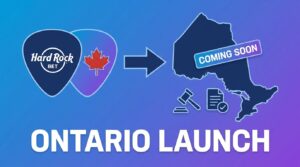
Hard Rock Bet has secured a critical regulatory approval that positions the brand to enter Ontario’s competitive online sports betting and iGaming market. The operator, backed by the Seminole Tribe of Florida’s gaming enterprise, cleared a significant hurdle in its licensing process with the Alcohol and Gaming Commission of Ontario (AGCO). While no official launch date has been confirmed, the development signals that Hard Rock Digital is serious about expanding its footprint into one of North America’s most closely watched regulated gambling jurisdictions.
What Hard Rock Bet’s Ontario Progress Means for the Market
Ontario’s iGaming framework, which went live in April 2022 under iGaming Ontario (iGO), has attracted dozens of licensed operators. But the arrival of a brand with Hard Rock’s consumer recognition and tribal gaming pedigree adds a different dimension to the competitive landscape. Here’s what stands out:
- Brand leverage in a crowded field: Ontario already hosts established names like BetMGM, FanDuel, and bet365. Hard Rock Bet enters with a hospitality-first identity that could differentiate its player acquisition strategy.
- The operator’s U.S. trajectory matters here. Hard Rock Bet has been scaling aggressively across American states, and Ontario represents its first foray into a Canadian province.
- Regulatory credibility: Clearing AGCO’s registration process is not a formality. The commission has denied or delayed multiple applicants, making this milestone substantive rather than procedural (a distinction that often gets lost in launch announcements).
- Revenue implications: Ontario’s regulated market generated over CAD $2 billion in total wagers in recent quarters. A new entrant with deep pockets could shift market share dynamics, particularly in the iGaming vertical where player loyalty remains fluid.
Ontario’s Regulatory Framework: Why It Attracts Heavyweights
When Ontario opened its doors to private-sector operators, the province created something unusual in the Canadian context: a genuinely competitive, multi-operator marketplace. Before 2022, legal online gambling in the province ran exclusively through the Ontario Lottery and Gaming Corporation (OLG). That changed with the establishment of iGaming Ontario as a subsidiary of AGCO, tasked with managing the commercial relationships between the province and private operators.
The framework requires operators to register with AGCO and execute an operating agreement with iGO. Revenue-sharing terms, responsible gambling obligations, and advertising standards all fall under this structure. And while the model has drawn criticism for its tax rate relative to some U.S. states, it has nonetheless attracted more than 50 licensed operators since launch.
Hard Rock Digital’s decision to pursue this market reflects a broader pattern. Operators with strong U.S. books increasingly view Ontario as a natural extension, partly because of regulatory familiarity and partly because the province’s 15-million-person population offers genuine scale.
How Hard Rock Bet Stacks Up Against Existing Ontario Operators
| Operator | Ontario Status | Primary Strength | Notable Differentiator |
|---|---|---|---|
| bet365 | Active since April 2022 | Global sportsbook depth | Established Canadian user base pre-regulation |
| BetMGM | Active | Casino and sports hybrid | MGM Rewards integration |
| FanDuel | Active | Sports-first brand | Daily fantasy crossover audience |
| Hard Rock Bet | Pending launch | Hospitality brand equity | Tribal gaming infrastructure and loyalty ecosystem spanning hotels, cafes, and entertainment venues globally |
The Strategic Calculus Behind Entering Canada Now
Timing is worth examining. The U.S. sports betting market, while still expanding state by state, has entered a phase where customer acquisition costs are punishing margins. Several major operators have publicly acknowledged that profitability, not growth at any cost, now drives their strategy. Ontario offers a release valve of sorts: a regulated, English-speaking market adjacent to the U.S. where Hard Rock Bet’s online sportsbook and casino platform can scale without the fragmented state-by-state licensing burden.
Still, Ontario is not without its own pressures. The grey market has not disappeared entirely, and operators must compete with unlicensed offshore sites that face limited enforcement. iGaming Ontario has reported steady channelization progress, but the gap between regulated and unregulated activity remains a live issue for every licensed operator in the province.
What Responsible Gambling Commitments Look Like in Practice
AGCO has been arguably more assertive than many U.S. regulators on responsible gambling enforcement. The commission banned the use of athlete endorsements in advertising, restricted bonus offer promotions, and imposed strict self-exclusion requirements. Any operator entering Ontario, Hard Rock included, must comply with these standards from day one.
For Hard Rock Digital, this means adapting marketing playbooks that may work in Florida or other U.S. jurisdictions but would violate Ontario’s advertising code. Whether the company can maintain brand visibility under these constraints without diluting its appeal is an open question that competitors have already had to wrestle with.
Frequently Asked Questions
When will Hard Rock Bet officially launch in Ontario?
No confirmed date has been announced. The operator has completed a key step in the AGCO registration process, but the final launch depends on executing an operating agreement with iGaming Ontario and meeting all remaining technical and compliance requirements.
Is Hard Rock Bet available elsewhere in Canada?
At present, Ontario is the only Canadian province with a private-operator iGaming framework. Hard Rock Bet’s Canadian ambitions are, at least on paper, limited to Ontario unless other provinces adopt similar models.
What products will Hard Rock Bet offer in Ontario?
The operator is expected to offer both online sports betting and iGaming products, including casino-style games. Specific product details have not been disclosed publicly, though the brand’s U.S. platform includes a full sportsbook alongside slots, table games, and live dealer options.
How does Ontario’s iGaming tax rate compare to U.S. states?
Ontario takes approximately 20% of gross gaming revenue from operators. That sits in the middle range compared to U.S. states, where rates vary from around 15% in states like Colorado to over 50% in New York’s mobile sports betting market. The rate has not deterred major operators from entering.