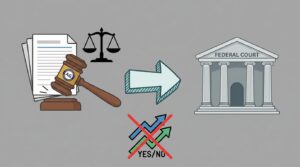
Kentucky Attorney General Russell Coleman has escalated the state’s offensive against prediction markets by filing a federal lawsuit, marking one of the most aggressive regulatory moves yet against platforms that allow users to wager on real-world events. The legal action targets major prediction market operators and seeks to block their services from reaching Kentucky residents. This case could set a precedent for how states regulate the fast-growing intersection of financial derivatives and gambling (a distinction regulators have been slow to enforce).
What Kentucky’s Legal Challenge Signals for Prediction Markets
The filing arrives at a moment when prediction markets are gaining mainstream traction, attracting both retail participants and institutional attention. Before diving into the details, here are the strategic takeaways from this development:
- State-level enforcement is accelerating. Kentucky’s move suggests other states may follow with their own legal challenges, creating a patchwork of regulatory risk for platform operators.
- Federal court venue raises the stakes. By filing federally rather than pursuing state administrative action, Coleman’s office is positioning this as a matter of broader legal principle, not just local enforcement.
- The lawsuit could force prediction market platforms to implement geofencing and state-by-state compliance frameworks, significantly increasing operational costs.
- Regulatory classification remains unresolved. Whether prediction markets constitute gambling, financial instruments, or something else entirely is the core tension driving this and similar disputes.
- Consumer protection arguments will likely anchor Kentucky’s case, framing prediction markets as unlicensed gambling products accessible to state residents without adequate safeguards.
Inside the Attorney General’s Strategy
Attorney General Russell Coleman’s decision to pursue federal litigation rather than rely on cease-and-desist orders or state court proceedings reveals a calculated approach. Kentucky has a long history of aggressive enforcement against online platforms it deems harmful to residents. The state famously seized gambling-related domain names over a decade ago in a case that wound through courts for years.
This time, the legal architecture appears different. Coleman’s office is reportedly arguing that prediction market operators are offering unregistered gambling products to Kentucky consumers, sidestepping both state gambling statutes and federal commodity trading regulations. The framing matters: by characterizing these platforms as gambling rather than financial services, Kentucky avoids the jurisdictional complexity of challenging them under federal securities or commodities law.
Still, the choice of federal court suggests the AG’s team anticipates constitutional questions around interstate commerce and federal preemption that a state tribunal might struggle to address.
Why the Timing Matters
Prediction markets have surged in visibility since the 2024 U.S. presidential election cycle, when platforms like Polymarket’s event-based trading platform drew enormous volumes from users betting on electoral outcomes. The Commodity Futures Trading Commission granted limited approval to certain prediction market contracts, but that federal green light has done little to settle the question at the state level.
Kentucky is not operating in isolation. Several states have examined whether prediction markets violate existing gambling laws, and a handful have issued informal warnings to operators. But Coleman’s lawsuit is arguably the most consequential action taken so far, because it seeks judicial clarity rather than administrative pressure.
And while the CFTC has signaled openness to regulated prediction markets in specific categories, the agency has simultaneously pursued enforcement actions against platforms operating without proper registration. That dual posture leaves operators navigating contradictory signals from federal and state authorities simultaneously.
The Broader Regulatory Landscape
What makes this case particularly thorny is the absence of a unified federal framework for prediction markets. The CFTC regulates event contracts on designated exchanges, but many popular platforms operate offshore or under structures that fall outside traditional oversight. States, meanwhile, retain broad authority over gambling within their borders.
| Regulatory Layer | Current Stance on Prediction Markets | Key Uncertainty |
|---|---|---|
| CFTC (Federal) | Limited approval for regulated exchanges; enforcement against unregistered platforms | Scope of “event contracts” definition remains contested in ongoing rulemaking |
| State Gambling Regulators | Varies widely; most have not issued formal guidance | Whether prediction markets fall under existing gambling statutes |
| SEC (Federal) | Has not claimed direct jurisdiction | Potential overlap if prediction contracts resemble securities |
| Kentucky AG | Active federal lawsuit seeking to block access | Whether federal court will defer to state gambling authority or apply preemption analysis |
How Operators Might Respond
Platform operators facing this kind of state-level challenge have limited options, none of them cheap. Geofencing Kentucky residents out of their platforms is the most immediate technical solution, but it concedes the legal argument without contesting it. Fighting the lawsuit means investing in prolonged federal litigation with uncertain outcomes. Some operators may seek to engage Kentucky legislators directly, pushing for a regulatory carve-out that distinguishes prediction markets from traditional gambling.
The industry’s trade groups have generally argued that prediction markets serve a public good by aggregating information and improving forecasting accuracy. Whether that argument carries weight in a courtroom built around consumer protection statutes is another question entirely.
What This Means for Market Participants
For users in Kentucky and potentially other states watching this case, the practical impact is straightforward: access to prediction market platforms may be restricted or eliminated depending on the court’s ruling. But the implications run deeper than access.
If Kentucky prevails, it hands every state attorney general a template. The result: a market caught between two frameworks, one federal and permissive at the margins, the other state-level and potentially hostile. Operators would face a compliance environment resembling online sports betting before widespread legalization, where state-by-state licensing became the cost of doing business.
Even so, a loss for Kentucky could embolden prediction market platforms to expand more aggressively into U.S. markets, citing federal court precedent as a shield against state interference.
Frequently Asked Questions
Are prediction markets legal in the United States?
At the federal level, certain prediction market contracts are permitted on CFTC-regulated exchanges. However, state laws vary considerably, and many platforms operate in a gray area. Kentucky’s lawsuit is specifically challenging whether these platforms violate state gambling laws.
What is Kentucky’s argument against prediction markets?
The Attorney General’s office characterizes prediction market platforms as offering unlicensed gambling products to Kentucky residents without proper regulatory authorization or consumer protections. The case has been filed in federal court.
Could other states follow Kentucky’s approach?
Yes, and that possibility is precisely what makes this case significant. A favorable ruling for Kentucky would give other state attorneys general both legal precedent and political cover to pursue similar actions.
How does this affect platforms like Polymarket?
Platforms may need to implement geographic restrictions for Kentucky users or contest the lawsuit directly. The broader risk is a domino effect where multiple states pursue enforcement, forcing operators into costly state-by-state compliance or retreat from U.S. markets altogether.