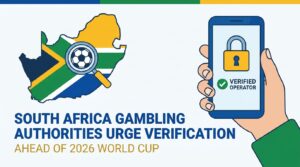
Gambling regulators in South Africa have issued a pointed warning to sports bettors: verify the licensing status of any operator before placing wagers tied to the 2026 FIFA World Cup. The advisory comes amid a surge in unlicensed betting platforms targeting South African punters, many of which lack the regulatory oversight required under the country’s National Gambling Act. With the tournament set to draw massive betting volumes across the continent, authorities are moving early to shield consumers from potential fraud and financial loss.
Why South Africa’s Gambling Warning Matters Right Now
The timing of this regulatory alert is deliberate. As anticipation builds for the 2026 World Cup (co-hosted by the United States, Mexico, and Canada), betting activity across Africa is expected to spike dramatically. South Africa already ranks among the continent’s largest regulated gambling markets, generating billions of rand in annual revenue. But that scale also attracts operators working outside the law, and regulators are signalling they won’t wait until kickoff to act.
- South African provincial gambling boards have flagged a rise in unlicensed online betting platforms specifically targeting World Cup interest
- Bettors who use unauthorised operators have no legal recourse if winnings are withheld or personal data is misused
- The National Gambling Board is coordinating with provincial authorities to identify and shut down non-compliant platforms
- Licensed operators must display valid credentials, and punters can verify these through official provincial board registries
- Regulatory enforcement actions are expected to intensify in the months leading up to the tournament
The Regulatory Landscape Behind the Warning
South Africa’s gambling framework operates on a dual-layer system. The National Gambling Board sets overarching policy, while nine provincial boards handle licensing and day-to-day enforcement. This structure, at least on paper, provides comprehensive coverage. In practice, the fragmented nature of oversight creates gaps that unlicensed operators exploit with relative ease.
Online gambling occupies a particularly contested space. The National Gambling Amendment Act has sought to modernise the regulatory approach, but implementation has been uneven. Provincial boards vary in their capacity to monitor digital platforms, and cross-border operators frequently fall outside jurisdictional reach. That tension between national ambition and provincial execution is something regulators have acknowledged without fully resolving.
Still, the current warning carries teeth. Authorities have pointed to specific enforcement tools available under existing law, including the ability to block payment processing for unlicensed sites and pursue criminal charges against operators who solicit South African bettors without proper authorisation.
What Bettors Should Actually Check
The practical advice from regulators is straightforward, though not every bettor follows it. Before depositing funds with any operator, punters should confirm three things:
| Verification Step | What to Look For | Where to Confirm |
|---|---|---|
| Licence status | A valid provincial gambling licence number displayed on the operator’s site | Relevant provincial gambling board registry |
| Operator identity | Registered company name matching the licence holder, not a subsidiary or white-label brand operating under a different entity | Companies and Intellectual Property Commission (CIPC) |
| Dispute resolution | Clear terms for handling complaints and withdrawals, including a named regulatory body for escalation | Operator’s terms and conditions page |
One detail worth noting: some platforms display licence numbers from foreign jurisdictions (Curaçao, for instance) as if these carry legal weight in South Africa. They do not. Only a licence issued by a South African provincial board authorises an operator to accept bets from residents.
How Unlicensed Platforms Gain Traction
Aggressive digital marketing is the primary vector. Unlicensed operators invest heavily in social media advertising, influencer partnerships, and search engine campaigns that target South African keywords. Many offer sign-up bonuses or enhanced odds designed to undercut licensed competitors (a distinction regulators have been slow to enforce in the digital advertising space).
The appeal is obvious. A bettor searching for World Cup odds encounters a sleek, mobile-optimised platform offering better returns than established bookmakers. The missing licence is invisible unless you look for it. And most people don’t look.
Which raises a harder question: should the burden of verification fall primarily on individual consumers, or do regulators and technology platforms share a larger responsibility to prevent unlicensed operators from reaching South African audiences in the first place?
Broader Market Implications Across Africa
South Africa’s warning reflects a continent-wide challenge. Regulated gambling markets in Kenya, Nigeria, and Tanzania have all grappled with the proliferation of unlicensed operators, particularly around major sporting events. The 2022 FIFA World Cup in Qatar triggered similar enforcement waves across multiple African jurisdictions, with mixed results.
What distinguishes the current moment is scale. Mobile penetration across Africa continues to climb, and mobile money integration has made it trivially easy to fund betting accounts. The National Gambling Board of South Africa has acknowledged that enforcement strategies designed for brick-and-mortar operations need fundamental rethinking for the digital era. But rethinking and implementing are different things entirely.
Arguably, the 2026 World Cup will serve as a stress test for gambling regulation across the continent. Jurisdictions that invest in proactive enforcement now may emerge with stronger frameworks. Those that don’t will likely face a wave of consumer complaints and political pressure after the fact.
Frequently Asked Questions
How can I check if a betting site is licensed in South Africa?
Visit the website of your provincial gambling board and search for the operator’s licence number. Every licensed operator is required to display this number prominently on their platform. If you can’t find it, or if the number doesn’t match provincial records, do not deposit funds.
Are international betting licences valid in South Africa?
No. Only licences issued by one of South Africa’s nine provincial gambling boards authorise an operator to legally accept bets from South African residents. A Curaçao or Malta licence, regardless of its legitimacy in those jurisdictions, carries no legal standing domestically.
What happens if I bet with an unlicensed operator?
You forfeit any legal protection under South African gambling law. If the operator withholds winnings, misuses your personal data, or simply disappears, you have no formal channel for redress through provincial gambling boards or courts. The financial and personal risk sits entirely with you.
Will enforcement increase before the World Cup?
Regulators have signalled as much. The National Gambling Board and provincial authorities are expected to ramp up monitoring and takedown efforts throughout 2025 and into 2026, with particular focus on digital platforms and payment processing channels used by unlicensed operators.