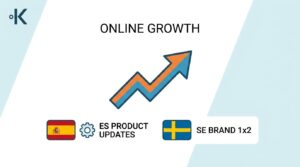
Kindred Group, the Nordic gambling operator behind brands such as Unibet and 32Red, has reported a period of online growth underpinned by targeted product improvements in Spain and the expanding performance of its Swedish-facing brand 1×2. The results signal a deliberate pivot toward regulated market depth over geographic breadth, a strategy that has gained traction across European operators navigating tighter compliance frameworks. While headline figures remain modest, the composition of growth tells a more interesting story about where Kindred sees its next margin.
What Kindred’s Online Growth Signals for Regulated Market Strategy
The operator’s latest performance update highlights two distinct engines of digital revenue acceleration. Before unpacking the broader implications, here are the strategic takeaways worth watching:
- Product-led growth in Spain suggests Kindred is investing in localised UX and content rather than relying solely on marketing spend to gain share in a competitive regulated market
- The 1×2 brand’s traction in Sweden points to a multi-brand approach that allows Kindred to segment audiences without cannibalising its flagship Unibet offering
- Online channels continue to outpace retail, reinforcing the operator’s digital-first positioning across its portfolio
- Regulated market focus aligns with the broader European trend of operators retreating from grey markets in favour of sustainable, licensed revenue streams
- Spain’s gambling advertising restrictions, tightened under Royal Decree 958/2020, make product quality a more critical differentiator than above-the-line marketing
Spain: Where Product Beats Promotion
Spain’s online gambling market operates under one of Europe’s stricter advertising regimes. Operators face severe limits on when and how they can promote gambling products, which has effectively shifted the competitive battleground from customer acquisition to customer retention. Kindred appears to have recognised this early.
The company’s product updates in Spain (a distinction that matters, since many operators treat localisation as a checkbox rather than a strategy) reportedly span improvements to the user interface, faster payment processing, and a broader sportsbook offering tailored to Spanish bettors. Football remains the dominant vertical, but the operator has expanded into niche sports and live betting features that keep session times longer. In a market where you cannot simply outspend rivals on TV ads, the product itself becomes the marketing.
Still, Spain is not an easy market to scale. The Dirección General de Ordenación del Juego (DGOJ) maintains tight oversight, and tax rates on gross gaming revenue sit at 20% for most online products. Kindred’s willingness to invest in product depth here suggests confidence in long-term unit economics, even if short-term margins remain compressed.
1×2’s Role in Kindred’s Swedish Multi-Brand Play
Sweden re-regulated its gambling market in January 2019, and the years since have been marked by consolidation, licence scrutiny, and a steady thinning of operators willing to meet Spelinspektionen’s compliance demands. Against that backdrop, Kindred’s portfolio of online gambling brands has leaned into a segmentation strategy that positions 1×2 as a complementary offering alongside Unibet.
The logic is straightforward. Unibet carries broad brand recognition and appeals to a mainstream betting audience. 1×2 targets a different demographic, one arguably more engaged with specific betting formats and less driven by brand loyalty. By running both brands under the same licensed infrastructure, Kindred captures a wider slice of the addressable market without duplicating regulatory overhead.
Whether 1×2 can sustain its growth trajectory depends on how effectively Kindred differentiates it. Swedish players are not short of options, and the regulator has shown little patience for operators that blur the lines between brands to circumvent bonus or deposit limit rules.
How Regulated Market Dynamics Are Reshaping Operator Priorities
Kindred’s results fit a pattern visible across the European gambling sector. Operators are pulling back from markets where regulatory clarity is lacking and doubling down where frameworks are established, even when those frameworks come with higher costs. The calculus has shifted: predictable compliance costs now outweigh the revenue upside of operating in jurisdictions where enforcement could arrive without warning.
This recalibration carries implications beyond individual operators. Payment providers, affiliate networks, and platform suppliers all feel the downstream effects when a major operator like Kindred concentrates its investment in a handful of regulated territories. The supply chain tightens around compliance-ready infrastructure.
Frequently Asked Questions
What drove Kindred Group’s recent online growth?
Product improvements in the Spanish market and the performance of the 1×2 brand in Sweden were the primary contributors, according to the operator’s latest update.
Why is Spain a strategically important market for Kindred?
Spain’s strict advertising rules mean operators must compete on product quality and user experience rather than marketing volume. Kindred’s localised updates position it to retain players more effectively in this environment, though the market’s 20% GGR tax rate keeps margins tight.
How does the 1×2 brand differ from Unibet?
1×2 targets a more niche betting audience in Sweden, allowing Kindred to segment its customer base without cannibalising Unibet’s mainstream appeal. Both operate under the same regulatory licence.
Is Kindred moving away from unregulated markets?
The broader trend across Kindred’s strategy suggests a preference for regulated, licensed jurisdictions where revenue is more predictable, even at higher operating costs.
The Psychology Behind Product-Led Retention
Kindred’s approach in Spain offers a useful case study in how behavioural principles shape digital product strategy. When advertising channels narrow, operators must rely on what neuro-linguistic programming practitioners would call anchoring and reframing: creating positive initial experiences that set expectations, then reinforcing those expectations through consistent delivery. A faster withdrawal, a cleaner interface, a bet slip that remembers preferences: these are not trivial UX details. They anchor the player’s perception of value in the platform itself rather than in a promotional offer that expires.
Reframing also plays a role. In markets saturated with similar odds and similar products, the operator that frames its experience as smoother, more trustworthy, or simply less frustrating gains an edge that compounds over time. Players may not articulate why they prefer one platform over another, but the cumulative effect of reduced friction is measurable in session length, deposit frequency, and churn rates. Kindred’s product updates in Spain appear designed to exploit exactly this dynamic.
And there is a rapport-building dimension worth noting. Localisation, done well, communicates respect for the player’s context. Spanish-language customer support, locally relevant payment methods, and content aligned with domestic sporting calendars all contribute to a sense that the operator understands its audience. That sense of understanding, even when delivered algorithmically, builds the kind of trust that no banner ad can replicate. The question Kindred faces is whether these investments translate into durable market share or merely slow the rate of player attrition in an increasingly crowded field.



