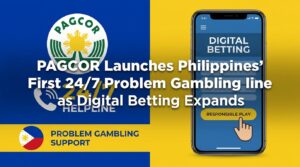
The Philippine Amusement and Gaming Corporation (PAGCOR) has activated the country’s first round-the-clock helpline dedicated solely to problem gambling, marking a significant shift in how the state regulator approaches harm reduction. The 24/7 National Problem Gambling Helpline (NPGH), operated from PAGCOR’s corporate office in Pasay City, provides immediate counselling and referral services for individuals and families affected by compulsive wagering. The move comes as mobile betting applications and electronic gaming sites proliferate across the archipelago, creating what regulators describe as an urgent need for accessible intervention channels.
Why the Helpline Signals a Regulatory Pivot for Philippine Gaming
PAGCOR’s decision to stand up a dedicated helpline is not merely administrative. It reflects a broader recalibration of the regulator’s role, from revenue collector and licensing authority to something closer to a public health stakeholder. Before unpacking the operational details, here are the strategic takeaways worth noting:
- The NPGH is the first government-operated, 24/7 gambling-specific support line in the Philippines, filling a gap that advocacy groups have flagged for years
- Digital accessibility drove the timeline: the unchecked growth of mobile wagering platforms and remote casino software accelerated the launch beyond what was originally planned
- PAGCOR is managing the helpline directly rather than outsourcing to a third-party NGO or healthcare provider, a choice that consolidates oversight but raises questions about independence
- The initiative positions the Philippines alongside jurisdictions like Singapore, the UK, and several Australian states that operate dedicated gambling harm hotlines
- For licensed operators, the helpline may foreshadow stricter responsible gambling compliance requirements tied to licence renewals
How the Helpline Actually Works
Callers reaching the NPGH are connected with trained counsellors who can provide immediate crisis support, referral pathways to mental health professionals, and guidance on self-exclusion programmes. The service is phone-based, operating continuously from PAGCOR’s Pasay City headquarters.
What remains less clear is the staffing model. PAGCOR has not disclosed how many counsellors are assigned to the line, what clinical qualifications they hold, or whether the service will eventually expand to include chat-based or digital intake options. These details matter. A helpline that cannot handle volume during peak hours risks undermining the credibility of the entire initiative.
Still, the infrastructure itself is a concrete step. The Philippines has lacked any centralised, government-backed mechanism for gambling harm intervention. Previous efforts relied on fragmented community-level programmes with limited reach and inconsistent funding.
The Digital Betting Landscape That Forced the Issue
The Philippines’ online gambling ecosystem has grown rapidly over the past five years. Licensed Philippine Offshore Gaming Operators (POGOs), domestic e-gaming cafés, and a surge in mobile sports betting apps have collectively expanded the market’s footprint well beyond traditional brick-and-mortar casinos. PAGCOR itself reported gross gaming revenues exceeding PHP 74 billion in recent fiscal periods, with digital channels accounting for an increasing share.
That expansion has not been without friction. Reports of gambling-related financial distress, family breakdown, and in extreme cases, criminal activity linked to compulsive betting have become more visible in Philippine media. Lawmakers have pushed for stronger safeguards, and PAGCOR’s responsible gaming framework has faced scrutiny for lagging behind the pace of market growth.
The NPGH, in that context, is partly a defensive measure. It gives the regulator a tangible response to critics who argue that the state has prioritised revenue generation over player protection (a distinction regulators have been slow to reconcile publicly).
Regional Benchmarks and What They Reveal
Comparing the Philippine helpline to established models elsewhere offers useful perspective, though direct equivalence is difficult given differences in market size, regulatory maturity, and cultural attitudes toward gambling.
| Jurisdiction | Helpline Model | Operator | Notable Feature |
|---|---|---|---|
| Philippines (NPGH) | 24/7 phone-based | PAGCOR (government) | First dedicated national line; regulator-operated |
| Singapore | 24/7 phone + in-person | National Council on Problem Gambling | Integrated with statutory exclusion orders |
| United Kingdom | 24/7 phone, chat, forum | GamCare (independent charity) | Funded by industry levy; fully independent from regulator |
| Australia (various states) | 24/7 phone + online | Gambling Help Online / state bodies | Multi-channel; linked to national research programme |
One pattern stands out. In most mature markets, the helpline function sits at arm’s length from the regulator. The UK’s GamCare, for instance, operates independently and is funded through an industry levy administered by the Gambling Commission. PAGCOR’s decision to run the NPGH internally consolidates control but may invite questions about whether callers can trust a service operated by the same entity that licenses and profits from the industry.
Reframing Harm Reduction as Market Infrastructure
There is a broader lesson embedded in the NPGH launch that extends beyond the Philippines. Across Asia-Pacific, regulators are increasingly recognising that player protection mechanisms are not peripheral to market integrity. They are foundational. A jurisdiction that cannot demonstrate credible harm-reduction infrastructure faces reputational risk, potential capital flight from institutional investors in gaming companies, and growing legislative pressure.
For operators licensed in the Philippines, the helpline’s existence arguably raises the baseline expectation. Responsible gambling provisions in licence conditions may tighten. Advertising standards could face additional scrutiny. And the data generated by the helpline, call volumes, demographic patterns, peak distress periods, could inform future regulatory interventions in ways that operators should be preparing for now.
Even so, infrastructure alone does not solve the problem. The effectiveness of the NPGH will ultimately depend on sustained funding, clinical rigour, and whether PAGCOR is willing to act on the intelligence the helpline generates, even when that intelligence points to uncomfortable conclusions about the market it oversees.
Frequently Asked Questions
Who can call the PAGCOR National Problem Gambling Helpline?
The service is open to anyone in the Philippines experiencing gambling-related harm, including family members and concerned individuals. There are no eligibility restrictions based on the type of gambling involved.
Is the helpline free?
PAGCOR has positioned the NPGH as a public service. Specific details on call charges have not been published, though government-operated helplines in the Philippines are typically toll-free.
Does calling the helpline trigger any legal consequences?
No. The helpline is designed as a support and referral service, not a reporting mechanism. Callers seeking help for compulsive gambling are not subject to legal action as a result of contacting the line.
Will the helpline expand to include online chat or text support?
PAGCOR has not confirmed plans for multi-channel expansion, though the trajectory of similar services in other jurisdictions suggests digital intake options may follow if call volumes justify the investment.