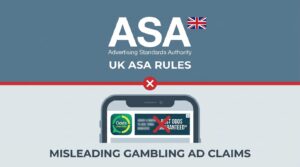
The UK Advertising Standards Authority (ASA) has ruled against Cyan Blue Odds Ltd, trading as Oddschecker, over advertising that the regulator deemed misleading. The decision centres on promotional claims that failed to meet the ASA’s established standards for clarity and substantiation in gambling advertising. Oddschecker, one of the most widely used odds comparison platforms in British betting, now faces restrictions on how it frames certain marketing messages going forward. The ruling adds to a growing body of ASA enforcement actions targeting the gambling sector’s promotional practices.
What the ASA Ruling Against Oddschecker Means for Gambling Advertisers
Before diving into the specifics, it’s worth framing why this matters beyond a single company. ASA decisions in the gambling space don’t just affect the advertiser named; they set interpretive precedent that shapes compliance strategy across the sector. Here are the key strategic takeaways:
- Misleading claims carry real enforcement risk — the ASA’s willingness to act reinforces that odds comparison platforms are held to the same advertising standards as licensed operators themselves
- Oddschecker has been told not to run the ad again in its current form, a directive that requires internal review of similar campaigns already live or in pipeline
- Substantiation remains the sticking point. Advertisers in the gambling space must be able to back up promotional claims with clear, verifiable evidence at the time of publication
- The ruling signals continued regulatory attention to affiliate and comparison platforms, not just direct-to-consumer sportsbooks
- Competitors and affiliates operating in the UK market should treat this as a compliance prompt to audit their own ad copy and promotional landing pages
How the Complaint Unfolded
The ASA investigated after a complaint challenged whether Oddschecker’s advertising was misleading. At issue was the way the platform presented certain promotional claims to consumers, specifically whether those claims could be adequately substantiated and whether they created a misleading impression about the offer available.
Oddschecker, which operates as an odds comparison service aggregating prices from major UK bookmakers, occupies a distinctive position in the gambling advertising ecosystem. It doesn’t take bets directly. But its promotional content reaches millions of punters making wagering decisions, which places its advertising squarely within the ASA’s remit under the CAP Code.
The ASA upheld the complaint. It concluded that the ad was likely to mislead consumers and told Cyan Blue Odds Ltd not to run the advertisement again in its investigated form. The company was also instructed to ensure future ads did not repeat the same issues.
A Broader Pattern of Gambling Ad Enforcement
This isn’t an isolated case. The ASA has steadily increased its scrutiny of gambling-related advertising over the past three years, issuing rulings against operators, affiliates, and media partners alike. In 2023 alone, the authority resolved dozens of cases involving misleading bonus claims, inadequate terms disclosure, and irresponsible targeting.
What makes the Oddschecker ruling notable is the target. Affiliate and comparison platforms have historically operated in a grey zone (a distinction regulators have been slow to enforce), benefiting from looser public perception of their role in the advertising chain. That buffer is clearly shrinking. The ASA’s position appears to be that if you’re promoting gambling products to UK consumers, the same rules apply regardless of whether you hold a betting licence or merely direct traffic to those who do.
Still, enforcement alone doesn’t resolve the underlying tension. Comparison platforms generate revenue by driving sign-ups and first deposits, which creates structural incentives to push the boundaries of promotional language. Whether the current regulatory framework adequately addresses that incentive structure remains an open question.
What Compliance Teams Should Reassess Now
For gambling advertisers and affiliates operating in the UK, the practical implications are straightforward but demand attention. The ASA’s ruling reinforces several compliance principles that are easy to overlook in fast-moving marketing environments:
| Compliance Area | Key Requirement | Risk if Ignored |
|---|---|---|
| Claim substantiation | All promotional claims must be verifiable at time of publication | Ad pulled, public ruling, reputational damage |
| Terms visibility | Material conditions must be prominent, not buried | ASA upholds misleading complaint |
| Affiliate responsibility | Platforms directing traffic to operators share advertising liability | Enforcement action regardless of licence status |
| Creative review cadence | Regular audits of live ad copy against current ASA guidance | Legacy campaigns triggering new complaints after regulatory updates |
The Psychology Behind Gambling Ad Regulation
Understanding why regulators act requires looking beyond legal frameworks into how promotional messaging actually influences consumer behaviour. Gambling advertising, particularly from comparison platforms, leverages several cognitive triggers that regulators are increasingly alert to. Anchoring bias plays a central role: when a consumer sees a “best odds” claim, it frames their decision-making around that single data point, often without interrogating the conditions attached.
There’s also the question of perceived authority. Oddschecker’s brand positioning as a neutral comparison tool lends its promotional claims an implicit credibility that a bookmaker’s own advertising might not carry. Consumers tend to trust aggregators more than direct sellers. That trust, when paired with inadequately substantiated claims, creates a compounding effect on misleading impressions. Regulators understand this asymmetry even if they rarely articulate it in those terms.
Scarcity framing and urgency cues compound the problem further. Phrases suggesting limited-time offers or exclusive deals activate loss aversion, pushing consumers toward faster, less considered decisions. And in a sector where the product itself carries financial risk, the stakes of that psychological nudge are materially different from, say, a misleading broadband comparison. The ASA’s intervention here isn’t merely procedural. It reflects a growing institutional awareness that the mechanics of persuasion in gambling advertising warrant tighter guardrails than other consumer categories.
For marketing teams, the lesson is nuanced: it’s not enough to be technically accurate. The overall impression an ad creates, filtered through the cognitive shortcuts consumers actually use, is what the ASA evaluates. Building compliance processes that account for perceptual impact rather than just literal truthfulness will separate operators who avoid enforcement from those who don’t.
Frequently Asked Questions
What did the ASA rule against Oddschecker?
The ASA found that an Oddschecker advertisement was misleading and instructed Cyan Blue Odds Ltd not to run the ad again in its current form. The company must also ensure future campaigns avoid the same issues.
Does this ruling affect other gambling comparison sites?
Directly, no. But it establishes interpretive precedent. Other affiliate and comparison platforms should treat it as a signal to review their own advertising compliance, particularly around claim substantiation and terms disclosure.
Can the ASA fine companies for misleading ads?
The ASA doesn’t impose financial penalties directly. Its primary tools are requiring ads to be withdrawn, referring persistent non-compliance to Ofcom or Trading Standards, and publishing rulings that carry significant reputational weight. In practice, the public nature of these rulings often proves more consequential than a fine would.
Is Oddschecker a licensed gambling operator?
Oddschecker operates as an odds comparison platform rather than a bookmaker. However, it holds a Gambling Commission licence for its activities in the UK market, and its advertising falls under the same regulatory standards applied to operators.