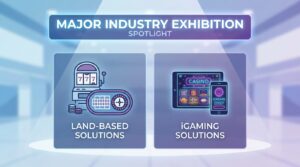
A gaming technology company is drawing attention at a major industry exhibition by showcasing its dual portfolio of land-based and igaming solutions. The display underscores a broader strategic push to bridge physical and digital gaming environments, a convergence that has accelerated since 2020. And while the specific event details remain limited, the company’s decision to present both verticals side by side signals confidence in an omnichannel approach that many operators now consider essential rather than aspirational.
Why the Dual Showcase Matters for Gaming Operators
Exhibiting land-based and igaming products together is no longer a novelty, but it carries strategic weight. The gaming industry has seen a measurable shift toward convergence, with operators seeking unified platforms that serve brick-and-mortar venues and online players through a single technology stack. Here are the key takeaways from this exhibition strategy:
- Omnichannel positioning: Presenting both verticals simultaneously targets operators who want to reduce vendor fragmentation and manage player experiences across channels from one dashboard.
- Regulatory alignment: Jurisdictions increasingly require integrated compliance reporting across land-based and digital operations, making unified solutions more attractive at the procurement stage.
- Operators attending these exhibitions are often in active buying cycles, meaning the timing of such a showcase is commercially deliberate.
- Competitive differentiation: Suppliers that can demonstrate proven performance in both arenas hold a structural advantage over pure-play igaming or land-based-only vendors.
The Convergence Trend in Numbers
The global gaming market continues its expansion across both physical and digital segments. According to various industry analyses, the igaming sector alone is projected to surpass $100 billion in annual revenue within the next few years, while land-based gaming revenue has largely recovered to pre-pandemic levels in most mature markets. What remains less clear is how quickly mid-tier operators will adopt fully integrated platforms versus maintaining separate technology stacks for each channel.
| Segment | Estimated Global Revenue (2024) | Growth Driver |
|---|---|---|
| Land-Based Gaming | ~$250 billion | Post-pandemic venue recovery, new jurisdictions opening |
| iGaming (Online) | ~$95–100 billion | Mobile penetration, regulatory expansion in North America and Latin America |
| Converged/Omnichannel | Emerging segment; limited standalone data available | Operator demand for unified player management and cross-channel analytics |
That third row is telling. The omnichannel category doesn’t yet have clean revenue attribution because most operators still report land-based and online figures separately. But the technology investment flowing into convergence platforms suggests the accounting will eventually catch up to the architecture.
What Operators Are Actually Looking For
Exhibition floors reveal procurement priorities in ways that earnings calls rarely do. When operators visit a booth showcasing both land-based terminals and igaming back-end systems, they’re typically evaluating several capabilities at once. Can the platform handle real-time data synchronization between a physical slot floor and an online casino lobby? Does the compliance layer adapt to multi-jurisdictional requirements without manual reconfiguration? These aren’t hypothetical questions; they’re the criteria that shape vendor shortlists.
Still, not every operator is ready for full convergence. Smaller regional casinos, particularly in markets where online gambling remains unauthorised, may find limited immediate value in an integrated offering. For them, the land-based component alone needs to justify the relationship. Suppliers exhibiting at trade shows understand this segmentation and typically design their booth experience to serve both audiences (a distinction that often gets lost in press coverage focused solely on digital innovation).
Framing the Opportunity: How Perception Shapes Procurement
Beyond the technical specifications and compliance checklists, there’s a subtler dynamic at play in how gaming companies present themselves at exhibitions. The framing of a product, whether it’s positioned as a cost-reduction tool, a revenue-growth engine, or a regulatory safeguard, shapes how operators perceive its value before they ever see a demo. This is where principles borrowed from neuro-linguistic programming become relevant to B2B sales strategy in the gaming sector.
Effective exhibitors anchor their messaging around outcomes rather than features. Instead of leading with “our platform supports 47 jurisdictions,” the stronger frame is “operators using our platform reduced compliance overhead by 30% in their first year.” The difference is not cosmetic. Outcome-anchored language activates a different decision-making pathway for the buyer, one rooted in projected benefit rather than technical evaluation. Companies that explore igaming business strategies and market intelligence understand that procurement decisions at the executive level are rarely made on spec sheets alone.
Sensory-specific language also plays a role. Describing a land-based cabinet’s “tactile player interface” or an igaming platform’s “visual-first dashboard design” creates mental engagement that abstract feature lists cannot. Exhibitors who calibrate their language to match the representational preferences of their audience, whether visual, auditory, or kinesthetic, tend to generate stronger post-event pipeline conversion. The best booths don’t just display products. They construct an experience that mirrors how the operator already thinks about their own business challenges.
Rapport-building at exhibitions follows a similar logic. Mirroring the language patterns and priorities of visiting operators, rather than defaulting to a scripted pitch, creates a sense of alignment that accelerates trust. In an industry where vendor relationships often span five-to-ten-year contracts, that initial perception of alignment carries outsized commercial weight.
Frequently Asked Questions
What does omnichannel mean in gaming technology?
It refers to a unified technology approach where land-based and online gaming operations share a common platform, enabling consistent player experiences, centralized data management, and streamlined regulatory compliance across both channels.
Why do gaming companies exhibit land-based and igaming solutions together?
Operators increasingly want fewer vendors and more integrated systems. Showing both capabilities demonstrates that a supplier can serve the full spectrum of an operator’s needs, which simplifies procurement and reduces long-term integration costs. It’s also a competitive signal: we do both, and we do both well.
Are all gaming operators moving toward convergence?
No. Adoption depends heavily on jurisdiction, operator size, and regulatory environment. Large multi-market operators are leading the shift, while smaller regional venues may prioritize land-based solutions for years to come.