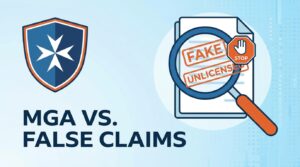
The Malta Gaming Authority (MGA) has once again been compelled to publicly address operators falsely claiming to hold its licence, issuing warnings against entities misrepresenting their regulatory status. This recurring problem underscores a persistent vulnerability in the online gambling ecosystem, where unauthorised operators exploit the MGA’s reputation to attract players under false pretences. The regulator’s latest intervention targets specific brands that have displayed MGA licensing marks or made explicit claims of authorisation without holding valid permits. For an industry built on trust and compliance, these repeated episodes raise uncomfortable questions about enforcement reach.
Why the MGA’s Latest Enforcement Action Matters for Operators and Players
False licensing claims are not merely a branding issue. They carry tangible consequences for consumer protection, market integrity, and the credibility of regulatory frameworks across Europe’s iGaming landscape. Before diving into the specifics, here are the critical takeaways from this development:
- Repeat pattern: This is not the first time the MGA has had to publicly disavow operators falsely using its branding, suggesting that existing deterrents remain insufficient
- Operators caught making unauthorised licensing claims risk being blacklisted across multiple jurisdictions, not just Malta
- Player exposure: Consumers who engage with falsely licensed platforms have no recourse through MGA’s complaint mechanisms or player protection frameworks
- The MGA’s credibility as one of Europe’s most recognised iGaming regulators makes it a prime target for impersonation by rogue operators
- Legitimate MGA-licensed operators face reputational spillover when unlicensed entities trade on the same regulatory badge
A Regulator’s Reputation as Both Asset and Liability
Malta’s gaming licence has long been considered among the most respected in the industry. That standing, built over nearly two decades of regulatory development, is precisely what makes it attractive to bad actors. Operators without legitimate authorisation display the MGA seal on their websites, banking on the assumption that most players won’t verify the claim independently.
And while the Malta Gaming Authority’s official licence verification tool allows anyone to check an operator’s status, the reality is that few casual players take that step. The gap between available verification infrastructure and actual consumer behaviour is where fraudulent operators thrive.
The MGA has responded by publishing notices identifying specific entities that have falsely claimed affiliation. But publication alone carries limited deterrent weight when the operators in question are often domiciled outside Malta’s jurisdictional reach (a distinction regulators have been slow to enforce across borders). Shutting down a website registered in a non-cooperative jurisdiction requires coordination that moves far slower than the operators themselves.
How False Licensing Claims Distort the Market
The damage extends well beyond individual player risk. Legitimate operators invest significantly in compliance infrastructure to obtain and maintain MGA licences. Annual fees, responsible gambling obligations, anti-money laundering protocols, technical audits: the cost of doing business properly is substantial.
When an unlicensed competitor sidesteps all of that and still presents itself as MGA-authorised, it creates an uneven playing field. Players may be drawn to platforms offering terms that no genuinely regulated operator could match, precisely because the unauthorised entity bears none of the compliance costs.
| Factor | Licensed MGA Operator | Falsely Claiming MGA Licence |
|---|---|---|
| Regulatory oversight | Subject to ongoing MGA audits and reporting | None whatsoever |
| Player fund protection | Segregated accounts required | No obligation or guarantee |
| Complaint resolution | MGA acts as mediator | No recourse available |
| AML compliance | Full KYC and transaction monitoring | Typically absent or superficial |
| Cost of compliance | Significant annual investment | Effectively zero |
That last row matters more than it might appear.
What Drives Operators to Fake Regulatory Credentials?
The incentive structure is straightforward. An MGA licence signals legitimacy to players, affiliates, and payment processors alike. Without one, an operator faces difficulty securing banking relationships, affiliate partnerships, and player trust. Faking it becomes a shortcut that, in jurisdictions with weak enforcement mechanisms, carries minimal immediate risk.
Still, the consequences when caught are not trivial. Being publicly named by the MGA can trigger cascading effects: payment providers may sever ties, affiliate networks may blacklist the brand, and other regulators may add the entity to their own warning lists. The question is whether those downstream consequences materialise quickly enough to matter.
Strengthening Verification: A Shared Responsibility
Arguably, the burden of verification should not rest solely on the consumer. Industry stakeholders across the value chain have a role to play. Payment processors, game suppliers, and affiliate platforms each represent a checkpoint where licensing claims could be validated before commercial relationships are established.
Some practical steps that could reduce the prevalence of false licensing claims:
- Game suppliers implementing automated licence verification before onboarding new operator clients
- Affiliate networks requiring proof of active licensing as a condition of partnership, with periodic re-verification
- Payment service providers cross-referencing operator claims against regulator databases before processing agreements
- Regulators like the MGA publishing machine-readable licence registries that third parties can query in real time
Several of these measures exist in some form already. Yet their adoption remains inconsistent, and the speed at which rogue operators can launch new brands often outpaces the verification cycle.
Frequently Asked Questions
How can players verify whether an operator holds a genuine MGA licence?
Players can use the MGA’s public licence register on its official website. Every authorised operator is listed with its licence number, company name, and the specific gaming services it is permitted to offer. If the operator’s name does not appear, the claim is false.
What should a player do if they suspect an operator is falsely claiming MGA authorisation?
Report it directly to the MGA through its online reporting mechanism. The regulator investigates such claims and has the authority to issue public warnings. Acting quickly helps limit exposure for other players who might encounter the same platform.
Does a false MGA licensing claim mean the operator is necessarily fraudulent in all respects?
Not automatically, but it is a serious red flag. An operator willing to misrepresent its regulatory status has already demonstrated a disregard for transparency. Whether that extends to rigged games, withheld withdrawals, or data misuse varies by case, but the trust foundation is already compromised.
Can the MGA shut down operators falsely using its name?
The MGA can issue cease-and-desist notices and public warnings, but its enforcement power is limited to entities within its jurisdiction. Operators based outside Malta require cooperation from other authorities, which can be slow and uncertain.