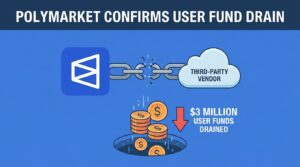
Polymarket, the blockchain-based prediction market platform, confirmed on Friday that hackers siphoned roughly $3 million from user wallets after a compromised third-party vendor injected malicious code into its website. Blockchain security firm PeckShield flagged the incident, which has since been contained according to the platform. Polymarket stated it would refund all affected users, though the timeline and mechanism for those refunds remain unspecified.
What the Polymarket Breach Reveals About Supply Chain Risk in DeFi
This incident lands at a moment when decentralized platforms are under growing scrutiny for operational security, not just smart contract integrity. The attack vector here wasn’t a protocol exploit or a vulnerability in Polymarket’s core infrastructure. It was a third-party dependency, a vendor whose code was weaponized to target end users. That distinction matters, because it shifts the conversation from protocol audits to something far harder to control: supply chain hygiene.
- $3 million drained from user accounts through malicious code injected by a compromised external vendor
- PeckShield identified and reported the breach, underscoring the role of independent blockchain security monitors
- Polymarket has pledged full refunds to impacted users, though no public timeline has been issued
- The attack exploited a third-party integration, not the platform’s own smart contracts or on-chain logic
- Supply chain attacks represent a growing and arguably underappreciated threat vector across Web3 platforms
How the Attack Unfolded
According to available details, the breach originated from a third-party vendor whose code was integrated into Polymarket’s front-end environment. Attackers compromised this vendor and injected malicious scripts, which then executed within the platform’s web interface. Users interacting with the site during the window of compromise had funds drained from their connected wallets.
Polymarket has not publicly named the vendor involved. The company said it moved quickly to isolate the compromised component and contain the damage. Still, the fact that a front-end dependency could serve as a conduit for wallet-level theft raises uncomfortable questions about how DeFi platforms vet, monitor, and sandbox their external integrations.
PeckShield, a well-known blockchain security firm, was among the first to surface the incident publicly. Their involvement highlights a pattern now familiar in crypto security: independent watchdogs often detect and disclose breaches faster than the affected platforms themselves.
Third-Party Risk: The Soft Underbelly of Decentralized Platforms
Smart contract audits have become standard practice. But front-end security, particularly the sprawling web of JavaScript dependencies and third-party integrations that power modern dApps, remains a blind spot (a distinction regulators have been slow to enforce). This breach is a textbook supply chain attack, a method that has plagued traditional software for years and is now finding fertile ground in Web3.
The parallels to incidents like the Ledger Connect Kit exploit in late 2023 are hard to ignore. In that case, a compromised npm package allowed attackers to inject a wallet drainer into multiple decentralized applications simultaneously. The Polymarket incident, while smaller in scale, follows the same playbook: target the weakest link in the dependency chain, not the protocol itself.
What makes these attacks particularly insidious is that users have no visibility into which third-party scripts are running when they connect a wallet. The trust model, at least on paper, assumes the platform has vetted every component. In practice, that assumption often breaks down.
Refund Commitment and User Impact
Polymarket’s pledge to refund affected users is notable. Many DeFi platforms disclaim liability for losses caused by external exploits, citing the decentralized nature of their architecture. By committing to make users whole, Polymarket’s prediction market platform is implicitly accepting a degree of responsibility for the security of its front-end stack, a position that could set expectations across the industry.
The company has not disclosed how many users were affected or whether the $3 million figure represents the full extent of losses. Whether refunds will come from an insurance fund, operational reserves, or some other mechanism also remains unclear.
Broader Implications for Platform Security Standards
This breach arrives as prediction markets gain mainstream traction, particularly following Polymarket’s high-profile role during the 2024 U.S. election cycle. Greater visibility brings greater scrutiny, and incidents like this one test whether platforms can scale their security posture alongside their user base.
Several dimensions deserve attention going forward:
- Vendor auditing protocols: Platforms may need to implement continuous monitoring of third-party code, not just point-in-time reviews
- Content Security Policies: Stricter CSP headers and subresource integrity checks could limit the blast radius of compromised dependencies
- Regulatory bodies watching the DeFi space will likely cite incidents like this when arguing for mandatory security frameworks
- User-side protections: Hardware wallet prompts and transaction simulation tools offer a partial defense, though adoption remains uneven
What Should Users Consider After a Supply Chain Breach?
For users of any decentralized platform, this incident is a reminder that connecting a wallet to a website is an act of trust in that site’s entire software supply chain. Revoking token approvals after interacting with a compromised interface is a basic but often overlooked step. And while Polymarket has contained this particular breach, the broader category of front-end supply chain attacks shows no sign of slowing.
Frequently Asked Questions
What exactly happened in the Polymarket breach?
A third-party vendor integrated into Polymarket’s website was compromised. Attackers injected malicious code through this vendor, which then drained approximately $3 million from users who interacted with the platform during the attack window.
Were Polymarket’s smart contracts exploited?
No. The exploit targeted the front-end layer through a compromised external dependency, not the on-chain protocol itself. That’s precisely what makes supply chain attacks so difficult to anticipate.
Will affected users get their money back?
Polymarket has committed to refunding all affected users, though specific details about the timeline and funding source have not been made public yet.
How can users protect themselves from similar attacks?
Using hardware wallets with transaction preview features, regularly revoking unnecessary token approvals, and avoiding interaction with platforms during known security incidents are practical steps. None of these are foolproof.