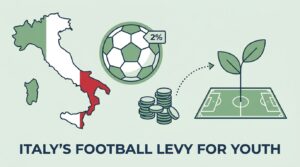
Italian legislators have put forward a proposal to impose a 2% tax on football betting turnover, with proceeds earmarked for grassroots and youth football programmes across the country. The measure, currently under parliamentary discussion, would channel funds directly from the gambling sector into the development pipeline that feeds Italian professional football. If enacted, the levy could reshape the financial relationship between sports betting operators and the football ecosystem they profit from, setting a precedent that other European nations may watch closely.
What the Proposed Betting Levy Means for Italian Football and Gambling Operators
Before diving into the specifics, it’s worth framing the strategic implications of this proposal for both the sports and betting industries. The measure sits at the intersection of gambling regulation, sports governance, and public policy around youth welfare. Here are the core takeaways:
- Revenue redirection: A 2% levy on football betting turnover would generate a significant annual fund for youth academies and grassroots infrastructure, though exact projections depend on total market volume.
- Operator margins under pressure: Betting companies operating in Italy already navigate one of Europe’s more heavily taxed gambling environments. An additional turnover-based charge would compress margins further, particularly for operators with thin spreads on football markets.
- The proposal signals a broader political appetite in Italy to tie gambling revenues more directly to the sports that generate betting interest.
- European ripple effect: Should Italy proceed, regulators in France, Spain, and Germany may face renewed domestic pressure to adopt similar models.
- Youth football funding gap: Italian football’s talent pipeline has drawn criticism in recent years, with underinvestment in academies cited as a factor behind the national team’s struggles at major tournaments.
Why Turnover, Not Gross Gaming Revenue?
One detail that stands out in the proposal is the choice to levy the tax on turnover rather than gross gaming revenue (GGR). That distinction matters enormously. Turnover-based taxes capture the total amount wagered, regardless of whether the operator turns a profit on those bets. GGR-based models, by contrast, tax only the margin the operator retains after paying out winnings.
For betting companies, a turnover tax is far more punishing. It applies even when the house loses. In practice, this means operators absorb the cost on every single football wager placed by Italian bettors, not just the ones where they come out ahead. The 2% figure may sound modest, but on high-volume, low-margin football markets, it can eat into profitability in ways that a headline number doesn’t immediately convey.
Whether this design choice survives parliamentary negotiation is another question entirely.
The State of Youth Football Funding in Italy
Italian football has long relied on club-level academies to develop talent, with storied programmes at Atalanta, AC Milan, and others producing players for Serie A and beyond. But the broader infrastructure beneath those elite academies tells a different story. Regional youth leagues, amateur clubs, and school-based football programmes have struggled with chronic underfunding, ageing facilities, and declining participation in some areas.
The Federazione Italiana Giuoco Calcio has acknowledged gaps in grassroots investment, and the national team’s failure to qualify for the 2018 and 2022 World Cups intensified public scrutiny of the development system. A dedicated funding stream from betting revenues could, at least on paper, address some of these structural shortfalls. Still, how the money would be distributed (and who would oversee it) remains undefined in the current proposal.
How Betting Operators Might Respond
Italy’s regulated gambling market already imposes substantial fiscal obligations on licensed operators. The country’s tax framework for sports betting includes both turnover taxes and licensing fees, placing it among the more demanding regulatory environments in Europe. Adding a 2% football-specific levy would layer another cost onto an already complex compliance structure.
Operators could respond in several ways:
- Adjusting odds: Bookmakers may widen their margins on Italian football markets, effectively passing the cost to bettors through less favourable pricing.
- Shifting promotional spend: Marketing budgets for football-specific campaigns could shrink as operators recalibrate their cost base.
- Some smaller operators might reduce their Italian football offering altogether, concentrating on markets where the tax burden is lighter.
- Lobbying efforts: Industry trade groups are likely to push for a GGR-based alternative or a lower rate during the legislative process.
The largest operators with diversified product portfolios would absorb the impact more easily than niche sportsbook providers focused heavily on football.
A Broader Shift in How Sport and Gambling Coexist
This proposal doesn’t exist in isolation. Across Europe, the relationship between professional sport and the betting industry has grown increasingly contentious. Sponsorship deals, advertising restrictions, and integrity concerns have all fuelled debate about whether gambling companies extract more value from sport than they return. Italy’s proposed levy represents one answer to that question: a direct fiscal mechanism that forces redistribution.
And yet, the model carries risks. Turnover taxes can push activity toward unlicensed offshore operators who don’t bear the same costs (a pattern regulators in several jurisdictions have struggled to contain). If the levy drives bettors to unregulated platforms, the net funding benefit for youth football could be smaller than projected.
Frequently Asked Questions
What exactly is the proposed 2% levy?
It is a tax on the total amount wagered on football bets placed with licensed operators in Italy. The revenue generated would be directed toward youth football development programmes.
Has the levy been enacted into law?
No. The proposal is currently under consideration by Italian lawmakers and has not yet been formally adopted. Its final form, including the rate and tax base, could change during the legislative process.
How would this affect bettors?
Bettors may not see a direct charge, but operators could adjust odds or reduce promotional offers to offset the additional cost. The practical effect would likely be slightly worse value on football wagers over time.
Could other countries adopt a similar model?
Possibly. Several European nations are actively reviewing how gambling revenues relate to sports funding. Italy moving first would give other regulators both a template and a set of early results to evaluate.
What Remains Unresolved
The proposal raises questions that go beyond the tax rate itself. Governance of the resulting fund is arguably the most consequential detail still missing. Will the FIGC distribute the money? A government ministry? An independent body? The answer will determine whether funds reach the small-town clubs and crumbling pitches where they’re needed most, or concentrate among organisations already well-resourced enough to navigate bureaucratic application processes.
Italian football’s relationship with betting revenue is about to be tested in a way that neither industry fully controls. The outcome will depend less on the percentage and more on the plumbing beneath it.