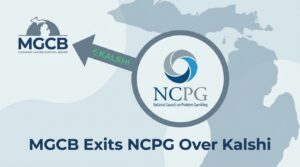
The Michigan Gaming Control Board (MGCB) has severed its membership with the National Council on Problem Gambling (NCPG), citing the advocacy group’s multi-million-dollar partnership with prediction-market operator KalshiEX, LLC as fundamentally incompatible with responsible gambling oversight. The split marks one of the most visible fractures between a state regulator and the nation’s leading problem gambling organization in recent memory. It also lands at a moment when prediction markets are pushing aggressively into territory that regulators have long treated as sports betting’s domain, raising questions about where the boundary sits and who gets to draw it.
Why Michigan’s Regulator Walked Away
At the heart of the MGCB’s objection is a structural concern: the NCPG created a new “Financial Services & Trading” membership tier specifically to accommodate KalshiEX. For the Michigan board, that move does more than expand the NCPG’s revenue base. It risks sending a signal to consumers that prediction markets carry the same regulatory safeguards as state-licensed sportsbooks.
They don’t.
Prediction markets like Kalshi’s event contract exchange operate under federal oversight from the Commodity Futures Trading Commission (CFTC), not state gaming commissions. The consumer protection frameworks differ substantially. State-licensed sports betting platforms must comply with responsible gambling mandates, self-exclusion registries, advertising restrictions, and operator accountability standards enforced at the state level. Prediction markets, at least on paper, face no equivalent obligations in most jurisdictions.
MGCB executives argued that the NCPG’s alliance with Kalshi blurs this distinction in ways that could confuse or mislead the public. When a problem gambling organization embraces a prediction-market firm as a strategic partner, the implied endorsement carries weight (a distinction regulators have been slow to enforce across the broader landscape).
What This Signals for State-Level Gambling Oversight
Before unpacking the broader implications, it’s worth isolating what Michigan’s departure actually changes in practical terms.
- The MGCB loses its seat at the NCPG’s table, reducing its direct influence on national problem gambling policy discussions
- The NCPG retains Kalshi’s partnership revenue but faces reputational risk if other state regulators follow Michigan’s lead
- Prediction markets gain a foothold in responsible gambling discourse, arguably without meeting the regulatory bar that licensed operators must clear
- Consumer protection gaps between CFTC-regulated event contracts and state-licensed sports betting remain unresolved
- Michigan’s move may accelerate legislative scrutiny of prediction markets at the state level
Still, whether other gaming control boards will mirror Michigan’s stance is far from certain. The NCPG’s funding model depends on broad industry participation, and the organization has historically positioned itself as a neutral convener. Losing a major state regulator tests that positioning.
Legal Pressure Compounds the Split
The MGCB’s withdrawal didn’t happen in isolation. It coincided with a legal escalation in Michigan’s Ingham County Circuit Court, where the state has moved to challenge aspects of prediction-market activity within its borders. The details of that litigation remain developing, but the timing suggests a coordinated posture: Michigan is drawing a line between regulated gambling and what it views as an unlicensed adjacent market.
That posture carries weight beyond Michigan. Several states have begun examining whether prediction markets constitute gambling under existing statutory definitions. If courts or legislatures in key jurisdictions reach that conclusion, the regulatory landscape for platforms like KalshiEX shifts dramatically. The CFTC’s jurisdiction, which Kalshi has relied on as its primary regulatory shield, may not be sufficient to preempt state-level gambling laws in every case.
How Prediction Markets and Sports Betting Differ in Regulatory Treatment
| Dimension | State-Licensed Sports Betting | Prediction Markets (CFTC-Regulated) |
|---|---|---|
| Primary Regulator | State gaming commissions | Commodity Futures Trading Commission |
| Self-Exclusion Programs | Mandatory in most states | Not required under federal rules |
| Responsible Gambling Mandates | Extensive, state-enforced | Voluntary, platform-dependent |
| Advertising Restrictions | Varies by state, often strict | Minimal federal constraints |
| Consumer Dispute Resolution | State-level enforcement mechanisms | CFTC complaint process, less granular at the individual consumer level |
The Perception Problem Facing the NCPG
For the National Council on Problem Gambling, the calculus is uncomfortable. The organization exists to reduce gambling harm. Its credibility depends on independence from the commercial interests it seeks to influence. Partnering with a prediction-market platform, even under a newly created membership category, invites scrutiny about whether financial considerations are shaping advocacy priorities.
And while the NCPG may argue that engaging prediction-market operators brings them into the responsible gambling tent, Michigan’s regulators clearly see it differently. Their view: you don’t expand the tent by lowering the standards for entry.
Not everyone in the regulatory community shares Michigan’s alarm. Some state officials have taken a more pragmatic stance, suggesting that engagement with prediction-market firms could encourage voluntary adoption of responsible gambling tools. What remains less clear is whether voluntary measures carry any meaningful deterrent against consumer harm when no enforcement mechanism backs them up.
Reframing the Responsible Gambling Conversation
This episode exposes a tension that has been building for years. The rapid expansion of legal gambling in the United States, from sports betting to iGaming to daily fantasy, has stretched the definition of what falls under “gambling” and who bears responsibility for consumer protection. Prediction markets occupy a grey zone that neither state gaming regulators nor federal commodity regulators have fully claimed.
Michigan’s decision to exit the NCPG is, in one reading, a refusal to participate in that ambiguity. By withdrawing, the MGCB is asserting that the line between regulated gambling and adjacent financial products must remain visible and enforceable. The alternative, in their framing, is a landscape where consumers cannot distinguish between a licensed sportsbook and a prediction-market contract, and where the responsible gambling infrastructure built over decades gets diluted by association.
Whether that stance holds or softens will depend on what other states do next, and on how courts in Michigan and elsewhere resolve the legal questions now in play. The NCPG, for its part, faces a strategic choice with no clean exit: retain the Kalshi partnership and risk further regulatory defections, or unwind it and lose both revenue and a foothold in an emerging market segment.
Frequently Asked Questions
Why did the MGCB leave the NCPG?
The Michigan Gaming Control Board objected to the NCPG’s strategic partnership with prediction-market platform KalshiEX, arguing it creates public confusion about the regulatory protections available to consumers on prediction markets versus licensed sports betting platforms.
Are prediction markets considered gambling?
That depends on the jurisdiction. Federally, prediction markets like Kalshi operate under CFTC oversight as event contracts, not as gambling products. Several states, however, are actively examining whether these platforms meet the statutory definition of gambling under state law. The answer is far from settled.
Could other state regulators follow Michigan’s lead?
It’s possible. Michigan’s departure puts pressure on other gaming control boards to evaluate their own relationship with the NCPG, particularly if the Kalshi partnership remains in place. But each state will weigh the decision against its own regulatory priorities and political dynamics.