Brazil’s lower house of Congress has approved a provisional measure that reshapes the regulatory framework for the country’s rapidly expanding sports betting market. The legislation, which passed after weeks of heated debate among lawmakers, now awaits the signature of President Luiz Inácio Lula da Silva. If signed into law, the measure will tighten oversight of licensed operators, impose new advertising restrictions, and introduce consumer protection mechanisms aimed at curbing problem gambling across Latin America’s largest economy.
What the Provisional Measure Means for Brazil’s Betting Sector
The stakes for operators, regulators, and consumers alike are considerable. Brazil’s legal sports betting market has grown at a pace that caught even optimistic forecasters off guard, with estimates suggesting tens of billions of reais in annual handle. This provisional measure attempts to bring structure to a market that, at least on paper, has operated in a regulatory grey zone since initial legalisation efforts began in 2018.
- Stricter licensing requirements: Operators will face enhanced due diligence checks and must demonstrate financial solvency before receiving or renewing licences, a move designed to filter out undercapitalised entrants.
- Advertising curbs: New rules limit how and where betting companies can advertise, particularly around content accessible to minors.
- The measure introduces mandatory self-exclusion tools and spending limits for consumers, reflecting a broader global trend toward responsible gambling mandates.
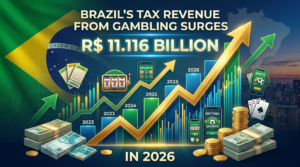
- Tax and revenue provisions: Adjustments to the gross gaming revenue tax rate could alter the profitability calculus for both domestic and international operators eyeing the Brazilian market.
- Enforcement teeth: Regulators gain expanded authority to block unlicensed platforms and pursue penalties against operators that violate the new framework.
A Market Too Large to Leave Unregulated
Brazil’s online betting ecosystem has ballooned in recent years. Dozens of international operators have entered the market, many through partnerships with local entities, while homegrown platforms have proliferated across social media and mobile app stores. The sheer volume of activity created pressure on lawmakers to act. And while the 2018 legalisation framework laid groundwork, enforcement remained patchy (a distinction regulators have been slow to address).
The provisional measure responds to that gap. By requiring operators to register with the Brazilian Ministry of Finance, the legislation centralises oversight in a way that previous rules did not. Whether the ministry has the institutional capacity to manage this expanded mandate is a question nobody in Brasília seems eager to answer directly.
What makes this moment different from earlier regulatory attempts is timing. President Lula’s administration has signalled that it views the betting sector as both a revenue opportunity and a social risk. The dual framing matters because it shapes how aggressively enforcement provisions will be applied once the measure takes effect.
How International Operators Are Positioning
For multinational betting firms, Brazil represents arguably the most significant untapped regulated market in the Western Hemisphere. Several major operators have already invested heavily in local infrastructure, sponsorship deals with Brazilian football clubs, and Portuguese-language platforms. Still, the provisional measure introduces uncertainty.
Operators that built their Brazilian presence during the loosely regulated period now face a compliance reckoning. Those without adequate know-your-customer systems, responsible gambling tools, or transparent financial reporting may find themselves locked out. The measure’s licensing requirements are not retroactive in a punitive sense, but they do impose a hard deadline for compliance that leaves little room for delay.
Smaller operators, particularly those operating from offshore jurisdictions without formal Brazilian presence, face the steepest climb. The expanded blocking authority granted to regulators means that unlicensed platforms could see their domains restricted within Brazil, cutting off access to millions of potential users.
Consumer Protection: More Than a Checkbox
One of the more substantive elements of the measure involves consumer safeguards. Mandatory self-exclusion registries, deposit limits, and cooling-off periods are now baked into the regulatory architecture. These provisions mirror frameworks already in place in the United Kingdom and parts of the European Union, though implementation in a market as vast and digitally fragmented as Brazil will test their practical effectiveness.
| Provision | Requirement | Comparable Jurisdiction |
|---|---|---|
| Self-exclusion registry | Operators must integrate with a national database | UK (GAMSTOP) |
| Deposit limits | Mandatory caps with user-adjustable thresholds | Sweden, Spain |
| Advertising restrictions | No ads targeting minors; time-of-day limits | Italy, Belgium |
| Licensing transparency | Public disclosure of licence holders and beneficial owners | This requirement goes further than most EU models currently mandate |
The Regulatory Psychology Behind the Shift
Beyond the legal text, there is a cognitive dimension to how this regulation will reshape behaviour across the market. Operators that frame compliance not as a burden but as a competitive differentiator will likely gain trust faster among Brazilian consumers, many of whom have grown wary of unregulated platforms that offered little recourse when disputes arose. This reframing matters. In behavioural terms, the provisional measure creates what psychologists call an anchoring effect: the new regulatory baseline resets expectations for every participant in the ecosystem, from the casual bettor placing weekend football wagers to the multinational operator managing a portfolio of Latin American markets.
Transparency requirements, in particular, serve a dual psychological function. They reduce information asymmetry between operators and consumers while simultaneously building institutional credibility for the regulatory body itself. When consumers believe the system is fair, participation increases and grey-market alternatives lose their appeal. That virtuous cycle is precisely what Brazilian regulators appear to be engineering, though achieving it depends on consistent enforcement rather than just well-drafted rules. The measure also introduces feedback loops through mandatory reporting of problem gambling metrics, which could allow regulators to adapt their approach based on real data rather than political pressure alone.
What Comes Next
President Lula’s signature is widely expected. His administration has publicly backed the measure’s objectives, and there is no indication of a veto. Once signed, operators will have a defined window to meet the new requirements or cease operations in Brazil.
But signing the measure into law is only the beginning. The real test arrives when regulators begin processing licence applications, blocking non-compliant platforms, and adjudicating disputes under the new framework. Brazil’s track record on regulatory follow-through in other sectors suggests this phase will be uneven, at least initially.
For the broader Latin American betting landscape, Brazil’s approach will function as a template. Colombia and Argentina have their own frameworks, but neither market carries the scale or global attention that Brazil commands. How Brasília handles the next twelve months of implementation will shape investor confidence and regulatory ambition across the region.
Frequently Asked Questions
What does the provisional measure change for existing betting operators in Brazil?
Operators must now meet stricter licensing, financial transparency, and consumer protection standards. Those already active in the market face a compliance deadline, and failure to meet it could result in licence denial or platform blocking.
When will the new rules take effect?
The measure takes effect upon presidential signature, with implementation timelines specified for different provisions. Operators should expect a defined transition period, though the exact duration depends on the final text approved by the executive.
How does this affect consumers who currently use betting platforms?
Consumers gain access to self-exclusion tools, deposit limits, and a more transparent marketplace. Unlicensed platforms may become inaccessible, which could temporarily disrupt users who rely on offshore operators not seeking Brazilian licences.
Will international operators still be able to enter the Brazilian market?
Yes, provided they meet the new licensing and compliance requirements. The framework does not prohibit foreign participation, but it raises the bar significantly for market entry.