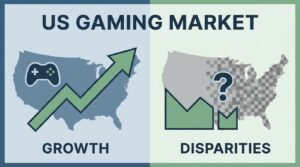
The US gaming market experienced continued growth in February, with revenues reaching $4.6 billion, a 5% increase year-over-year, according to the latest report from the American Gaming Association (AGA). However, the data reveals a widening gap between top-performing states and others, raising concerns about market sustainability and regulatory implications.
Strategic Insights
This month’s report highlights key trends and shifts within the gaming industry, underscoring the importance of understanding regional dynamics.
- Revenue Disparities: States like New Jersey and Nevada continue to dominate, while others struggle to keep pace, indicating potential regulatory and market positioning challenges.
- Regulatory Scrutiny: The disparity in revenue generation may prompt regulators to reassess licensing and operational frameworks across states.
- Market Opportunities: Emerging markets in states such as Virginia and Maryland show potential for future growth, attracting new operators and investments.
- Strategic Risks: Operators in underperforming states may face increased pressure to innovate or diversify offerings to remain competitive.
Revenue Trends by State
According to the AGA, New Jersey reported a staggering 15% increase in gaming revenue, totaling $1.3 billion for the month. Meanwhile, Nevada’s revenue grew by 4%, reaching $1.1 billion. In contrast, states like Mississippi and West Virginia saw declines, with revenues dropping by 3% and 2% respectively. This uneven growth raises questions about the long-term viability of gaming markets in these regions.
Regulatory Implications
The disparities in revenue generation could lead to increased scrutiny from regulators. States with lower revenues may face pressure to revise their gaming laws or expand gaming options to enhance competitiveness. For instance, states like Massachusetts, which reported modest growth, may consider introducing new gaming licenses or expanding online gaming options to attract more players.
Market Positioning and Competition
As the gaming landscape evolves, operators are increasingly focusing on market positioning. Companies such as DraftKings and FanDuel are investing heavily in marketing and technology to capture market share in states where online gaming is gaining traction. The competition is expected to intensify, particularly in states where legislation is favorable for online and mobile gaming.
Forward-Looking Insights
The current trends in the US gaming market suggest a bifurcation that could have significant implications for stakeholders. Operators in high-revenue states may capitalize on their positions, while those in struggling markets will need to adapt quickly to changing consumer preferences and regulatory landscapes.
In a best-case scenario, states may implement policies that foster a more equitable gaming environment, allowing for growth across the board. Conversely, if disparities continue to widen, it could lead to regulatory challenges and potential market consolidation as weaker operators exit the industry.
As the gaming market continues to evolve, stakeholders must remain vigilant to shifts in consumer behavior and regulatory frameworks. The need for strategic innovation and adaptability will be crucial for sustaining growth in this competitive landscape.
For more insights on the US gaming market, visit the American Gaming Association.



