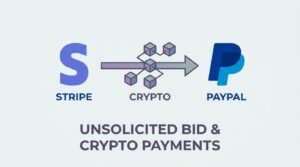
Stripe, together with private-equity firm Advent International, has made an unsolicited joint offer to acquire PayPal, a move that would consolidate two of the most significant crypto-adjacent operations in the payments industry under a single roof. The potential deal would merge Stripe’s Bridge stablecoin infrastructure with PayPal’s PYUSD token and its consumer-facing crypto-trading business. If completed, the combination would create an entity with unmatched reach across both traditional payment rails and digital asset settlement layers. The story was first reported by The Defiant.
What a Stripe-PayPal Merger Means for the Payments Landscape
Before diving into the strategic implications, it’s worth framing the scale of what’s being proposed. Stripe, valued at roughly $91 billion after its 2023 internal funding round, has been aggressively building out stablecoin capabilities since acquiring Bridge, a stablecoin-focused payments platform. PayPal, meanwhile, launched its own dollar-pegged stablecoin PYUSD in 2023 and has steadily expanded crypto buying and selling features for its 430-million-plus user base. Folding these two ecosystems together wouldn’t just be a payments merger. It would be a crypto infrastructure consolidation with few historical parallels.
- Stripe’s Bridge acquisition gave it programmable stablecoin settlement infrastructure; combining that with PYUSD would create a vertically integrated stablecoin stack spanning issuance, settlement, and merchant acceptance.
- Consumer crypto exposure: PayPal’s retail crypto-trading platform serves millions of users. Stripe has historically focused on the merchant and developer side, making the overlap minimal and the synergy potential substantial.
- A combined entity would hold significant leverage in regulatory conversations around stablecoin frameworks currently advancing in the U.S. Congress.
- Advent International’s involvement signals that private equity sees a value extraction opportunity in PayPal’s current market position, which has lagged its fintech peers in recent years.
- The unsolicited nature of the bid suggests PayPal’s board may not have been seeking a sale, raising questions about governance dynamics and shareholder pressure ahead.
Bridge Meets PYUSD: The Stablecoin Angle
Stripe’s acquisition of Bridge earlier this year was widely interpreted as a bet that stablecoins would become core infrastructure for cross-border payments. Bridge enables businesses to move, store, and accept stablecoins through APIs that plug directly into existing financial workflows. That’s the plumbing. PayPal’s PYUSD, issued in partnership with Paxos, operates on a different layer entirely: it’s a consumer-facing stablecoin designed for everyday transactions and transfers within PayPal’s global payments ecosystem.
Combining the two creates something neither company could easily build alone. Stripe gets a branded stablecoin with existing circulation and consumer trust. PayPal gets programmable settlement infrastructure that could dramatically reduce the cost and latency of cross-border merchant payouts. And both gain a stronger hand in lobbying efforts around the GENIUS Act and other stablecoin legislation moving through Congress (a distinction regulators have been slow to enforce in practice).
Still, PYUSD’s market capitalization has remained modest compared to dominant stablecoins like USDT and USDC. Whether Stripe would maintain, rebrand, or phase out PYUSD is an open question the bid itself doesn’t answer.
Why Private Equity Is at the Table
Advent International’s role in this bid deserves scrutiny. The firm manages over $90 billion in assets and has deep experience in financial services deals. Its presence alongside Stripe suggests a structured approach: Stripe likely brings the strategic vision and technology integration thesis, while Advent provides capital firepower and deal execution expertise.
PayPal’s stock has underperformed relative to the broader fintech sector over the past two years, trading well below its 2021 highs. That gap between current valuation and perceived intrinsic value is exactly the kind of asymmetry private equity firms target. But an unsolicited bid adds complexity. PayPal’s board will need to weigh fiduciary obligations against strategic independence, and activist shareholders could push the outcome in either direction.
Competitive and Regulatory Ripple Effects
A merged Stripe-PayPal would process a combined volume that dwarfs most competitors outside of Visa and Mastercard. Antitrust review seems inevitable, particularly given the overlap in online checkout and merchant services. European regulators, already cautious about concentration in digital payments, would likely scrutinize the deal under the Digital Markets Act framework.
On the crypto side, the implications cut differently. U.S. regulators have been moving toward clearer stablecoin rules, and a company controlling both issuance infrastructure and a licensed stablecoin could accelerate or complicate those efforts depending on how much market share the combined entity commands. The OCC and SEC would both have jurisdiction over different pieces of the resulting business.
How Industry Players Should Read This Signal
For executives in payments, fintech, and digital assets, this bid carries a message that extends beyond the two companies involved. The convergence of traditional payment processing and crypto-native infrastructure is no longer theoretical. It is being priced into M&A strategy at the highest levels.
Reframing this through a strategic lens: organizations that have treated stablecoin integration as a future initiative may find themselves behind a combined entity that controls the full value chain from token issuance to merchant settlement. The window for building independent stablecoin capabilities is narrowing. Companies anchored in legacy payment architectures face a choice between accelerating their own crypto infrastructure investments or risking displacement by platforms that already span both worlds.
What makes this moment distinct is the speed at which the strategic calculus has shifted. Twelve months ago, Stripe had no stablecoin business. PayPal’s PYUSD was a cautious experiment. Now both assets sit at the center of a potential mega-merger. That velocity should inform how boards and strategy teams allocate attention and capital in the quarters ahead.
Frequently Asked Questions
Has PayPal accepted Stripe’s acquisition offer?
No. The bid is unsolicited, meaning PayPal’s board has not publicly endorsed or agreed to the proposal. The company’s response and any potential counter-offers remain to be seen.
What is Bridge, and why does it matter in this deal?
Bridge is a stablecoin infrastructure platform Stripe acquired to enable businesses to send, receive, and settle payments using stablecoins via API. It represents Stripe’s core bet on stablecoins as future payment rails, and pairing it with PayPal’s PYUSD could create a full-stack stablecoin payments operation.
Would this deal face regulatory challenges?
Almost certainly. The combined processing volume and overlapping merchant services would trigger antitrust review in the U.S. and likely in the EU. Crypto-specific regulatory scrutiny from the OCC and SEC adds another layer of complexity that could extend any approval timeline significantly.



