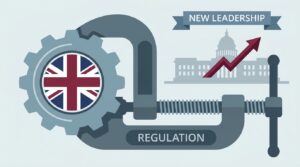
Britain’s industrial and business sectors are confronting mounting anxiety over the prospect that incoming government leadership could tighten regulatory and fiscal frameworks in ways that compress margins and reshape competitive dynamics. The concern, voiced across trade bodies and boardrooms alike, centres on whether policy shifts will prioritise revenue generation and political objectives at the expense of sector growth. And while no single policy announcement has triggered the alarm, the cumulative signals from Westminster have been enough to put industry leaders on notice.
Why UK Business Leaders Are Watching Westminster Closely
The unease isn’t abstract. It stems from a convergence of policy directions that, taken together, suggest a government willing to lean harder on industry to fund public spending commitments and deliver on electoral promises. Before unpacking the broader implications, here are the strategic takeaways that matter most for executives and stakeholders:
- Fiscal pressure is building: Businesses anticipate higher employer contributions, potential windfall levies, and tighter compliance obligations that could erode operating margins across multiple sectors.
- Regulatory scope is expanding: From employment law reforms to environmental mandates, the breadth of proposed regulation signals a more interventionist posture than industry had prepared for.
- Small and mid-cap firms face disproportionate exposure, lacking the lobbying infrastructure and compliance teams that larger corporates deploy to absorb regulatory shifts.
- Investment decisions are already being deferred in some capital-intensive industries, with boards citing policy uncertainty as a material risk factor in forward planning.
- Trade bodies are mobilising earlier than usual in the parliamentary cycle, a sign that the perceived threat is not hypothetical but operational.
The Policy Landscape Shifting Beneath Industry’s Feet
What makes this moment distinct from routine government transitions is the speed and breadth of proposed changes. Employment rights reform, energy transition mandates, and adjustments to business taxation are moving through policy channels simultaneously. That convergence creates a compounding effect (a distinction many in Whitehall seem reluctant to acknowledge). For sectors already navigating post-Brexit trade friction and lingering supply chain disruption, the timing is particularly unwelcome.
The UK government’s official policy pipeline suggests that several of these measures could reach legislative stages within the current parliamentary session. Whether all of them survive scrutiny intact remains an open question, but the direction of travel is clear enough to alter corporate planning assumptions.
Manufacturing, hospitality, and professional services have been among the most vocal. Each faces a different configuration of risk, yet the underlying complaint is consistent: too much change, too fast, with too little consultation.
What History Tells Us About Regulatory Squeezes
This is not the first time UK industry has felt the grip tighten. The post-2008 period saw a wave of financial regulation that reshaped banking and insurance. The difference now is that the squeeze appears broader, touching sectors that previously operated with relatively light oversight. Retail, logistics, and even creative industries are flagging concerns about compliance costs and administrative burden.
Still, not every regulatory tightening produces the outcomes industry fears. Some businesses adapt, finding competitive advantage in early compliance or using the transition to modernise outdated processes. The question is whether the current government provides enough runway for that adaptation to happen without destroying value in the interim.
How Businesses Can Reframe Uncertainty as Strategic Advantage
Drawing on principles of cognitive reframing, a concept rooted in neuro-linguistic programming, business leaders can shift their internal narrative around regulatory change. Rather than anchoring on threat perception, executives who consciously reframe policy shifts as environmental signals gain earlier clarity on where to allocate resources. This isn’t optimism for its own sake. It is a deliberate cognitive strategy that separates reactive organisations from adaptive ones.
NLP-informed leadership communication also matters here. When senior leaders articulate regulatory risk using language that emphasises agency and preparedness rather than victimhood, the organisational response tends to be faster and more coherent. Teams mirror the framing they receive. A CEO who describes new compliance requirements as “operational upgrades we’re choosing to lead on” generates a fundamentally different internal response than one who frames them as “burdens imposed on us.”
Anchoring bias presents another challenge. Boards that anchor their strategic outlook to pre-election assumptions risk mispricing the new environment entirely. Scenario planning that explicitly models a range of regulatory outcomes, including worst-case fiscal scenarios, provides a more resilient foundation for capital allocation and hiring decisions. The organisations that will navigate this period best are arguably those that treat uncertainty itself as a data point rather than a paralysing condition.
Frequently Asked Questions
Which UK sectors face the greatest regulatory risk?
Manufacturing, hospitality, financial services, and energy-intensive industries are most exposed, though the breadth of proposed reforms means few sectors are entirely insulated.
Are businesses already changing investment plans?
Yes. Multiple trade associations have reported that members are deferring or restructuring capital expenditure pending greater policy clarity. The effect is most pronounced among mid-market firms with limited capacity to absorb sudden cost increases.
How can companies prepare for potential regulatory tightening?
Early engagement with trade bodies, scenario-based financial planning, and proactive compliance audits are the most commonly recommended steps. Waiting for final legislation before acting is, in practice, a strategy that tends to cost more than it saves.
What Comes Next
The coming months will test whether government rhetoric translates into the kind of legislative action that fundamentally alters the operating environment, or whether political pragmatism softens the edges. Industry lobbying is intensifying, and some early signs suggest that certain proposals may be phased or diluted in response to economic impact assessments. But the broader trajectory points toward a state that expects more from business, in tax revenue, in employment standards, and in environmental accountability, without necessarily offering more in return.



