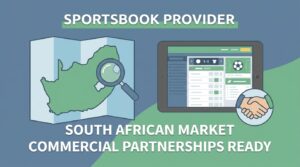
A sportsbook and platform provider has announced its intention to enter the South African betting market, confirming it is now prepared to begin commercial discussions with prospective partners in the country. The move signals growing international interest in South Africa’s regulated gambling landscape, which has attracted a wave of technology suppliers seeking footholds on the continent. While the company has not disclosed specific partnership targets or a launch timeline, the announcement positions it among a widening field of operators and suppliers eyeing one of Africa’s most structured betting jurisdictions.
What This Market Entry Signal Means for the Industry
South Africa’s gambling sector operates under a well-established regulatory framework, making it an attractive destination for international sportsbook providers looking to expand beyond saturated European and North American markets. The provider’s decision to publicly signal its readiness for commercial talks carries several implications worth unpacking.
- The announcement suggests the provider has completed preliminary regulatory and technical assessments required before entering the South African market, a process that can take months of groundwork.
- By seeking local partners, the company appears to be pursuing a B2B model rather than applying for a direct operator licence (a distinction that shapes both risk exposure and speed to market).
- South Africa’s provincial licensing structure means any commercial deal will likely require navigating multiple regulatory bodies, not just one national authority.
- Increased supplier competition in the region could drive innovation in product localisation, pricing, and compliance tooling for South African operators.
- The timing aligns with broader continental trends: several African markets are formalising their regulatory regimes, and early movers stand to capture long-term strategic advantage.
South Africa’s Betting Landscape: Why Suppliers Are Circling
South Africa’s gambling industry generated over R35 billion in gross gambling revenue in the 2022/23 financial year, according to the National Gambling Board. Sports betting, in particular, has grown rapidly, driven by mobile penetration and a passionate sports culture anchored in football, rugby, and cricket. Yet the market remains fragmented across nine provincial gambling boards, each with its own licensing requirements and compliance expectations.
That fragmentation is precisely what makes a B2B partnership model attractive. Rather than navigating the licensing maze independently, international suppliers can plug into existing licensed operators who already hold the necessary provincial authorisations. The approach reduces regulatory friction and accelerates time to revenue. Still, it demands that the incoming supplier’s platform can adapt to local payment methods, responsible gambling requirements, and data protection standards under South Africa’s POPIA legislation.
Not every international provider has managed this transition smoothly.
How Strategic Framing Shapes Market Entry Decisions
Beyond the commercial mechanics, the psychology behind market entry announcements like this one deserves scrutiny. In Neuro-linguistic programming terms, the way a company frames its intentions shapes stakeholder perception and, arguably, the quality of partnerships it attracts. By publicly stating readiness for “commercial discussions,” the provider is deploying what NLP practitioners call a “future pacing” strategy: projecting a confident, forward-looking narrative that invites prospective partners to envision a shared outcome.
This framing technique works on multiple levels. For potential local partners, it signals commitment without overcommitting to specifics, leaving room for negotiation. For competitors, it establishes territorial intent. And for regulators, it communicates a willingness to engage through proper channels rather than attempting to operate in grey areas. The language of readiness, rather than urgency, also suggests the provider is positioning itself as a long-term player rather than a short-term opportunist. In practice, companies that anchor their market entry communications in collaborative language tend to attract more established local partners, those with stronger licences and deeper market knowledge. The contrast with providers that lead with aggressive growth targets or revenue projections is notable: the latter often trigger regulatory scrutiny before they’ve even signed a deal.
What remains less clear is whether this measured approach will translate into actual signed agreements within a competitive timeline, or whether the provider risks being outpaced by rivals already further along in their South African negotiations.
Competitive Dynamics and What Comes Next
The South African sportsbook and gambling regulatory environment has become increasingly competitive for international suppliers. Several established platform providers already serve licensed South African operators, and the barriers to differentiation are rising. Localisation is no longer optional; it is table stakes. Operators want platforms that handle South African Rand transactions natively, integrate with local mobile money solutions, and comply with the Advertising Standards Authority’s gambling advertising codes.
| Factor | Consideration for Market Entry |
|---|---|
| Licensing Structure | Nine provincial boards; each requires separate compliance alignment |
| Payment Integration | Must support ZAR, local banking rails, and increasingly mobile wallets |
| Responsible Gambling | Mandatory self-exclusion tools and deposit limits under provincial regulations |
| Data Protection | Full POPIA compliance required for handling player data |
| Advertising | Strict codes governed by the ASA; non-compliance risks licence jeopardy |
The provider’s next steps will likely involve identifying licensed operators with the appetite and infrastructure to integrate a new sportsbook platform. Whether those discussions yield a partnership in 2025 or stretch into 2026 depends on factors the announcement itself doesn’t address: pricing models, exclusivity terms, and the willingness of local operators to switch from incumbent suppliers.
Frequently Asked Questions
Why is South Africa attractive to international sportsbook providers?
The country offers a regulated, sizeable market with strong mobile adoption and a deeply engaged sports audience. Its legal framework, while complex due to provincial licensing, provides a level of certainty that many other African jurisdictions still lack.
What does “beginning commercial discussions” typically mean in this context?
It signals that the provider has moved past internal feasibility assessments and is actively seeking local partners, usually licensed operators, to deploy its technology in the market. No deal has been signed yet, but the groundwork is done.
How long does market entry usually take in South Africa?
Timelines vary considerably. A provider partnering with an already-licensed operator can potentially go live within six to twelve months, depending on platform integration complexity and regulatory approvals. Going it alone takes significantly longer.



