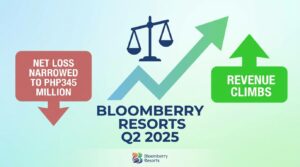
Bloomberry Resorts Corporation, the operator behind the Solaire Resort & Casino complex in the Philippines, cut its second quarter 2025 net loss to PHP345 million (approximately $6 million), signalling a meaningful recovery trajectory compared with earlier periods. The improvement was driven by stronger gaming revenues and tighter cost discipline across its Manila operations. While the company remains in the red, the narrowing loss margin suggests that Bloomberry’s strategic investments in capacity expansion and premium player acquisition are beginning to yield measurable returns.
What Bloomberry’s Q2 Numbers Reveal About Its Recovery Path
The quarterly results carry several implications for investors, competitors, and regulators watching the Philippine integrated resort sector closely. Here are the critical takeaways:
- Net loss compression: A net loss of PHP345 million marks a substantial improvement, indicating that revenue growth is outpacing the cost base even as the company invests in its new Solaire North property.
- Gaming revenue momentum: VIP and mass-market gaming segments both contributed to top-line gains, with mass gaming arguably showing the more durable growth pattern.
- Operational expenses remained controlled despite inflationary pressures across labour and energy costs in Metro Manila.
- Solaire North timeline: The phased opening of the company’s second integrated resort in Quezon City continues to shape capital allocation decisions and near-term profitability.
- Bloomberry’s results reflect broader recovery trends across Southeast Asian gaming markets, where Chinese tourist volumes and regional premium play have not yet returned to 2019 peaks.
Revenue Growth and the Mass Gaming Shift
Bloomberry’s top-line improvement in Q2 rested on two pillars. VIP gaming, long the backbone of Philippine casino economics, showed signs of stabilisation after several quarters of post-pandemic softness. But the more telling story sits in the mass-market segment, where foot traffic at Solaire Resort & Casino in Parañaque has been climbing steadily.
Mass gaming tables and electronic gaming machines generated higher hold percentages during the quarter. That shift matters because mass-market revenue carries better margins than VIP play, which typically involves junket commissions and higher credit risk. Philippine regulators, through PAGCOR, have also been encouraging operators to diversify their revenue mix away from junket-dependent VIP segments (a distinction that gained urgency after the crackdown on offshore gaming operators in 2023).
Still, the VIP segment cannot be dismissed. High-roller volumes from mainland China and other North Asian markets remain below historical norms, and whether that gap closes depends on factors largely outside Bloomberry’s control: visa policies, Beijing’s stance on capital outflows, and regional competition from destinations like Singapore and Macau.
Solaire North: The Variable That Could Reshape the Balance Sheet
Much of Bloomberry’s capital expenditure continues to flow toward Solaire North, the company’s second integrated resort under development in Vertis North, Quezon City. The project represents a significant bet on the northern Metro Manila catchment area, targeting a demographic that currently lacks a premium gaming and entertainment destination nearby.
Construction and pre-opening costs associated with Solaire North are a key reason the company remains in net loss territory. Once operational, the property is expected to roughly double Bloomberry’s gaming capacity in the Philippines. Whether that capacity translates into proportional revenue growth depends on execution, timing, and the competitive response from rivals like Okada Manila and City of Dreams Manila.
How Philippine Gaming Stacks Up Regionally
| Market | Q2 2025 Trend | Key Driver |
|---|---|---|
| Philippines (Bloomberry) | Narrowing losses, revenue growth | Mass gaming expansion, Solaire North investment |
| Macau | Strong GGR recovery | Chinese tourist return, premium mass segment |
| Singapore | Stable, high-margin | Duopoly structure, tourism rebound |
| Cambodia | Mixed signals | Regulatory overhaul, online gaming crackdown |
The Philippines occupies an interesting middle ground. It lacks Macau’s scale and Singapore’s regulatory clarity, yet it offers growth optionality that more mature markets simply cannot match.
Reading Between the Financial Lines
Investors parsing Bloomberry’s Q2 results should resist the temptation to fixate solely on the net loss figure. The trajectory matters more than the snapshot. Revenue is climbing. Margins on mass gaming are expanding. And the capital deployed toward Solaire North, while dragging current-period earnings, represents a calculated wager on future cash flow generation.
One metric worth watching in subsequent quarters: EBITDA margin. If Bloomberry can sustain or improve its EBITDA performance while absorbing pre-opening costs, it would suggest the core Solaire operation is generating enough cash to fund growth organically. That would reduce reliance on external financing at a time when interest rates across Asian credit markets remain elevated.
And yet, a question lingers beneath the surface of these numbers. Can Bloomberry convert its capacity expansion into market share gains fast enough to reach profitability before competitive pressures from Entertainment City rivals intensify?
Frequently Asked Questions
What caused Bloomberry’s net loss in Q2 2025?
The net loss of PHP345 million primarily reflects ongoing capital expenditure and pre-opening costs related to the Solaire North development in Quezon City, even as the company’s existing Solaire Resort operations posted revenue gains.
Is Bloomberry Resorts publicly traded?
Yes. Bloomberry Resorts Corporation is listed on the Philippine Stock Exchange under the ticker BLOOM.
When will Solaire North open?
The company has indicated a phased opening approach, though specific dates remain subject to construction milestones and regulatory approvals. No firm public timeline has been confirmed for full operations.
How does Bloomberry compare to other Philippine casino operators?
Bloomberry operates in Manila’s Entertainment City alongside competitors including Okada Manila, City of Dreams Manila, and Westside City Resorts. Its Solaire brand is widely regarded as a market leader in the premium segment, though each operator targets slightly different player demographics and geographic catchments.