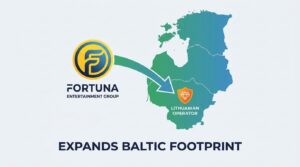
Fortuna Entertainment Group (FEG) has moved to strengthen its presence across the Baltic region by acquiring a Lithuanian gambling operator, folding the business into its growing multi-market network. The deal, which adds Lithuania to FEG’s portfolio of regulated European markets, signals the group’s continued appetite for geographic expansion in jurisdictions where online and retail gambling frameworks are maturing. While specific financial terms of the transaction have not been disclosed, the strategic rationale points toward consolidation in a region where operator density remains relatively high and regulatory barriers favour established, licensed groups.
What the Lithuanian Deal Means for FEG’s Strategy
Before unpacking the operational details, it’s worth framing the broader business implications of this acquisition. FEG already operates across several Central and Eastern European markets, and Lithuania represents a logical adjacency. Here are the key strategic takeaways:
- FEG gains a licensed foothold in Lithuania’s regulated gambling market, bypassing the lengthy process of securing a new licence from scratch
- The acquisition extends FEG’s Baltic corridor, potentially creating operational synergies with neighbouring markets like Latvia and Estonia
- Lithuania’s gambling regulatory framework, which has tightened considerably since 2016, favours incumbents with established compliance infrastructure
- Adding another jurisdiction diversifies FEG’s revenue base and reduces concentration risk in its legacy Czech and Slovak markets
- The deal fits a wider pattern of mid-market European gambling consolidation, where scale increasingly determines margin sustainability
Lithuania’s Gambling Landscape: A Market Worth Entering
Lithuania’s gambling sector operates under the supervision of the Gaming Control Authority, which has progressively raised the bar for operator compliance over the past several years. Advertising restrictions, responsible gambling mandates, and anti-money laundering requirements have all been tightened. That regulatory pressure has, arguably, made the market less attractive for smaller operators lacking the resources to keep pace.
For a group like FEG, though, this environment is precisely the kind of opportunity that makes acquisitions more appealing than organic entry. Buying an existing operator means inheriting not just a licence but an established player database, local banking relationships, and a compliance track record that regulators already recognise.
The Lithuanian market itself is modest by Western European standards but growing. Online gambling revenue has been climbing steadily, driven by mobile penetration and a younger demographic that increasingly prefers digital betting over retail formats. Still, the retail segment retains a meaningful share (a distinction that matters for operators with hybrid distribution models like FEG).
How This Fits the Broader European Consolidation Wave
FEG’s move doesn’t happen in isolation. Across Europe, mid-tier gambling operators have been acquiring or merging at an accelerating pace. The economics are straightforward: technology costs are rising, regulatory compliance is getting more expensive, and customer acquisition in mature markets demands scale.
What makes the Central and Eastern European corridor particularly active is the fragmented nature of many national markets. Unlike the UK or France, where a handful of large operators dominate, countries like Lithuania, Romania, and Croatia still host dozens of smaller licensed operators. That fragmentation creates a target-rich environment for groups with capital and integration capability.
Fortuna Entertainment Group’s expanding European operations now span multiple jurisdictions, and each new market addition compounds the group’s ability to negotiate better supplier terms, share technology platforms, and cross-sell across borders where regulations permit.
But scale alone doesn’t guarantee success. Integration risk remains real, particularly when absorbing operators in markets with distinct cultural preferences and regulatory nuances. Lithuanian bettors, for instance, tend to favour basketball wagering far more heavily than their Czech counterparts. Adapting product mix and marketing to local tastes is where acquisitions either create value or destroy it.
Regulatory and Operational Considerations
Any acquisition in a regulated gambling market requires approval from the relevant national authority. In Lithuania’s case, the Gaming Control Authority will need to vet FEG’s suitability as a new controlling entity. This process typically involves background checks on beneficial owners, financial stability assessments, and a review of the acquiring group’s compliance record in other jurisdictions.
Given FEG’s established track record across regulated European markets, approval is widely expected to proceed without significant obstacles. The company has not indicated any anticipated timeline for regulatory clearance.
| Factor | Implication for FEG |
|---|---|
| Lithuanian licence transfer | Subject to Gaming Control Authority approval; expected to be routine |
| Existing player database | Immediate revenue contribution post-closing |
| Technology integration | Migration to FEG’s platform stack likely over 12–18 months |
| Local staffing | Retention of key local personnel critical for regulatory continuity |
| Market growth trajectory | Online segment expanding; retail stable but not growing materially |
Reading Between the Lines: What Drives Operator Behaviour
Acquisitions like this one reveal something about how gambling executives frame opportunity. The decision to enter Lithuania isn’t purely about that market’s revenue potential in isolation. It reflects a mental model where geographic breadth functions as a hedge, where each new jurisdiction is less a standalone profit centre and more a node in a network that becomes harder to replicate.
This kind of thinking draws on pattern recognition that experienced operators develop over multiple market cycles. When regulatory environments shift, having positions in several jurisdictions means revenue disruption in one market can be absorbed by stability in others. The psychological comfort of diversification, in practice, often matters as much as the financial arithmetic.
And there’s a competitive signalling dimension too. Every market FEG enters is one where a rival now faces an entrenched, well-capitalised competitor. In industries where first-mover advantages erode quickly but incumbent advantages compound, the timing of entry can matter more than the size of the initial investment.
Whether Lithuania becomes a meaningful contributor to FEG’s top line within the next two years or simply serves as a strategic placeholder depends on execution. The acquisition itself is the easier part. What follows, from platform migration to local marketing calibration, will determine whether this deal earns its place in the portfolio or quietly underperforms.
Frequently Asked Questions
Which Lithuanian operator did FEG acquire?
The specific identity of the Lithuanian gambling operator has not been detailed in the announcement. FEG has confirmed only that the deal adds a licensed Lithuanian business to its network.
Does FEG already operate in other Baltic states?
FEG’s primary markets have historically been in Central Europe, particularly the Czech Republic and Slovakia. The Lithuanian acquisition represents a direct push into the Baltic region, though the group has been expanding its geographic reach progressively.
What regulatory approvals are needed?
Lithuania’s Gaming Control Authority must approve the change of ownership. This involves vetting FEG’s financial standing, compliance history, and the suitability of its beneficial owners. The process is standard for licence transfers in regulated European gambling markets.
Why is Lithuania attractive for gambling operators?
Growing online revenues, a regulated framework that favours compliant operators, and relatively lower market entry costs compared to Western European jurisdictions all contribute. The market’s size is modest, but its regulatory stability makes it appealing for groups building multi-market portfolios.



