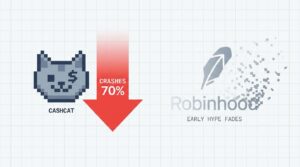
CASHCAT, the flagship meme token on the nascent Robinhood Chain, has shed roughly 70% of its value from a record peak that briefly pushed its market capitalisation above $200 million. Trading near $0.065 on Friday, the token’s collapse unwinds the bulk of a speculative rally fuelled by the arrival of leveraged trading on the chain. The drawdown raises pointed questions about the durability of hype-driven launches on newly minted Layer 1 and Layer 2 networks, and whether retail participants understood the risk profile of what they were buying.
What CASHCAT’s Collapse Signals for Robinhood Chain
Before unpacking the mechanics, it helps to frame what this event actually means for the broader market. The speed of the reversal, and its magnitude, carry implications that stretch beyond a single meme coin.
- A 70% drawdown within days of an all-time high suggests that leveraged positions amplified both the rally and the unwind, creating a feedback loop that retail traders were poorly positioned to exit
- Robinhood Chain is barely two weeks old; the CASHCAT episode may shape early perceptions of the network’s credibility among developers and institutional observers
- Meme token volatility on new chains tends to suppress broader ecosystem adoption, as builders hesitate to deploy serious infrastructure alongside speculative assets
- The brief $200 million market cap milestone, while eye-catching, now looks more like a liquidity mirage than a reflection of genuine demand
- Regulatory scrutiny of branded blockchain ecosystems could intensify if retail losses mount on a chain associated with a publicly traded brokerage
How Leverage Turned a Rally Into a Rout
The introduction of leveraged trading on Robinhood Chain acted as accelerant in both directions. When CASHCAT was climbing, leveraged longs magnified buying pressure and pulled in momentum traders chasing what looked like a breakout. That dynamic is familiar to anyone who watched similar episodes on Solana-based meme coins throughout 2024.
But leverage cuts both ways.
Once selling pressure emerged (arguably triggered by early holders taking profit near the $200 million cap), cascading liquidations of leveraged positions accelerated the decline. The result: a token that gave back most of its gains in a fraction of the time it took to accumulate them. What remains less clear is whether the chain’s infrastructure handled the liquidation cascade smoothly, or whether slippage and failed transactions compounded losses for smaller participants.
Robinhood’s Brand Exposure
There is an uncomfortable dimension to this story that separates it from a typical meme coin blowup. Robinhood’s blockchain ecosystem carries the weight of a brand synonymous with democratised retail trading. When a flagship token on that chain loses 70% of its value in days, the reputational spillover is harder to contain than it would be for an anonymous DeFi protocol.
Robinhood has not publicly commented on CASHCAT’s price action (a distinction worth noting, given the company’s history of navigating meme-asset controversies dating back to the GameStop saga). Still, the optics are difficult. A branded chain whose most visible token implodes within its first fortnight of operation does not inspire confidence among the institutional partners and enterprise developers that any new chain needs to attract.
Meme Coins on Branded Chains: A Recurring Pattern?
This is not the first time a high-profile chain launch has been overshadowed by speculative token activity. Base, Coinbase’s Layer 2, experienced a similar dynamic in 2023 when early meme tokens surged and crashed before the network’s utility layer matured. The pattern suggests a structural tension: new chains need transaction volume to demonstrate viability, but the easiest volume to attract early on comes from speculation that can damage the ecosystem’s reputation.
| Metric | CASHCAT Peak | CASHCAT Current |
|---|---|---|
| Price | ~$0.217 | ~$0.065 |
| Market Cap | Above $200M | Significantly reduced |
| Decline from ATH | — | ~70% |
| Chain Age | Approximately two weeks at time of crash | |
What Traders and Observers Should Watch Next
Several threads will determine whether this episode becomes a footnote or a defining narrative for Robinhood Chain. On-chain data over the coming weeks will reveal whether active addresses and transaction counts stabilise or continue to bleed alongside the token price. A sustained decline in network activity would suggest that CASHCAT was not just the chain’s flagship token but effectively its only source of traction.
Equally important is how Robinhood itself responds. Even indirect acknowledgment of the risks associated with leveraged meme token trading on its chain could set a precedent for how branded blockchain ecosystems manage the tension between permissionless innovation and brand stewardship.
Frequently Asked Questions
What is CASHCAT?
CASHCAT is a meme token that emerged as the most prominent asset on Robinhood Chain, a blockchain network launched by the trading platform. It briefly reached a market capitalisation above $200 million before losing approximately 70% of its value.
Why did CASHCAT crash so quickly?
The introduction of leveraged trading amplified both the rally and the subsequent sell-off. When early holders began taking profits, cascading liquidations of leveraged positions drove the price down sharply. Meme tokens on new chains are particularly vulnerable to this kind of volatility because liquidity depth tends to be shallow.
Does this affect Robinhood as a company?
Robinhood has not commented directly on CASHCAT’s price action. However, the episode carries reputational risk for a brand closely associated with retail investor access, particularly given the company’s prior experience navigating controversies around speculative assets.
Is Robinhood Chain still operational?
Yes. The chain remains active and is approximately two weeks old. Whether it can attract meaningful developer activity and diversify beyond meme token speculation will likely determine its longer-term relevance in an increasingly crowded blockchain landscape.



