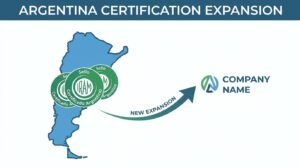
Just days after securing certification for the Argentine market, the company has signaled its intent to deepen its footprint in Latin America. The certification, a regulatory prerequisite for operating in Argentina’s tightly controlled market, positions the firm to tap into one of the region’s most promising growth corridors. While details on the timeline for market entry remain sparse, the move aligns with a broader strategic pivot toward emerging economies that several competitors have also begun eyeing.
What the Argentina Certification Actually Unlocks
Obtaining regulatory certification in Argentina is no small feat. The country’s compliance framework demands rigorous documentation, local partnerships, and adherence to national standards that differ materially from those in North America or Europe. For companies seeking to operate across Latin American borders, Argentina often functions as a litmus test: succeed here, and the path into neighboring markets like Chile, Uruguay, and Brazil becomes considerably smoother.
The certification itself doesn’t guarantee commercial success, of course. But it removes the single largest barrier to entry. And in a market where demand has outpaced the supply of certified operators, timing matters.
Strategic Signals Behind the Certification Timing
Before unpacking the broader implications, it’s worth isolating what this development tells us about the company’s priorities and positioning.
- Latin America is no longer peripheral to the growth strategy — the Argentina certification suggests a deliberate, resourced commitment rather than an exploratory gesture
- Regulatory readiness in Argentina could accelerate approvals in adjacent jurisdictions that recognize reciprocal compliance frameworks
- Competitive positioning sharpens — fewer than a dozen international firms hold equivalent certification in Argentina, giving early movers a structural advantage
- The certification arrives at a moment when Argentina’s government has been actively courting foreign operators under its broader economic liberalization agenda
- Supply chain and distribution partnerships, likely negotiated during the certification process, may already be in place
Argentina’s Regulatory Landscape: A Closer Look
Argentina’s regulatory environment has undergone significant shifts over the past 18 months. Under President Milei’s administration, deregulation efforts have touched sectors from energy to financial services, creating openings that previously didn’t exist. Yet the certification process itself remains demanding (a distinction regulators have been slow to simplify), requiring companies to demonstrate not just technical compliance but also local economic contribution commitments.
What makes this particular certification noteworthy is the speed. Companies that navigate Argentina’s national certification requirements typically spend 12 to 18 months in the approval pipeline. Completing the process in a shorter window suggests either exceptional preparation or strong institutional relationships on the ground. Possibly both.
How This Fits the Broader Latin American Expansion Playbook
The company’s move into Argentina doesn’t exist in isolation. Across the industry, Latin America has become the most contested expansion theater outside of Southeast Asia. Brazil’s market alone grew an estimated 14% year-over-year in 2024, and Colombia’s regulatory modernization has attracted a wave of new entrants.
Still, Argentina occupies a unique position. Its consumer base is sophisticated, price-sensitive, and historically underserved by international operators. The country’s economic volatility, particularly around currency fluctuations, has kept some competitors at arm’s length. That hesitation, arguably, is precisely what creates the opening.
For the company now holding certification, the calculus appears straightforward: enter while the competitive field remains thin, build brand equity before the inevitable wave of followers arrives, and use Argentina as an operational hub for the Southern Cone.
Reframing Risk: What Executives Should Consider
Expansion into any emerging market carries inherent uncertainty. Argentina’s macroeconomic conditions, including inflation that exceeded 200% annually in recent periods, present real operational challenges. Currency hedging, local pricing strategy, and workforce costs all demand careful calibration.
But risk is not the same as recklessness. Companies that entered Brazil’s market during its own period of economic turbulence in the mid-2010s often outperformed those that waited for stability. The pattern suggests that early commitment, paired with adaptive operational models, tends to reward patience.
Whether the company can replicate that pattern in Argentina depends on execution. The certification is a starting gate, not a finish line.
Frequently Asked Questions
What does certification in Argentina mean for a company?
It means the company has met all regulatory, legal, and operational requirements set by Argentine authorities to conduct business in the country. Without it, commercial operations would be unauthorised.
Why is Argentina considered a strategic market in Latin America?
Argentina combines a large, educated consumer base with relatively low penetration by international operators. Its geographic position also makes it a natural gateway to Chile, Uruguay, and Paraguay.
How long does the Argentine certification process typically take?
Most companies report timelines between 12 and 18 months, though this varies depending on the sector and the applicant’s preparedness. Some have completed it faster with strong local advisory support.
| Factor | Argentina | Brazil | Colombia |
|---|---|---|---|
| Certification timeline | 12–18 months | 6–12 months | 8–14 months |
| Market growth (2024 est.) | 9% | 14% | 11% |
| International operator density | Low | High | Medium |
| Currency risk level | High — peso volatility remains a persistent factor for foreign operators budgeting in hard currency | Moderate | Moderate |