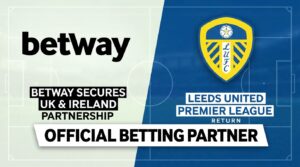
Betway has agreed a multi-year deal to become the official UK and Ireland betting partner of Leeds United, stepping in as the Yorkshire club prepares for its return to the Premier League. The partnership arrives shortly after Betway’s previous arrangement with West Ham United came to a natural end following the Hammers’ relegation from the top flight. For Leeds, the timing aligns with a period of renewed commercial ambition after securing promotion back to English football’s most lucrative division.
What the Betway-Leeds Deal Signals for Both Parties
Betting sponsorships in English football remain a contested but commercially significant revenue stream. This deal sits at the intersection of two shifts: Betway’s need to maintain Premier League visibility, and Leeds United’s push to rebuild its commercial portfolio after years outside the top tier. Here’s what matters most.
- Premier League exposure retained: Betway moves quickly from West Ham to Leeds, ensuring uninterrupted brand presence in the world’s most-watched football league.
- Leeds capitalises on promotion: A return to the Premier League dramatically increases the club’s sponsorship value, and securing a betting partner early signals confidence in the commercial pipeline.
- The deal covers the UK and Ireland market specifically, suggesting Betway may pursue separate regional arrangements for other territories.
- Regulatory backdrop: With the UK government’s gambling white paper still shaping the future of betting sponsorships in sport, both parties are operating in a landscape where the rules could shift mid-contract.
Why Betway Pivoted from West Ham
West Ham’s relegation from the Premier League at the end of the 2024–25 season created a gap in Betway’s sponsorship strategy. The operator had been a visible presence at the London Stadium for several seasons, but Championship football offers a fraction of the global broadcast reach that makes Premier League partnerships so valuable to gambling brands. Rather than follow West Ham into the second tier, Betway chose to redirect its investment.
Leeds United, freshly promoted, presented an obvious alternative. The club carries a large domestic and international fanbase, and Elland Road has historically attracted strong matchday atmospheres that translate well on broadcast. Still, the speed of the transition raises a question worth sitting with: how much of this deal was opportunistic, and how much was already in motion before West Ham’s fate was sealed?
The Commercial Landscape for Promoted Clubs
Promotion to the Premier League doesn’t just change what happens on the pitch. It rewrites the economics of a football club almost overnight. Broadcasting revenue alone can increase tenfold compared to the Championship, and that uplift cascades into sponsorship valuations, hospitality income, and merchandise sales.
For Leeds, the Betway deal is one piece of a broader commercial reconstruction. Clubs returning to the top flight typically renegotiate or replace several partnership agreements in the months following promotion, seeking terms that reflect their enhanced market position. Betting partnerships, in particular, tend to command significant fees in English football (a distinction regulators have been slow to reconcile with public health concerns).
And while the financial logic is straightforward, the reputational calculus is more layered. Fan sentiment around gambling sponsorships has shifted noticeably in recent years, with supporter groups across multiple clubs voicing opposition to shirt-front betting logos. Leeds’ arrangement with Betway reportedly covers a broader partnership scope rather than primary shirt sponsorship, though full details of the deal’s commercial terms have not been disclosed.
Regulatory Pressures Aren’t Going Away
The UK’s evolving regulatory framework for gambling advertising continues to cast a long shadow over deals like this one. The government’s gambling white paper, published in 2023, proposed a range of reforms including potential restrictions on betting sponsorships in sport. Implementation has been gradual, and some measures remain under review.
Betway’s UK-facing betting operations sit squarely within the scope of these reforms. The Gambling Commission has signalled an appetite for tighter controls on how gambling brands interact with sports audiences, particularly younger demographics. Whether the current regulatory trajectory will ultimately prohibit or merely constrain betting partnerships in football remains an open question, but operators and clubs alike are structuring deals with that uncertainty baked in.
Short-term contracts. Territory-specific agreements. Flexible activation rights. These are the hallmarks of a market hedging against regulatory intervention.
How Football Betting Sponsorships Have Evolved
A decade ago, betting logos on Premier League shirts were unremarkable. Today, they sit at the centre of a public debate about gambling harm, advertising ethics, and the financial dependency of professional sport on wagering revenue. The table below illustrates how the sponsorship landscape has shifted among top-flight English clubs.
| Season | Premier League Clubs with Betting Shirt Sponsors | Regulatory Environment |
|---|---|---|
| 2016–17 | 10 out of 20 | Minimal restrictions |
| 2019–20 | 10 out of 20 | Voluntary whistle-to-whistle TV ad ban introduced |
| 2023–24 | 8 out of 20 | Gambling white paper under implementation |
| 2025–26 | To be confirmed | Further restrictions anticipated but not yet legislated |
What This Means for Leeds United’s Brand Strategy
Leeds United’s return to the Premier League is arguably the club’s most commercially significant moment since its last promotion in 2020. The intervening years brought financial restructuring, ownership changes, and a Championship campaign that tested the patience of one of England’s most passionate fanbases.
Securing Betway as a betting partner early in the pre-season window gives Leeds a foundation on which to layer additional commercial agreements. The club’s global profile, particularly in markets like Australia, Scandinavia, and Southeast Asia, makes it an attractive platform for brands seeking international reach through English football. Yet the real test will be whether Leeds can sustain top-flight status long enough for these partnerships to deliver compounding value.
Promotion is a door. Staying up is the room behind it.
Frequently Asked Questions
What is the duration of the Betway-Leeds United partnership?
The deal has been described as multi-year, though the exact length and financial terms have not been publicly confirmed by either party.
Does Betway replace Leeds’ existing shirt sponsor?
Not necessarily. The agreement covers Betway’s role as the official UK and Ireland betting partner, which may encompass perimeter advertising, digital activations, and hospitality rights rather than the primary shirt logo. Full activation details are expected closer to the season opener.
Why did Betway leave West Ham?
West Ham’s relegation from the Premier League significantly reduced the broadcast exposure and commercial value of the partnership. Betway opted to maintain its Premier League presence by partnering with a promoted club instead.
Could gambling sponsorships in football be banned?
The UK government has considered restrictions as part of its gambling reform agenda, but an outright ban has not been legislated. The Premier League itself has discussed voluntary phase-outs of front-of-shirt betting logos, though no binding commitment has been finalised.



