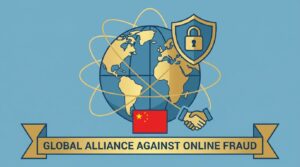
China’s Ministry of Public Security has unveiled plans to establish a global intergovernmental alliance aimed squarely at dismantling transnational telecommunications and online fraud networks. The initiative, announced in mid-2025, targets what Beijing describes as an escalating cross-border threat that has victimized millions across Asia, Africa, and beyond. With fraud syndicates increasingly operating from lawless border zones and exploiting digital infrastructure gaps between jurisdictions, the proposed alliance would mark one of the most ambitious multilateral law enforcement coordination efforts in recent years.
What Beijing’s Anti-Fraud Alliance Signals for Global Law Enforcement
The announcement arrives at a moment when transnational fraud operations, particularly those rooted in Southeast Asia’s so-called scam compounds, have drawn intense scrutiny from governments and human rights organizations alike. Before diving into the strategic implications, here are the core takeaways:
- Scope of ambition: China is positioning itself as the architect of a new intergovernmental framework, not merely a participant in existing Interpol or UN-led mechanisms
- The alliance would focus on intelligence sharing, joint operations, and harmonizing legal standards across participating nations
- Geopolitical subtext: By leading the initiative, Beijing gains diplomatic leverage with countries in Southeast Asia and Africa where fraud networks have entrenched themselves
- Domestic pressure is a driver. Chinese citizens account for a significant share of victims, and public frustration has mounted
- Operational gaps persist. Whether participating nations will grant the kind of jurisdictional access China envisions remains an open question
The Scale of the Problem
Transnational telecom fraud is not a niche crime category. It has industrialized. Operations in Myanmar, Cambodia, Laos, and the Philippines have generated billions of dollars in illicit revenue annually, according to estimates from the United Nations Office on Drugs and Crime. Victims span continents, lured through fake investment platforms, romance scams, and fraudulent job postings that sometimes result in human trafficking.
China alone reported dismantling over 391,000 fraud-related cases in 2023, a figure the Ministry of Public Security has cited as evidence of the threat’s magnitude. Yet arrests within Chinese borders address only one node in a sprawling network. The syndicates recruit globally, launder money through cryptocurrency and shell companies, and relocate operations when pressure mounts in any single jurisdiction.
That pattern of displacement is precisely what makes unilateral enforcement insufficient.
How the Alliance Would Operate
Details remain preliminary, but the proposed structure appears to rest on three pillars: real-time intelligence exchange between national police agencies, coordinated cross-border raids, and a shared legal framework for extradition and asset recovery. China has already conducted bilateral operations with counterparts in Myanmar, the Philippines, and several African nations. The alliance would, at least on paper, formalize and expand those ad hoc arrangements into something more durable.
One notable element is the emphasis on technology transfer. Beijing has signaled willingness to share its domestic anti-fraud tools, including AI-driven call interception systems and blockchain tracing capabilities, with partner nations. For countries lacking the technical infrastructure to combat sophisticated fraud rings, this could prove a compelling incentive to join. But it also raises questions about data sovereignty and surveillance that not every potential partner will find easy to set aside.
Existing Frameworks and Where They Fall Short
| Mechanism | Lead Organization | Primary Limitation |
|---|---|---|
| Interpol I-GRIP | Interpol | Advisory role; no enforcement authority |
| UNODC Regional Programme | United Nations | Capacity-building focus, slow operational tempo |
| Bilateral MOUs | Various governments | Fragmented coverage; inconsistent legal standards |
| China’s proposed alliance | China MPS | Untested; participation commitments unclear as of mid-2025 |
Why Framing Matters: The Psychology of Cross-Border Fraud Response
Beyond the operational mechanics, there is a cognitive dimension worth examining. Fraud at this scale persists partly because of how governments and populations frame the problem. When telecom scams are categorized as individual consumer losses rather than organized transnational crime, the institutional response tends to be reactive and underfunded. China’s decision to frame this as a matter requiring an intergovernmental alliance (a distinction regulators in many Western nations have been slow to adopt) represents a deliberate reframing.
From a behavioral standpoint, the language used to describe these crimes shapes resource allocation. Calling something a “scam” invokes personal carelessness; calling it “transnational organized fraud” invokes state responsibility. That linguistic shift matters enormously when lobbying for budget lines, legislative action, and international cooperation. Governments that anchor their messaging around systemic threat rather than individual victimhood tend to mobilize faster and allocate more aggressively.
There is also the question of trust architecture. For an alliance like this to function, participating nations must believe that shared intelligence will not be weaponized for unrelated political purposes. Building that trust requires transparency mechanisms, something China’s security apparatus has historically been reluctant to provide. Still, the sheer economic damage caused by fraud networks may create enough mutual incentive to override those concerns, at least partially.
Even the sequencing of announcements carries weight. By publicizing the alliance concept before securing formal commitments, Beijing creates social proof pressure: nations that decline to participate risk appearing soft on a crime their own citizens suffer from.
What Stands in the Way
Ambition and execution are different animals. Several obstacles could blunt the alliance’s effectiveness before it begins operating. Sovereignty concerns top the list. Joint raids require host-nation consent, and governments in Southeast Asia have historically been reluctant to allow foreign police forces to operate on their soil, even when the targets are foreign-run fraud compounds.
Corruption compounds the challenge. In some jurisdictions where scam operations thrive, local officials are complicit or at minimum tolerant. An intergovernmental alliance cannot easily override domestic political economies that profit from the status quo.
And then there is the question of which countries actually join. Western nations may hesitate to participate in a China-led security framework regardless of the stated mission, particularly given broader geopolitical tensions. Whether the alliance becomes genuinely global or remains a coalition of willing partners in Asia and Africa will likely determine its long-term credibility.
Frequently Asked Questions
What types of fraud does the proposed alliance target?
The primary focus is transnational telecommunications fraud and online scams, including investment fraud, romance scams, and schemes involving human trafficking for forced criminal labor.
Has any country formally joined the alliance?
As of mid-2025, no formal membership commitments have been publicly confirmed. China has conducted bilateral anti-fraud operations with several nations, but the multilateral alliance structure remains in its proposal phase.
How does this differ from Interpol’s existing work?
Interpol facilitates coordination but lacks direct enforcement power. China’s proposed alliance envisions joint operational capacity, shared technology platforms, and harmonized legal frameworks for extradition, which goes considerably further than current multilateral arrangements.



