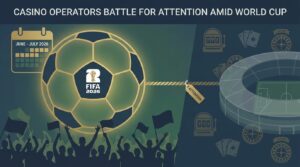
While the expanded 2026 FIFA World Cup commanded global viewership across 48 competing nations, casino operators found themselves locked in a parallel contest for consumer engagement. The tournament’s sprawling schedule, hosted across North America, created both a challenge and an opportunity for gaming companies seeking to capture the attention of sports-mad audiences. What unfolded was a strategic scramble that revealed how deeply intertwined sports entertainment and the casino industry have become.
Why the World Cup Forced Casino Operators to Rethink Their Playbook
Major sporting events have long shaped the rhythms of casino floor traffic and online platform engagement. But the 2026 World Cup, with its unprecedented expansion to 48 teams and matches spread across 16 cities in the United States, Canada, and Mexico, presented a different kind of pressure. The sheer volume of games meant weeks of sustained competition for discretionary entertainment spending. For casino brands, the question wasn’t whether to engage with the tournament. It was how aggressively to lean in.
Here’s what stood out from the industry’s response:
- Sportsbook integration became a retention tool — operators with embedded sports betting platforms used World Cup wagering as a gateway to keep customers active across casino verticals, from slots to table games.
- Promotional spending spiked during group-stage matches, when casual fans were most likely to place exploratory bets
- Land-based casinos in host cities reported measurable upticks in foot traffic, particularly properties near stadiums and fan zones in cities like Houston, Dallas, and Miami.
- Operators without sportsbook capabilities faced a sharper attention deficit, struggling to compete with platforms offering live in-play betting alongside traditional casino products.
- Cross-sell conversion rates during the tournament window became a key performance metric, with several operators reportedly tracking how many sports bettors migrated to casino offerings within 48 hours of their first wager.
The Attention Economy: Sports Events as a Double-Edged Sword
Casino operators have historically viewed major sporting events with a mix of enthusiasm and caution. The influx of sports bettors is welcome. Yet the diversion of entertainment hours away from casino floors (a distinction regulators have been slow to quantify in economic impact studies) can suppress traditional gaming revenue during peak tournament periods. The 2026 World Cup amplified this tension because of its duration and geographic footprint.
Properties in Las Vegas, for instance, leaned heavily into watch-party experiences and themed promotions tied to specific national teams. The strategy was straightforward: if you can’t beat the football, absorb it. Casinos that treated the World Cup as ambient entertainment rather than a competitor fared better in early anecdotal reports from operators.
Still, not every property had the infrastructure or regulatory clearance to offer sports wagering alongside their core casino products. That gap mattered.
How Digital Platforms Seized the Moment
Online casino and sportsbook operators arguably had the structural advantage during the tournament. Platforms capable of offering live betting on World Cup matches alongside casino games could keep users within a single ecosystem for hours. The seamless toggle between a halftime slot session and a second-half accumulator bet represents exactly the kind of engagement loop that digital operators have spent years engineering.
Mobile-first operators reported that session durations increased during match days. And while specific figures remain proprietary, industry analysts noted that the pattern mirrored what was observed during the 2022 Qatar World Cup, only at a larger scale given the North American time zones aligning with peak usage hours.
One dynamic worth watching: whether the customer acquisition costs during the World Cup window prove sustainable. Operators poured significant marketing budgets into tournament-adjacent campaigns, and the return on that investment depends entirely on how many of those new users remain active once the final whistle blows.
Reframing Competition Through Strategic Perception
From a neuro-linguistic programming perspective, the casino industry’s response to the World Cup reveals something instructive about how businesses frame competitive threats. Operators that anchored their internal narrative around scarcity (“we’re losing attention to football”) tended toward defensive, discount-heavy promotions. Those that reframed the tournament as an expansion of the entertainment addressable market pursued more creative integration strategies.
This reframing matters beyond marketing. It shapes operational decisions, staffing models, and technology investment priorities. When leadership teams perceive a major sporting event as a threat, resource allocation contracts. When they perceive it as a channel, investment flows toward integration and cross-platform capability. The language executives use internally to describe these moments directly influences organizational behavior, a pattern well-documented in behavioral strategy research.
Consider the difference between “How do we survive the World Cup?” and “How do we make the World Cup work for us?” Both questions address the same external reality. But the presuppositions embedded in each question produce radically different strategic outputs. Operators that asked the second question were more likely to invest in real-time content, dynamic odds displays on casino floors, and partnerships with sports media brands. Those stuck on the first question defaulted to blanket discounts and hoped for the best.
The anchoring effect also played a role in customer communication. Properties that framed their World Cup promotions around excitement and participation (“Be part of the action”) generated stronger engagement than those framing around compensation (“We’ll match your losses during the tournament”). Positive framing, in practice, outperformed loss-aversion messaging during a period when consumers were already primed for entertainment spending.
What Comes Next for Casino-Sports Convergence?
The 2026 World Cup won’t be the last time casino operators face this kind of attention competition. The 2028 Los Angeles Olympics and the continued expansion of legal sports betting across U.S. states will keep the pressure on. What the World Cup period demonstrated, at least on paper, is that operators with integrated sportsbook and casino platforms hold a meaningful structural edge during major sporting events.
| Operator Type | World Cup Strategy | Reported Outcome |
|---|---|---|
| Integrated sportsbook + casino (digital) | Cross-sell promotions, live in-play betting, session extension tactics | Higher engagement and longer session durations during match windows |
| Land-based casino in host city | Watch parties, themed F&B, national team promotions | Increased foot traffic, particularly on match days |
| Casino-only (no sportsbook) | Discount-driven retention offers | Mixed results; some reported dips in midweek traffic |
| Online casino without sports integration | Limited tournament engagement | Attention loss to competing platforms offering sports betting |
Frequently Asked Questions
Did the 2026 World Cup hurt casino revenues?
The impact varied significantly by operator type. Casinos with integrated sportsbooks generally benefited from increased engagement, while properties without sports betting capabilities faced stiffer competition for consumer attention during the tournament window.
Why does the World Cup matter to casino operators?
Major global sporting events redirect entertainment spending and screen time. For casino operators, this creates both a risk of losing customers temporarily and an opportunity to attract new ones through sports-adjacent promotions and cross-platform offerings.
Which casino operators were best positioned for the tournament?
Digital platforms with combined sportsbook and casino products held the clearest advantage, particularly those optimized for mobile. They could offer live World Cup betting and casino games within a single app, keeping users engaged across both verticals without friction.



