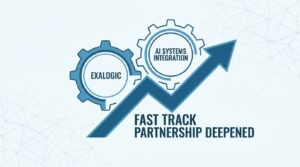
Exalogic Consulting, a technology solutions provider serving the iGaming sector, has expanded its existing partnership with Fast Track to incorporate the latter’s artificial intelligence systems into its service offering. The move signals a broader push by both companies to embed AI-driven capabilities into player engagement and CRM workflows. While the two firms have collaborated previously, this expanded scope marks a deliberate shift toward automation and predictive analytics in how operators manage player lifecycles.
What the Expanded Partnership Actually Covers
Before unpacking the strategic implications, it helps to understand what changed. The partnership between Exalogic and Fast Track already existed, but the new agreement specifically brings Fast Track’s AI-powered tools into the fold. Here are the key dimensions worth watching:
- AI-enhanced CRM integration: Exalogic will now leverage Fast Track’s AI modules to offer operators more granular player segmentation and automated engagement triggers, reducing manual intervention in retention workflows.
- Operators working with Exalogic gain access to predictive modelling tools that were previously outside the partnership’s scope.
- Scalability for mid-tier operators: The integration is positioned to help smaller and mid-sized operators deploy AI capabilities without building proprietary systems from scratch, lowering the barrier to entry considerably.
- Faster time-to-value: By combining Exalogic’s implementation expertise with Fast Track’s ready-built AI infrastructure, deployment timelines for new operator clients could shrink by weeks rather than months.
Why AI in CRM Has Become a Competitive Baseline
The iGaming industry’s relationship with AI has evolved rapidly over the past 18 months. What was once a differentiator (a distinction that mattered more in pitch decks than in practice) has become something closer to table stakes. Operators that lack automated segmentation, real-time behavioural triggers, and churn prediction models increasingly find themselves at a disadvantage against competitors who deploy these tools at scale.
Fast Track has positioned itself as a platform-agnostic CRM and engagement layer, and its AI systems are designed to sit on top of existing operator tech stacks. That flexibility matters. Many operators run fragmented infrastructures, and bolting on AI without disrupting legacy systems is a genuine engineering challenge. Exalogic’s role as an integrator becomes more valuable precisely because of that complexity.
Still, the question lingers: how much of the AI functionality translates into measurable operator outcomes versus serving as a feature checkbox during procurement?
The Business Logic Behind the Deal
For Exalogic’s consulting and integration practice, this expansion is straightforward commercial logic. AI integration projects command higher margins than standard CRM deployments. They also create stickier client relationships, since operators who adopt AI-driven engagement tools tend to require ongoing optimisation and support.
From Fast Track’s perspective, the calculus is equally clear. Every integration partner that deploys its AI systems extends the platform’s reach without requiring Fast Track to scale its own sales and implementation teams proportionally. It is, arguably, the most capital-efficient growth model available to a CRM platform in this sector.
And while neither company has disclosed specific financial terms, partnerships of this nature typically involve revenue-sharing arrangements tied to operator onboarding and usage volume.
How AI-Driven Engagement Reshapes Operator Decision-Making
Beyond the commercial mechanics, there is a behavioural dimension worth examining. When operators adopt AI-powered CRM tools, the nature of their internal decision-making shifts. Marketing teams move from campaign-driven thinking to system-driven thinking. Instead of designing a promotion and targeting a segment, they configure parameters and let the AI determine timing, channel, and offer value.
This transition carries real cognitive implications for operator teams. Drawing from principles of neuro-linguistic programming, the shift from manual to automated engagement mirrors a broader pattern in how professionals anchor their sense of control. Teams accustomed to hands-on campaign management often experience initial resistance, not because the AI performs worse, but because it removes the feedback loop they relied on for professional identity and confidence. Successful adoption, in practice, requires reframing the operator’s internal narrative: from “I design campaigns” to “I optimise systems.”
That reframing is not trivial. Operators that invest in change management alongside technology deployment tend to see faster adoption curves and better retention outcomes. The most effective implementations pair technical onboarding with structured internal communication that helps teams visualise their evolving role. Anchoring new workflows to measurable outcomes (player lifetime value, churn reduction rates, reactivation percentages) gives teams a concrete reference point that replaces the old manual feedback loop. Without this psychological scaffolding, even the best AI tools risk underperformance due to organisational friction rather than technical shortcomings.
Competitive Landscape and What Comes Next
Exalogic and Fast Track’s AI-powered engagement platform are not operating in a vacuum. Competitors across the CRM and engagement space have been layering AI into their offerings with increasing urgency. The table below outlines how this partnership fits within the broader competitive picture:
| Factor | Exalogic + Fast Track | Typical Competitor Approach |
|---|---|---|
| AI Deployment Model | Partner-integrated, platform-agnostic | Often proprietary, requiring full-stack adoption |
| Target Operator Segment | Mid-tier and scaling operators | Primarily enterprise-level clients |
| Implementation Speed | Accelerated via Exalogic’s integration layer | Varies; often 3–6 month cycles |
| Customisation Flexibility | High, due to modular AI components | Moderate, dependent on platform constraints and vendor roadmap alignment |
The partnership’s real test will come in execution. Signing the agreement is one thing. Delivering measurable improvements for operators across diverse regulatory environments and player demographics is another entirely.
Frequently Asked Questions
What does the Exalogic and Fast Track partnership expansion involve?
The expanded partnership integrates Fast Track’s AI systems into Exalogic’s service offering, enabling operators to access predictive analytics, automated player engagement, and advanced segmentation tools through a combined technology and consulting framework.
Which operators stand to benefit most?
Mid-tier and growing operators who lack the resources to build proprietary AI infrastructure are the primary beneficiaries. That said, larger operators seeking faster deployment without vendor lock-in may also find the model attractive.
How does AI change CRM in iGaming?
AI shifts CRM from campaign-based marketing to system-driven engagement. Operators configure parameters; the AI handles timing, channel selection, and personalisation at a scale no manual team can match.