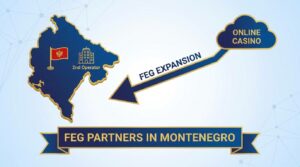
Fortuna Entertainment Group (FEG) has confirmed the launch of online casino services in Montenegro, marking a strategic expansion for the Central and Eastern European betting giant. CEO Dieter John announced the move, which integrates casino offerings into the portfolio of Montenegro’s second-largest gambling operator. The addition signals FEG’s broader ambition to deepen its digital footprint across regulated Balkan markets, where online gaming penetration remains comparatively low but growing fast.
What FEG’s Montenegro Casino Push Means for the Region
This development carries weight beyond a single product launch. Montenegro’s regulated gambling landscape has been evolving steadily, and FEG’s decision to layer online casino onto an already established sportsbook operation reflects a calculated bet on market readiness. Here are the strategic takeaways worth watching:
- Revenue diversification: Online casino products typically generate higher margins than sports betting alone, giving FEG a broader revenue base in a market where it already holds significant share.
- Regulatory positioning: By operating through Montenegro’s second-largest licensed entity, FEG avoids the friction of entering as a new market participant and leverages existing compliance infrastructure.
- The move may pressure competitors in the Montenegrin market to accelerate their own digital casino rollouts or risk losing share to a more complete product offering.
- Cross-market blueprint: If the Montenegro model performs, FEG could replicate the sportsbook-to-casino expansion playbook in other jurisdictions where it holds licences but has yet to introduce casino verticals.
Why Montenegro, and Why Now?
Montenegro’s gambling market is small by Western European standards, but that framing misses the point. What matters is trajectory. The country has been tightening its regulatory framework for online gambling while simultaneously opening space for licensed operators to offer a wider range of digital products. For a group like Fortuna Entertainment Group’s portfolio of regulated brands, that combination is arguably ideal: clear rules, limited competition, and room to grow before the market matures.
Dieter John’s confirmation of the casino addition suggests FEG views Montenegro not as a peripheral territory but as a proving ground. The operator already commands the number-two position in the country. Adding casino to that existing customer base is less about acquiring new users and more about increasing revenue per user, a metric that matters enormously in markets where customer acquisition costs are rising across the board.
Still, questions linger about how quickly Montenegrin players will shift spending toward online casino from land-based alternatives or sports betting. Player behaviour in smaller Balkan markets doesn’t always mirror the patterns seen in, say, the UK or Denmark.
FEG’s Broader Digital Strategy
This isn’t happening in isolation. FEG has been steadily building out its digital capabilities across multiple regulated markets in Central and Eastern Europe, including the Czech Republic, Slovakia, and Romania. The group’s approach has been methodical: secure the licence, establish the sportsbook, build the customer base, then layer on higher-margin products like casino and live dealer games.
Montenegro fits that template neatly. But what distinguishes this particular expansion is timing. The European online gambling sector is consolidating rapidly, with larger operators acquiring or outcompeting smaller regional players. FEG’s ability to move quickly in a market where it already has operational scale could prove decisive (a distinction that matters more than the raw market size might suggest).
Product Mix and Competitive Dynamics
Online casino is where the margin story gets interesting. Across European regulated markets, casino products consistently outperform sports betting in terms of gross gaming revenue per active player. The economics are straightforward: casino games run continuously, carry no event dependency, and offer operators more control over hold percentages. For FEG, bolting this onto an existing Montenegrin operation means incremental revenue without proportional increases in overhead.
Competitors in the market will feel the pressure. And whether they respond with their own product expansions or cede ground remains an open question.
How Regulated Balkan Markets Are Shaping Operator Decisions
The broader context here involves a shift in how operators evaluate Balkan jurisdictions. For years, these markets were treated as secondary priorities by major European groups. That perception has changed. Regulatory clarity in countries like Montenegro, Serbia, and Croatia has improved, making them more attractive for operators willing to invest in compliance and local partnerships.
FEG’s move reflects this recalibration. Rather than chasing scale in saturated Western markets, the group is extracting more value from territories where it already operates. In practice, this means deeper product offerings, localised marketing, and tighter integration between online and retail channels. The Montenegrin casino launch fits squarely within that logic.
Frequently Asked Questions
What does FEG’s online casino launch in Montenegro involve?
FEG is adding online casino products to its existing sportsbook operation in Montenegro, run through the country’s second-largest licensed gambling operator. This expands the digital product range available to existing customers.
Is online gambling legal in Montenegro?
Yes. Montenegro operates a regulated online gambling framework, and FEG’s expansion is conducted through a licensed entity, ensuring compliance with local laws.
Why is this strategically significant for FEG?
Casino products carry higher margins than sports betting. Layering them onto an established customer base allows FEG to grow revenue without the cost of entering a new market from scratch. It also tests a model the group could deploy elsewhere in the region.
Which other markets does FEG operate in?
FEG holds licences and operates across several Central and Eastern European countries, including the Czech Republic, Slovakia, and Romania, among others.