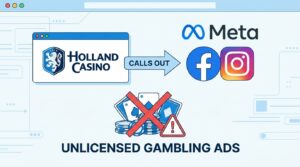
Holland Casino, the Netherlands’ state-owned gambling operator, has publicly criticised Meta for failing to act against a flood of unlicensed gambling advertisements running across Facebook and Instagram. The Dutch gambling regulator, Kansspelautoriteit (KSA), reported more than 4,600 such ads from unregulated operators to Meta over the past month alone. The sheer volume underscores a persistent enforcement gap in how major social platforms handle gambling content in regulated European markets. And it raises pointed questions about where platform responsibility begins and regulatory patience ends.
Why 4,600 Reported Ads in One Month Matters for the Dutch Market
Before unpacking the strategic implications, it helps to frame the scale. The KSA did not simply flag a handful of rogue advertisers. Over 4,600 individual advertisements, all tied to companies lacking a valid Dutch licence, were formally reported to Meta within roughly 30 days. That figure represents a systemic problem, not an isolated lapse.
- Platform accountability under pressure: Meta’s apparent inaction despite thousands of formal reports from a national regulator signals a disconnect between regulatory expectations and platform enforcement mechanisms.
- Licensed operators face competitive distortion: Holland Casino and other licensed Dutch operators invest heavily in compliance. Unlicensed ads undercut that investment by reaching the same audiences without adhering to responsible gambling standards or advertising codes.
- The Dutch market, which only fully opened to online gambling in October 2021, remains in a fragile maturation phase where consumer trust depends on visible enforcement.
- Regulatory escalation is likely: When a regulator publicly quantifies platform failures at this scale, it typically precedes formal enforcement action or legislative proposals targeting intermediaries.
- Meta’s ad review systems, at least on paper, include gambling-specific restrictions. Whether those filters function adequately for non-English markets is arguably the real question here.
Holland Casino’s Position: More Than a Complaint
Holland Casino is not a minor stakeholder in this dispute. As the sole land-based casino operator in the Netherlands and a licensed online provider through Holland Casino’s regulated online platform, the company operates under some of the strictest advertising and responsible gambling requirements in Europe. Every euro it spends on marketing passes through compliance filters that unlicensed competitors simply ignore.
The frustration is tangible. When thousands of illegal ads circulate freely on platforms used by millions of Dutch consumers, the playing field tilts sharply. Licensed operators absorb the cost of compliance while unlicensed ones harvest the demand.
Still, Holland Casino’s public criticism carries a strategic dimension beyond grievance. By naming Meta directly and attaching a specific number to the problem, the operator is building a public record. That record could prove useful if Dutch or EU-level legislators move to impose intermediary liability on platforms hosting unlicensed gambling content.
What Meta’s Silence Reveals About Platform Enforcement
Meta has not, as of this reporting, issued a detailed public response to the KSA’s figures. The company’s advertising policies do include restrictions on gambling content, requiring advertisers to hold appropriate licences and limiting targeting to users in jurisdictions where gambling is legal. In practice, enforcement of those policies appears inconsistent across markets.
This is not the first time a European regulator has flagged the issue. Italian, Belgian, and Spanish authorities have all raised concerns about unlicensed gambling ads appearing on Meta’s platforms. The pattern suggests that Meta’s automated ad review systems struggle with non-English-language content and jurisdiction-specific licensing requirements (a distinction regulators have been slow to force into platform design).
| Metric | Detail |
|---|---|
| Ads reported to Meta | Over 4,600 in one month |
| Reporting authority | Kansspelautoriteit (KSA) |
| Platform | Facebook and Instagram (Meta) |
| Market context | Dutch online gambling market, regulated since October 2021 |
| Meta’s stated policy | Requires valid gambling licences for advertisers; geographic targeting restrictions apply |
The Broader Regulatory Trajectory
Across the EU, the direction of travel is clear. The Digital Services Act (DSA), which entered full application in February 2024, imposes new obligations on very large online platforms regarding illegal content, including advertising. Whether unlicensed gambling ads fall squarely within the DSA’s enforcement scope for intermediary liability remains a matter of interpretation, but the regulatory intent is unmistakable.
Dutch lawmakers have already shown willingness to tighten gambling advertising rules domestically. A near-total ban on untargeted gambling advertising took effect in the Netherlands in mid-2023, restricting when and where licensed operators can promote their services. That unlicensed operators continue to advertise freely on major platforms makes the domestic restrictions feel asymmetric at best.
What happens next likely depends on whether Meta responds with meaningful technical changes or whether the KSA escalates. The regulator has tools available, from public warnings to formal proceedings, and the political appetite for cracking down on gambling-related harms in the Netherlands shows no sign of fading.
How Platform Gaps Shape Consumer Behaviour
Beyond the regulatory and competitive dimensions, there is a consumer protection angle that deserves attention. Unlicensed gambling operators are not bound by the responsible gambling frameworks that Dutch-licensed companies must follow. They are not required to offer self-exclusion tools, deposit limits, or addiction support resources. When these operators reach Dutch consumers through Facebook and Instagram ads, they bypass every safeguard the licensing system was designed to provide.
The psychological impact compounds over time. Repeated exposure to gambling advertisements, particularly from operators with no accountability to Dutch authorities, normalises participation in unregulated environments. For vulnerable individuals, the absence of built-in protections can accelerate harmful gambling patterns. Research consistently links advertising frequency with gambling engagement, and platforms that fail to filter unlicensed content effectively become conduits for unregulated exposure. This dynamic is especially concerning in a market where the regulatory framework is still relatively young and public awareness of the distinction between licensed and unlicensed operators remains limited.
Framing matters here. When consumers see gambling ads on trusted platforms like Instagram, they may reasonably assume the advertiser has been vetted. That assumption, however reasonable, is often wrong.
Frequently Asked Questions
Why is Holland Casino specifically criticising Meta?
Holland Casino operates under strict Dutch licensing requirements and competes directly with unlicensed operators whose ads appear on Meta’s platforms. The company views Meta’s inaction as enabling unfair competition and undermining consumer protection.
Has the KSA taken formal enforcement action against Meta?
Not yet, based on available information. The regulator has reported over 4,600 ads and publicly disclosed the figures, which often precedes more formal steps.
Are gambling ads banned on Facebook and Instagram?
Not entirely. Meta’s policies require gambling advertisers to hold valid licences and comply with geographic targeting rules. The issue is that enforcement of these policies appears inadequate in the Dutch market.
What could change this situation?
EU-level instruments like the Digital Services Act may eventually force platforms to take more proactive measures. Domestically, the KSA could pursue formal proceedings, and Dutch legislators could introduce intermediary liability provisions targeting platforms directly.



