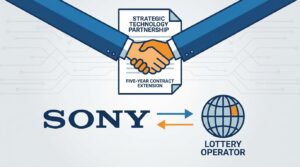
A major lottery operator has locked in a five-year contract extension with Sony, reinforcing a technology partnership that underpins its gaming infrastructure. The deal signals continued confidence in Sony’s enterprise solutions beyond its consumer electronics reputation. While specific financial terms have not been disclosed, the duration of the agreement points to a substantial commitment on both sides.
What the Contract Extension Signals for Both Parties
Renewals of this length rarely happen without significant operational dependency. Before unpacking the broader implications, here are the core strategic takeaways from this deal:
- A five-year extension suggests deep integration between the lottery company’s operations and Sony’s technology stack, making a vendor switch costly and disruptive
- Sony’s enterprise and professional solutions division continues to secure long-term contracts outside its more visible consumer business
- The lottery sector’s increasing reliance on sophisticated hardware and software ecosystems gives technology partners like Sony recurring, high-margin revenue streams
- For the lottery operator, locking in a multi-year agreement likely provides pricing stability and guaranteed service-level commitments during a period of broader industry digitisation
Why Five Years Matters in Lottery Technology
In an industry where regulatory cycles, licensing windows, and technology refresh timelines intersect, a five-year contract is not arbitrary. It typically aligns with either a regulatory licence period or a planned infrastructure upgrade cycle. Lottery operators tend to synchronise their vendor agreements with these milestones to avoid mid-cycle disruptions that could affect compliance or service continuity.
Sony’s role in the lottery space, while less publicised than its PlayStation or entertainment divisions, draws on its professional systems expertise. The company’s professional technology and solutions portfolio spans display systems, imaging, and data management tools that find applications well beyond broadcast and media.
And while the consumer brand dominates headlines, it is the enterprise side that often delivers steadier margins. That dynamic makes contracts like this one quietly significant for Sony’s overall business health.
The Broader Landscape: Lottery Operators and Tech Dependencies
Lottery companies globally are navigating a transition. Traditional retail-based ticket sales coexist with digital channels, mobile platforms, and increasingly complex draw management systems. Each layer demands reliable technology infrastructure.
This creates a competitive environment among technology suppliers. Companies like IGT, Scientific Games, and Intralot compete for lottery contracts that bundle hardware, software, and managed services. Sony occupies a different niche (arguably a more specialised one), providing components or systems that integrate into these larger ecosystems rather than competing head-to-head with full-service lottery vendors.
That positioning carries advantages. By not competing directly for the primary lottery management contract, Sony avoids the political and regulatory scrutiny that primary vendors face. Still, it captures recurring revenue from operators who need its specific capabilities.
How Strategic Partnerships Shape Operator Resilience
Long-term vendor relationships in regulated industries serve a purpose beyond cost savings. They build institutional knowledge on both sides. When a technology partner understands an operator’s infrastructure intimately, troubleshooting accelerates, upgrades become smoother, and compliance documentation stays current without the friction of onboarding a new supplier.
Consider the alternative. Switching vendors mid-cycle in a regulated lottery environment means re-certification, staff retraining, potential downtime, and regulatory notifications. The cost of transition often exceeds any savings a new supplier might offer on paper.
| Factor | Short-Term Contract (1–2 Years) | Long-Term Contract (5+ Years) |
|---|---|---|
| Pricing flexibility | Higher renegotiation frequency | Locked-in rates with escalation clauses |
| Vendor switching cost | Lower but still disruptive | Substantially higher due to deep integration |
| Innovation incentive | Vendor may under-invest | Vendor more likely to co-develop solutions |
| Regulatory alignment | May not match licence periods | Typically synchronised with regulatory cycles |
What Remains Less Visible
Neither party has disclosed the precise scope of services covered under this extension. Whether it encompasses hardware supply, maintenance, software licensing, or a bundled service agreement remains unconfirmed. The lottery company has not indicated whether competitive bids were solicited before the renewal, a detail that regulators in some jurisdictions require operators to disclose.
These gaps matter. In an industry built on public trust and regulatory transparency, the terms of major vendor contracts carry weight beyond their commercial value.
Frequently Asked Questions
What does Sony provide to lottery operators?
Sony’s professional solutions division offers display technology, imaging systems, and data infrastructure components that lottery operators integrate into their broader gaming and draw management ecosystems. The company does not typically serve as a primary lottery management vendor.
Why do lottery companies sign long-term technology contracts?
Regulatory alignment, infrastructure stability, and the high cost of switching vendors mid-cycle all drive operators toward multi-year agreements. A five-year term reduces procurement overhead and ensures continuity during critical operational periods.
Does this affect Sony’s consumer business?
Not directly. Sony’s enterprise contracts operate through a separate division. But they contribute to revenue diversification, which in practice strengthens the company’s overall financial position and reduces dependence on cyclical consumer electronics sales.



