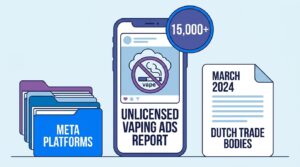
Two prominent Dutch trade associations, KVA and VNLOK, have flagged more than 15,000 advertisements for unlicensed vaping brands on Instagram and Facebook during March alone. The findings put fresh pressure on Meta to enforce advertising restrictions around nicotine and tobacco-adjacent products across its European platforms. For an industry already navigating tightening regulation, the scale of non-compliant promotion raises pointed questions about platform accountability and the effectiveness of existing ad-review systems.
What the Dutch Findings Reveal About Platform Enforcement
Before unpacking the broader implications, here is what the data tells us at a glance:
- KVA and VNLOK identified over 15,000 adverts promoting unlicensed vaping brands across Meta’s two largest social platforms in a single month
- The sheer volume suggests systemic gaps in Meta’s automated ad-screening processes, not isolated failures
- Licensed operators in the Netherlands face strict advertising constraints that unlicensed competitors appear to bypass with relative ease on social media
- The findings could accelerate regulatory action at both national and EU level, particularly as the revised Tobacco Products Directive remains under discussion
- Trade bodies are increasingly positioning themselves as enforcement watchdogs, filling a gap that platforms and regulators have struggled to close
A Market Distorted by Uneven Enforcement
The Dutch vaping market operates under a licensing regime designed to ensure product safety, age verification, and responsible marketing. KVA, representing specialist vape retailers, and VNLOK, which covers a broader swath of the nicotine products trade, have long argued that unlicensed operators undercut compliant businesses. But 15,000 ads in 30 days is not a marginal problem. That figure points to a parallel marketplace operating in plain sight on platforms used daily by millions of Dutch consumers, including minors.
Licensed brands invest in compliance infrastructure. They submit to ingredient notifications, adhere to packaging rules, and restrict their marketing channels. Unlicensed competitors, by contrast, face none of those costs (a distinction regulators have been slow to enforce in the digital space). The result: a market caught between two frameworks, one governed by law and the other by algorithm.
Meta’s Ad Review Systems Under Scrutiny
Meta prohibits ads for tobacco products and, in most jurisdictions, restricts promotion of e-cigarettes and vaping devices. Yet the Dutch data suggests these policies are not translating into effective gatekeeping. Whether the issue lies in keyword evasion, visual obfuscation, or simply insufficient moderation capacity, the outcome is the same. Thousands of ads for products that should not appear on Instagram’s advertising ecosystem are reaching consumers unchecked.
Still, platform enforcement is not binary. Meta processes billions of ad submissions annually, and some degree of leakage is inevitable. What makes the Dutch case notable is the concentration: 15,000 ads in one country, in one month, in one product category. That density is hard to dismiss as noise.
Why This Matters Beyond the Netherlands
The European Union has been moving toward stricter regulation of novel nicotine products for several years. The revised Tobacco Products Directive, still being shaped, is expected to bring e-cigarettes and potentially nicotine pouches under tighter marketing controls. National-level findings like those from KVA and VNLOK feed directly into that legislative process, providing regulators with evidence that voluntary platform compliance is insufficient.
Germany, France, and Belgium have all seen similar complaints from licensed operators about unlicensed social media advertising. The Dutch report adds quantitative weight to what has, until now, been largely anecdotal concern. And while Meta is the most visible target, other platforms face comparable challenges. TikTok, in particular, has drawn scrutiny for influencer-driven vape promotion that skirts formal advertising definitions.
How Trade Bodies Are Reframing Their Role
KVA and VNLOK did not simply complain. They counted. That methodological shift, from grievance to data collection, signals a maturation in how trade associations engage with digital platform governance. By producing a specific, verifiable number, they created a reference point that regulators and journalists can cite, and that Meta must respond to.
This approach arguably gives trade bodies more leverage than formal regulatory complaints, which can take months or years to process. A public-facing dataset creates immediate reputational pressure. Whether Meta adjusts its enforcement in the Netherlands as a result remains an open question, but the political cost of inaction has risen.
Frequently Asked Questions
What are KVA and VNLOK?
KVA is the Dutch trade association for specialist vape retailers, while VNLOK represents a wider segment of the nicotine products industry in the Netherlands. Both advocate for regulatory compliance and fair market conditions.
Are vaping ads banned on Facebook and Instagram?
Meta’s advertising policies restrict or prohibit promotion of tobacco and e-cigarette products in most markets, including the EU. In practice, enforcement has proven inconsistent, as the Dutch findings demonstrate.
What happens to unlicensed brands caught advertising?
Consequences vary. Meta may remove individual ads or suspend advertiser accounts. At the national level, regulators can pursue fines or injunctions, though cross-border enforcement against digital-only operators remains difficult. The gap between policy and action is where most of the damage occurs.
Could this lead to new EU regulation?
It could strengthen the case for stricter rules under the revised Tobacco Products Directive, particularly around digital advertising obligations for platforms hosting nicotine product promotions.



