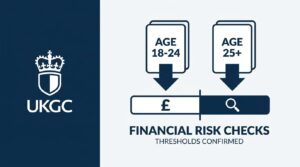
The Gambling Commission has formally approved a framework for financial risk checks on gamblers in Great Britain, with distinct spending thresholds tied to age brackets. The move, which has been debated across the industry for months, sets out when operators must conduct affordability assessments on their customers. It marks one of the most significant regulatory interventions in UK gambling in recent years, and not every stakeholder views it the same way.
What the New Financial Risk Check Framework Means for Operators and Players
Before diving into specifics, it’s worth understanding the commercial and regulatory weight behind this decision. Financial risk checks sit at the intersection of player protection and business viability, and the thresholds chosen will determine how deeply operators must scrutinise customer spending. Here are the core takeaways:
- The British regulator has confirmed differentiated thresholds based on customer age, meaning younger gamblers will trigger checks at lower spending levels than older ones
- Operators face new compliance obligations that will require investment in data infrastructure and verification systems
- The framework is designed to reduce gambling-related harm without imposing blanket restrictions that could push customers toward unlicensed platforms
- Industry bodies have expressed mixed reactions, with some welcoming the proportionality of the approach and others questioning whether the thresholds are set correctly
- Enforcement timelines and penalty structures for non-compliance remain areas operators will need to monitor closely
How the Age-Based Thresholds Work
Under the confirmed rules, the Gambling Commission will require licensed operators to conduct financial vulnerability assessments when a customer’s net losses reach certain levels within a defined period. The thresholds are lower for younger adults. A 19-year-old losing £125 in a month triggers a different response than a 45-year-old reaching the same figure.
That distinction matters. Younger gamblers are statistically more susceptible to developing problematic gambling behaviours, and their average disposable income tends to be lower. The regulator’s approach reflects this reality rather than applying a one-size-fits-all cap.
Still, the mechanics of conducting these checks raise practical questions. Operators will need to integrate with credit reference agencies or open banking providers to verify a customer’s financial standing without creating excessive friction. The balance between protection and user experience is, arguably, the hardest part of implementation.
A Regulatory Shift Years in the Making
This framework didn’t emerge in a vacuum. The UK government’s gambling white paper, published in 2023, laid the groundwork for affordability checks as part of a broader overhaul of gambling regulation. The Gambling Commission’s evolving approach to financial risk assessments has been shaped by consultations with operators, charities, and the public over the past two years.
What changed is the specificity. Earlier proposals floated flat thresholds, which drew criticism from both sides. Harm-reduction advocates argued they were too high. Operators warned they were too low and would drive recreational customers to offshore, unregulated sites. The age-differentiated model represents a compromise (a distinction regulators have been slow to enforce in other jurisdictions).
And while the UK is not the first market to introduce affordability checks, it is among the first to formally codify age as a variable in determining when those checks are triggered.
Operator Readiness and the Compliance Challenge
For large operators like Flutter Entertainment, Entain, and bet365, the technical infrastructure to conduct real-time financial checks already exists in some form. These companies have invested heavily in responsible gambling tools over the past several years. Smaller operators face a steeper climb.
The cost of integrating third-party affordability verification services, training compliance teams, and adjusting customer journeys will fall disproportionately on mid-tier and smaller licensees. Whether the Commission offers transitional relief or phased implementation timelines could determine how many operators struggle to meet the new standard.
Will the Thresholds Actually Reduce Harm?
This is the question that lingers beneath the policy architecture. Financial risk checks are a blunt instrument applied to a nuanced problem. A customer earning £80,000 a year and one earning £20,000 may hit the same threshold, but the risk profile is entirely different.
The age-based differentiation addresses part of this gap. But income verification, debt levels, and household financial obligations introduce layers of complexity that a threshold alone cannot capture. In practice, the checks may function more as a screening mechanism than a diagnostic one.
Frequently Asked Questions
What triggers a financial risk check under the new rules?
When a customer’s net gambling losses exceed the threshold set for their age group within a specified timeframe, the operator must initiate an affordability assessment. The exact figures vary by age bracket, with lower thresholds for younger adults.
Do these checks apply to all forms of gambling?
The framework applies to online gambling operators licensed by the Gambling Commission. Retail betting shops operate under separate, though related, regulatory expectations.
How will operators verify a customer’s financial situation?
Most will rely on open banking integrations or credit reference data. The Commission has indicated that checks should be frictionless where possible, though the definition of “frictionless” remains contested across the industry.
Can customers refuse a financial risk check?
They can, but refusal may result in account restrictions or suspension, depending on the operator’s compliance procedures and the Commission’s enforcement guidance.
The Broader Strategic Landscape
Beyond compliance mechanics, this decision reshapes how the UK gambling market positions itself globally. Jurisdictions across Europe and in parts of Asia-Pacific are watching Britain’s experiment with affordability checks closely. If the model demonstrably reduces harm without collapsing operator revenues, it becomes a template. If it drives significant customer migration to unlicensed platforms, it becomes a cautionary tale.
For operators, the strategic calculus now extends beyond simply meeting the threshold requirements. Customer communication becomes critical. How a brand explains why it’s asking for financial information, and how seamlessly it integrates that process into the betting experience, will separate operators who retain trust from those who lose customers to frustration.
The Gambling Commission has signalled that these thresholds may be adjusted over time based on observed outcomes. That built-in flexibility is reassuring on paper. Yet it also means operators are building compliance systems against a moving target, which makes long-term planning harder than the headline policy suggests.