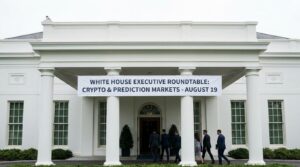
The White House is expected to convene cryptocurrency and prediction market executives on 19 August, placing the expanding intersection of digital assets and event-based trading squarely on the federal policy agenda. The meeting signals a notable shift in how the current administration engages with an industry that, until recently, operated under persistent regulatory ambiguity. Prediction markets, which allow participants to wager on the outcomes of real-world events ranging from elections to economic indicators, have surged in both volume and public visibility over the past year. And the timing of this gathering, weeks before a pivotal election cycle intensifies, is difficult to ignore.
What This White House Meeting Signals for Digital Asset Policy
Before parsing the strategic implications, it helps to frame what this event represents in practice. A sitting administration inviting crypto-native firms and prediction market operators to the same table suggests that policymakers are no longer treating these sectors as fringe curiosities. The conversation has shifted from whether these platforms belong in regulated markets to how they should be governed.
- The meeting marks one of the first direct White House engagements with prediction market operators alongside broader crypto industry leaders, elevating the sector’s policy standing.
- Prediction markets have gained traction as alternative data sources for gauging public sentiment on elections, monetary policy, and geopolitical risk (a distinction regulators have been slow to enforce).
- Regulatory clarity remains the central ask from industry participants, particularly around the CFTC’s jurisdiction over event contracts and the SEC’s posture on token-based prediction platforms.
- The gathering could accelerate bipartisan momentum behind stablecoin legislation and market structure bills currently moving through Congress.
- For prediction market platforms like Kalshi and Polymarket, White House-level engagement lends institutional credibility that could unlock partnerships with traditional finance.
Why Prediction Markets Are Drawing Federal Attention Now
Prediction markets are not new. They have existed in academic and niche commercial settings for decades. What changed is scale. Polymarket’s blockchain-based event contracts drew hundreds of millions of dollars in trading volume during the 2024 U.S. presidential race, generating price signals that major media outlets began citing alongside traditional polling data. Kalshi, a CFTC-regulated exchange, fought a high-profile legal battle to list election event contracts and won a federal court ruling in its favour last year.
That court decision cracked open a door the CFTC had kept shut for years.
Still, the regulatory landscape remains fragmented. The CFTC oversees certain event contracts but has historically resisted approving those tied to elections, citing concerns about market manipulation and public interest. The SEC, meanwhile, has taken enforcement actions against unregistered prediction platforms operating with crypto tokens. Between these two agencies, the jurisdictional lines blur in ways that leave operators guessing. Whether this White House session produces any concrete guidance or merely serves as a listening exercise is, arguably, the question that matters most to the firms attending.
Stakeholders at the Table
The guest list reportedly includes executives from major cryptocurrency exchanges, stablecoin issuers, and at least two prediction market platforms. While the White House has not released a full roster, industry sources suggest representation from firms that have been actively lobbying for clearer federal frameworks.
| Sector | Key Interests | Regulatory Pressure Points |
|---|---|---|
| Crypto Exchanges | Market structure legislation, custody rules | SEC enforcement actions, registration requirements |
| Stablecoin Issuers | Federal licensing framework, reserve transparency | Competing House and Senate bills |
| Prediction Markets | Event contract approvals, election market legality | CFTC jurisdiction, state gambling laws |
| DeFi Protocols | Regulatory safe harbours, token classification | SEC’s broad application of securities law to decentralised platforms |
What remains less clear is whether consumer advocacy groups or sceptical regulators will have any presence. Previous White House crypto roundtables have leaned heavily toward industry voices, drawing criticism from lawmakers who argue that such forums risk becoming lobbying venues dressed in policy language.
The Broader Political Calculus
This meeting does not exist in a vacuum. Both major political parties have recalibrated their postures toward crypto ahead of November. Republican candidates have openly courted the industry’s donor base, while certain Democratic figures have softened previously hostile rhetoric. Prediction markets sit at an especially sensitive intersection: they generate real-time odds on elections, which some legislators view as uncomfortably close to gambling on democracy itself.
Yet the data utility is hard to dismiss. Institutional investors, hedge funds, and even some government analysts have begun treating prediction market prices as leading indicators. When Polymarket’s election contracts moved sharply in one direction last summer, it preceded polling shifts by several days. That kind of informational edge attracts serious capital, and serious capital attracts serious regulatory interest.
Even so, the optics of a White House meeting with prediction market firms weeks before a national election carry risk. Critics will ask whether the administration is endorsing these platforms implicitly. Supporters will counter that engagement is not endorsement.
How This Shapes Industry Strategy Going Forward
For crypto firms, the strategic read is straightforward: federal engagement at this level suggests the window for shaping regulation is open, but unlikely to stay that way indefinitely. Companies that position themselves as compliance-forward and willing to accept reasonable oversight stand to benefit from whatever framework emerges. Those that resist may find themselves on the wrong side of enforcement actions that have already accelerated in 2024.
Prediction market operators face a more nuanced path. Their product sits at the convergence of financial derivatives, information markets, and, in the eyes of some state regulators, gambling. Navigating that requires not just federal clarity but state-level engagement that most platforms have barely begun.
One thing is worth watching closely: whether any concrete policy commitments emerge from the 19 August session, or whether it functions primarily as a signal of intent. In Washington, sometimes the meeting itself is the message.
Frequently Asked Questions
What are prediction markets?
Prediction markets are platforms where participants buy and sell contracts tied to the outcome of future events, such as elections, economic data releases, or geopolitical developments. Prices on these contracts reflect the collective probability assessment of participants, functioning as a real-time forecasting tool.
Are prediction markets legal in the United States?
It depends on the platform and the type of contract. CFTC-regulated exchanges like Kalshi operate legally under federal oversight, though specific contract types, particularly those tied to elections, have faced regulatory challenges. Offshore and crypto-based platforms occupy a greyer area, with some facing SEC enforcement actions for operating without proper registration.
Why is the White House engaging with crypto and prediction market firms now?
Several factors converge: growing trading volumes on prediction platforms, bipartisan legislative momentum around stablecoin and market structure bills, and the political reality that crypto has become a significant donor constituency ahead of the 2024 election cycle. The administration appears to be balancing regulatory caution with industry engagement.