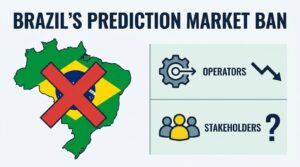
Brazil’s government has formally declared that prediction markets are illegal, a ruling that significantly affects operators within this niche sector. This decision comes amid increasing scrutiny of unlicensed gambling activities in the country, raising questions about the future of such platforms and their operational viability. Key stakeholders, including operators and investors, are now reassessing their strategies in light of this regulatory shift.
Key Implications of Brazil’s Prediction Market Ruling
The recent ruling by Brazil’s regulatory authorities has immediate implications for the prediction market landscape. The following key takeaways outline the business impact and strategic considerations for industry participants:
Regulatory Trends in Prediction Markets
The recent developments in Brazil regarding the illegality of prediction markets echo similar warnings issued by regulatory bodies in other regions. For instance, the Hong Kong Investor and Financial Education Council (IFEC) has also cautioned against the legality of trading on prediction markets, emphasizing that such platforms fall outside established financial regulations. This trend highlights a growing global concern over unlicensed wagering activities, as detailed in the IFEC’s statement on the matter, which can be found here.
- Regulatory Compliance: Operators must now navigate a landscape that explicitly prohibits prediction markets, requiring a reevaluation of their business models to ensure compliance.
- Market Exit Strategies: Companies like PredictIt may need to consider exit strategies or pivot to alternative markets that align with local regulations.
- Investor Confidence: The ruling may undermine investor confidence in the market, leading to a potential decrease in funding for existing and new platforms.
- Legal Precedents: This decision could set a legal precedent impacting similar markets across Latin America, prompting other countries to examine their own regulatory frameworks.
- Consumer Impact: Users of prediction markets may lose access to platforms for betting on outcomes, affecting consumer choice and engagement in the sector.
Understanding Prediction Markets
Prediction markets allow individuals to place bets on the outcome of future events, functioning as a tool for aggregating information and forecasting. They have gained popularity in various sectors, including politics, sports, and finance, due to their perceived accuracy in predicting outcomes based on collective intelligence.
Current Regulatory Landscape in Brazil
Brazil has been tightening its regulations surrounding gambling and betting activities, reflecting a broader global trend towards increased oversight. The recent announcement emphasizes the government’s commitment to curbing unauthorized gambling practices. This move aligns with Brazil’s efforts to create a more controlled gambling environment, ensuring consumer protection and financial integrity.
Potential Market Responses
In light of the ruling, operators may explore several strategic avenues:
- Rebranding Opportunities: Some operators might consider rebranding their platforms to comply with local laws, potentially shifting to legal betting frameworks.
- Engagement with Regulators: Building relationships with regulatory bodies could help operators stay informed about future legislative changes and opportunities for compliance.
- Diversifying Offerings: Companies might diversify their product offerings to include legal betting options or other forms of entertainment that do not conflict with regulations.
Market and Economic Impact
The economic ramifications of this ruling extend beyond immediate operational challenges for prediction market operators. The decision could lead to:
- Reduced Tax Revenue: The government may experience a decline in tax revenue from gambling, which could impact public funding for various initiatives.
- Job Losses: Employees within the prediction market sector may face job insecurity as companies adapt to the new legal environment.
- Consumer Spending Shifts: Consumers may redirect their spending towards other forms of entertainment, affecting the broader gambling and betting markets.
FAQs on Brazil’s Prediction Market Ruling
What are prediction markets?
Prediction markets are platforms where individuals can bet on the outcomes of future events, aggregating collective knowledge to forecast results.
Why are prediction markets considered illegal in Brazil?
The Brazilian government has classified prediction markets as unauthorized gambling activities, leading to their prohibition.
What are the implications for operators in Brazil?
Operators must now reassess their business models, potentially leading to market exits or pivots to compliant offerings.
How might this ruling affect consumers?
Consumers may lose access to prediction markets, impacting their ability to engage in betting on various outcomes.
Conclusion
The recent ruling by Brazil’s government to classify prediction markets as illegal marks a significant regulatory shift that will reshape the landscape for operators and consumers alike. As stakeholders navigate these changes, the focus will likely shift towards compliance, adaptation, and exploring new opportunities within the legal gambling framework.