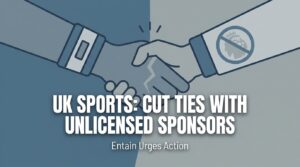
Entain, one of the largest gambling operators in the UK, has called on British sports organisations to sever commercial relationships with gambling sponsors that do not hold a licence from the Gambling Commission. The move signals a sharpening divide between licensed operators investing in compliance and offshore or unlicensed brands that continue to secure visibility through sports partnerships. It also raises pointed questions about the due diligence obligations of sports bodies themselves, and whether the current regulatory framework does enough to prevent unlicensed operators from gaining a foothold in the UK market.
What Entain’s Call Means for UK Sports Sponsorship
Before unpacking the wider implications, here are the core strategic takeaways from Entain’s intervention:
- Entain is positioning itself as a compliance-first operator, drawing a visible line between licensed and unlicensed gambling brands in UK sport
- The call puts pressure on sports governing bodies to vet their commercial partners more rigorously, particularly around Gambling Commission licensing status
- Unlicensed operators that sponsor UK sports events or teams could face reputational and regulatory scrutiny if this push gains traction
- For the broader industry, the move may accelerate a shift toward stricter sponsorship codes, potentially ahead of any formal regulatory mandate
- Licensed operators stand to benefit commercially if unlicensed competitors are squeezed out of high-visibility sponsorship slots
The Licensing Gap in Sports Sponsorship
At the heart of Entain’s argument is a structural inconsistency. UK-licensed gambling operators are subject to extensive regulatory obligations: advertising standards, responsible gambling requirements, anti-money laundering controls, and ongoing Gambling Commission oversight. Unlicensed operators, by contrast, face none of these constraints when they attach their brand to a UK sports property. They gain consumer-facing exposure without bearing the compliance costs that licensed competitors absorb.
This is not a trivial distinction.
A licensed operator spending millions on safer gambling tools, customer affordability checks, and regulatory reporting competes for the same sponsorship real estate as a brand that operates outside the Commission’s jurisdiction entirely. The playing field, at least on paper, tilts toward those willing to bypass the system. And while the Gambling Commission regulates operators, it has limited direct authority over the sponsorship decisions made by football clubs, cricket boards, or racing organisations (a distinction regulators have been slow to enforce).
Why Sports Bodies Face a Harder Question
Entain’s call shifts some of the accountability toward sports organisations. But whether governing bodies will act voluntarily is another matter. Sponsorship revenue from gambling brands remains significant across several UK sports, particularly football and horse racing. Turning away a willing sponsor because it lacks a Gambling Commission licence requires both commercial sacrifice and a level of due diligence that many sports bodies have not historically prioritised.
Still, the reputational calculus is changing. Public and political scrutiny of gambling’s role in sport has intensified over the past three years. The UK government’s gambling white paper, published in 2023, signalled a more interventionist posture. Sports organisations that continue to partner with unlicensed operators risk being caught on the wrong side of a shifting regulatory consensus, even if no formal rule currently prohibits such arrangements.
Which raises a harder question: should the Gambling Commission itself mandate that UK sports sponsorships involve only licensed operators? Or is this a gap that industry self-regulation can close?
How Entain’s Strategy Fits a Broader Pattern
Entain’s public stance is not purely altruistic. The company, which operates brands including Ladbrokes and Coral through its UK-facing gambling portfolio, has a clear commercial interest in reducing the visibility of unlicensed competitors. By framing the issue around consumer protection and regulatory integrity, Entain aligns its business interests with a narrative that resonates with policymakers and the public alike.
That alignment is deliberate. Across Europe and beyond, licensed operators have increasingly adopted a strategy of advocating for tighter regulation as a competitive moat. The logic is straightforward: the higher the compliance bar, the harder it becomes for unlicensed or grey-market operators to compete. Entain’s UK intervention follows this playbook closely, though the specific focus on sports sponsorship adds a new dimension.
And while some may view this as self-serving, the underlying concern is legitimate. Consumers encountering a gambling brand through a Premier League shirt or a racing event may reasonably assume that brand is regulated. When it isn’t, the gap between perception and reality creates genuine risk.
Regulatory and Market Implications
| Factor | Licensed Operators | Unlicensed Operators |
|---|---|---|
| Gambling Commission oversight | Full regulatory compliance required | No direct UK regulatory obligation |
| Advertising standards | Subject to ASA and industry codes | Not bound by UK advertising rules in practice |
| Responsible gambling obligations | Mandatory affordability checks, self-exclusion tools | Typically absent or minimal |
| Sponsorship access | Permitted under current rules | Not explicitly prohibited by most sports bodies, though Entain’s push could change this |
| Consumer trust | Backed by regulatory framework | Relies on brand association with sports properties |
What Shapes the Industry Response
Understanding how stakeholders will react requires looking beyond the regulatory text. In behavioural terms, the framing Entain has chosen matters enormously. By anchoring the conversation around consumer safety rather than competitive advantage, the company taps into a principle that psychologists call loss aversion: the idea that people (and institutions) are more motivated to avoid harm than to pursue gain. Sports bodies are far more likely to act if they perceive a risk of reputational damage from association with unlicensed brands than if they are simply asked to prefer licensed ones.
There is also a signalling effect at work. When a major operator publicly calls for higher standards, it creates social proof for others to follow. Smaller licensed operators who might have stayed silent now have cover to echo the same demand. Regulators who were weighing intervention can point to industry support. Even sports bodies gain a ready-made justification for tightening their own sponsorship criteria. The psychology of collective action suggests that one prominent voice can shift the equilibrium, provided the underlying incentives align. In this case, they arguably do: licensed operators want a level playing field, regulators want fewer consumer protection gaps, and sports bodies want to avoid the next parliamentary inquiry into gambling sponsorship.
Yet none of this guarantees action. Institutional inertia is powerful, and the revenue from unlicensed sponsors spends the same as any other. The real test will come when a governing body faces a concrete choice between a lucrative unlicensed partner and a less generous licensed alternative.
Frequently Asked Questions
Does UK law currently prohibit sports bodies from accepting sponsors without a Gambling Commission licence?
No explicit prohibition exists under current UK gambling or advertising law. Entain’s call is for voluntary action by sports organisations, though future regulatory changes could formalise such a requirement.
Why would an unlicensed gambling operator want to sponsor UK sports?
Brand visibility in a major market. Sponsoring a UK sports team or event gives an operator consumer-facing credibility and recognition, even if it does not hold a licence to offer gambling services to UK customers. The association with a trusted sports property can blur the line between regulated and unregulated in the minds of consumers.
What happens if sports bodies ignore Entain’s request?
In the short term, very little changes. But the political and regulatory environment around gambling sponsorship continues to tighten, and organisations that maintain ties with unlicensed operators may find themselves under increasing scrutiny from lawmakers, media, and the public.