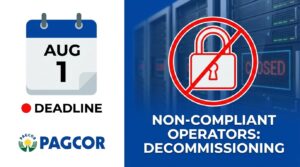
The Philippine Amusement and Gaming Corporation (PAGCOR) has issued a firm warning to licensed gaming operators across the country: entities that fail to meet compliance requirements by August 1 will be decommissioned. The directive targets operators who have not aligned their systems, reporting mechanisms, or licensing conditions with the regulator’s updated framework. It marks one of the most explicit enforcement deadlines PAGCOR has set in recent memory, and the implications for the Philippine gaming sector are substantial.
What the August 1 Deadline Means for Philippine Gaming Operators
Before unpacking the strategic consequences, it’s worth isolating the core signals this announcement carries for industry stakeholders.
- Hard enforcement, not guidance: PAGCOR is framing this as a decommissioning event, not a warning period. Operators who miss the deadline face operational shutdown rather than fines or probationary extensions.
- Compliance infrastructure under scrutiny: The directive likely covers technical system integrations, anti-money laundering protocols, and reporting obligations that some operators have been slow to implement.
- Smaller operators with limited compliance budgets are disproportionately exposed to this deadline.
- Signal to foreign investors: By enforcing a clear cutoff, PAGCOR is positioning the Philippine market as one that prioritizes regulatory credibility over volume of licensees.
- Precedent for future enforcement cycles: If PAGCOR follows through, this sets a template the regulator can replicate across other compliance gaps without extended negotiation.
Why PAGCOR Is Tightening the Grip Now
The timing is not accidental. Over the past two years, the Philippine government has moved aggressively to clean up its gaming sector, particularly in the wake of controversies surrounding offshore gaming operators (formerly known as POGOs). President Ferdinand Marcos Jr. ordered a complete ban on POGO operations in 2024, and the regulatory apparatus has been recalibrating ever since. PAGCOR, which functions both as regulator and operator (a distinction critics have long questioned), has been under pressure to demonstrate that its oversight mechanisms have teeth.
And while the POGO crackdown drew international headlines, the compliance challenges extend well beyond offshore operators. Domestic licensees, integrated resort operators, and e-gaming platforms all fall under PAGCOR’s expanding compliance umbrella. The August 1 deadline appears to consolidate several of these threads into a single enforcement moment.
That shift matters because PAGCOR has historically been perceived as lenient with deadline extensions. This announcement breaks that pattern.
Decommissioning: What It Actually Looks Like
The term “decommissioning” carries specific operational weight. It doesn’t simply mean a license suspension. In PAGCOR’s framework, decommissioning involves disconnecting an operator’s gaming systems from the regulator’s central monitoring infrastructure, effectively rendering the entity unable to legally offer any gaming product in the Philippines. Revenue streams halt. Player databases go dormant. Staff face immediate displacement.
For operators running physical electronic gaming machines or online platforms connected to PAGCOR’s centralized monitoring and reporting system, the technical severance is both swift and difficult to reverse. Reconnection typically requires a fresh application cycle, which can take months.
How Operators Should Be Preparing
With roughly weeks remaining before the cutoff, the window for remediation is narrow. Operators still working toward compliance face a compressed timeline that demands prioritization.
| Compliance Area | Key Requirement | Risk if Missed |
|---|---|---|
| System Integration | Full connection to PAGCOR’s monitoring platform | Immediate decommissioning of gaming terminals |
| AML Protocols | Updated suspicious transaction reporting | Regulatory sanctions and potential criminal referral |
| Licensing Documentation | Renewal filings and fee settlements | Automatic license lapse |
| Responsible Gaming | Player protection mechanisms in place | Operational restrictions or suspension |
Not every operator faces the same gaps. Larger integrated resorts with dedicated compliance teams are arguably well-positioned. The real pressure falls on mid-tier and smaller licensees operating electronic gaming parlors in provincial areas, where regulatory infrastructure and legal counsel are thinner on the ground.
The Broader Regulatory Recalibration in Southeast Asia
PAGCOR’s move fits within a wider pattern across Southeast Asian jurisdictions. Singapore’s Casino Regulatory Authority tightened its oversight framework in 2024. Cambodia has been restructuring its licensing regime. Even jurisdictions with less mature regulatory environments, like Laos, have signaled interest in stricter operator vetting. The Philippines, as one of the region’s largest regulated gaming markets, is under particular scrutiny from international watchdogs and financial compliance bodies.
Still, enforcement credibility hinges on follow-through. If August 1 passes and non-compliant operators remain connected, the directive loses its force. PAGCOR’s institutional reputation is, in a real sense, on the line.
Frequently Asked Questions
What does decommissioning mean for a PAGCOR-licensed operator?
Decommissioning involves the complete disconnection of an operator’s gaming systems from PAGCOR’s central monitoring infrastructure. The operator can no longer legally offer gaming products, and reconnection requires a new application process that can take several months.
Which operators are most at risk?
Mid-tier and smaller licensees, particularly those running electronic gaming parlors outside Metro Manila, face the highest risk. These entities often lack the compliance teams and legal resources that larger integrated resort operators maintain. The deadline applies uniformly, but the burden is uneven.
Can operators request an extension beyond August 1?
PAGCOR’s announcement has not indicated any extension mechanism. The language used suggests a firm cutoff, though whether the regulator will exercise discretion in borderline cases remains to be seen.
Does this affect online gaming platforms?
Yes. Any entity operating under a PAGCOR license, whether land-based or digital, falls within the scope of this compliance directive.
What Comes After the Deadline
The real test begins on August 2. PAGCOR will either demonstrate that its enforcement apparatus can execute at scale, or it will quietly extend timelines as it has done before. For operators, the calculus is straightforward: treat the deadline as real, because the cost of being wrong is operational extinction. For the broader market, this moment will reveal whether the Philippines is building a regulatory framework that international partners and investors can trust, or whether compliance deadlines remain, at least in practice, aspirational.