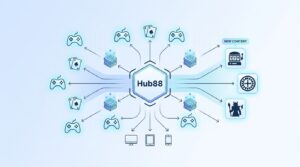
Hub88, the B2B platform operated under the Yolo Group umbrella, has broadened its content library with a batch of new game integrations. The additions span multiple game providers and genres, reinforcing the aggregator’s push to deepen its catalogue for operator partners. While specific titles and studio names tied to this latest wave remain limited in public detail, the move signals Hub88’s continued appetite for supplier diversification in a crowded aggregation market.
What Hub88’s Latest Integration Push Means for Operators
Content volume alone no longer separates one aggregation platform from another. What matters now is curation, speed of integration, and how well new titles align with operator-specific player demographics. Hub88’s decision to onboard a fresh slate of games reflects several strategic priorities worth tracking.
- Broader game variety gives Hub88 operator partners more flexibility to tailor lobbies by market and player segment
- Frequent content refreshes help operators maintain engagement metrics and reduce churn among active players
- The expansion strengthens Hub88’s competitive positioning against rival aggregators like Softswiss, EveryMatrix, and Digitain
- For game studios, gaining shelf space on Hub88 opens distribution across multiple regulated and crypto-friendly jurisdictions
- Speed of go-live remains a differentiator; platforms that can onboard titles faster capture first-mover advantages for operators
The Aggregation Arms Race: Why Content Depth Matters More Than Ever
Game aggregation has become one of the most contested layers in the iGaming supply chain. Platforms like Hub88’s integration and distribution infrastructure compete not just on the number of titles available but on the quality of their API architecture, the breadth of jurisdictional coverage, and the commercial terms they can negotiate with studios. A platform carrying 10,000 games sounds impressive on paper. But if 80% of those titles generate negligible player activity, the number is decorative rather than functional.
Hub88 has historically leaned into the crypto-native operator segment, a niche that demands rapid deployment and lighter regulatory overhead in certain markets. Yet the platform has also pursued traditional fiat-based operators, which requires a different compliance posture entirely. Balancing both audiences while scaling content is not a trivial exercise.
Still, the real question for any aggregator adding games is whether those titles actually get played. Operators increasingly rely on data-driven lobby management tools to surface the right games to the right players. An aggregator that pairs content breadth with recommendation intelligence holds a structural edge (a distinction that separates the top-tier platforms from the rest of the pack).
How Content Strategy Shapes Player Retention
There is a behavioural dimension to game library expansion that often goes underexamined. From an NLP and cognitive framing perspective, the way players perceive choice directly influences engagement duration and return frequency. Research in decision architecture suggests that an abundance of options can paradoxically reduce satisfaction, a phenomenon sometimes called the paradox of choice. But in iGaming, the effect operates differently because players tend to anchor on a small set of preferred titles while expecting a sense of discovery when they browse.
This creates a dual mandate for platforms like Hub88. They need enough depth to sustain the illusion of endless novelty, while simultaneously ensuring that familiar, high-performing games remain prominent. The cognitive pattern here mirrors what behavioural economists describe as “exploration versus exploitation”: players oscillate between trying something new and returning to what they know works. Aggregators that understand this rhythm and help operators calibrate their lobbies accordingly will retain players longer than those that simply dump thousands of titles into a flat catalogue.
Anchoring effects also play a role. When a player’s first interaction with a platform involves a high-quality, visually engaging title, their expectations recalibrate upward. Every subsequent session is measured against that initial anchor. Which means the sequencing and positioning of new content matters as much as the content itself. Hub88’s ability to guide operators on launch sequencing could, arguably, matter more than the raw number of integrations announced in any given quarter.
Where Does Hub88 Sit in the Competitive Landscape?
| Platform | Parent / Group | Key Differentiator | Crypto Support |
|---|---|---|---|
| Hub88 | Yolo Group | Crypto-native roots with fiat expansion | Yes, extensive |
| SoftSwiss | Independent | Turnkey casino solutions with deep aggregation | Yes |
| EveryMatrix | Independent | Modular platform with broad regulatory coverage | Limited |
| Digitain | Independent | Sportsbook-first with growing casino aggregation | Partial |
Hub88’s crypto heritage gives it a natural advantage in markets where blockchain-based transactions dominate. But as regulatory frameworks tighten globally, that advantage narrows unless paired with robust compliance tooling.
Frequently Asked Questions
What is Hub88?
Hub88 is a B2B game aggregation platform under the Yolo Group, providing operators with access to a wide catalogue of casino games through a single API integration. It serves both crypto-native and fiat-based operators.
Why do aggregators keep adding new games?
Fresh content drives player engagement and helps operators differentiate their offerings. In practice, though, only a fraction of newly added titles generate meaningful revenue, which makes curation as important as volume.
Does Hub88 support cryptocurrency transactions?
Yes. Hub88 was built with crypto functionality at its core, supporting a range of digital currencies alongside traditional payment methods.
How does game aggregation benefit smaller studios?
Aggregation platforms give independent studios distribution reach they could not achieve alone. A single integration with Hub88 can expose a studio’s titles to dozens of operator brands across multiple jurisdictions, dramatically reducing the cost and complexity of market entry.



