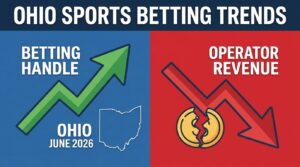
Ohio’s regulated sportsbooks processed a higher volume of wagers in June 2026 compared to the prior month, yet the state’s operators walked away with thinner margins. Bettor-friendly outcomes across major sporting events squeezed gross gaming revenue, a pattern that underscores the volatility baked into sports wagering markets. The Ohio Casino Control Commission’s latest monthly data reveals a market where growth in handle doesn’t automatically translate into proportional gains for the house. For regulators and operators alike, the divergence between volume and revenue raises questions about seasonal risk exposure and promotional spending strategies heading into the second half of the year.
What June’s Numbers Tell Us About Ohio’s Betting Market
Before diving into the individual data points, it’s worth framing the broader picture. Ohio legalized sports betting in January 2023, and the market has matured rapidly, with both online and retail channels now well-established. June typically sits in a transitional window: the NBA and NHL playoffs wind down, MLB enters its summer stretch, and pre-season NFL interest hasn’t yet kicked in. That seasonal gap tends to compress margins even when handle holds steady or grows. Here’s what stood out from the latest reporting period:
- Handle increased month-over-month, suggesting sustained bettor engagement despite a lighter sports calendar
- Gross gaming revenue dropped, driven by outcomes that favored bettors across multiple high-volume events
- The gap between handle growth and revenue contraction highlights operator exposure to short-term variance
- Promotional credits and free bets likely played a role in softening the revenue picture further
- Tax receipts to the state may have dipped in tandem, though final figures depend on adjusted gross revenue calculations
Handle Growth Without the Revenue Payoff
A rising handle is typically a signal operators want to see. More money flowing through the system means more opportunities to capture margin. But June broke that logic. The sportsbooks collectively took in more bets, yet the outcomes tilted toward bettors at a rate that eroded the built-in hold percentage.
This isn’t unusual in isolation. Any given month can produce results that deviate from the long-term statistical edge operators maintain. Still, when it happens during a period of lower event density, the impact is amplified. Fewer marquee games mean each individual contest carries more weight in the overall revenue equation. A handful of unexpected results in MLB or late-round playoff games can swing the numbers meaningfully.
And while operators absorb these swings as a cost of doing business, the downstream effects matter. Lower revenue means lower tax contributions to Ohio’s education and sports-related funds (a distinction regulators have been slow to publicize in monthly summaries). It also means tighter internal budgets for customer acquisition during a period when operators are already competing aggressively for market share.
How Ohio Compares to Neighboring States
Ohio doesn’t operate in a vacuum. Bettors in border regions can and do cross state lines, and the competitive dynamics with Pennsylvania, Michigan, and Indiana shape operator behavior. The table below offers a rough comparison of how Ohio’s June performance stacks up against its regional peers, based on publicly available data from state regulators:
| State | June Handle Trend | Revenue Trend | Market Maturity |
|---|---|---|---|
| Ohio | Up month-over-month | Down | 3.5 years since launch |
| Pennsylvania | Relatively flat | Stable | Over 5 years |
| Michigan | Slight increase | Mixed | Approximately 4 years |
| Indiana | Down slightly | Down | Over 5 years, smaller population base |
What stands out is that Ohio’s handle growth, even in a soft revenue month, suggests the state’s market hasn’t plateaued. That’s a meaningful signal for operators weighing long-term investment in the Buckeye State.
The Promotional Spending Question
One variable that complicates the revenue picture is promotional credit usage. Ohio permits operators to deduct a portion of promotional spending from taxable revenue, which means months with heavy bonus activity can further depress the state’s take. Whether June saw an uptick in promotional offers tied to summer engagement campaigns hasn’t been broken out in detail by the commission.
But the incentive structure is clear. When organic handle is growing, operators often lean into promotions to capture a larger share of that expanding pie. The risk is that promotional dollars cannibalize margin without delivering lasting customer retention. Operators like DraftKings, which dominates Ohio’s online sportsbook market, have publicly discussed recalibrating promotional budgets in earnings calls, yet the competitive pressure to spend remains intense in a state with more than two dozen licensed operators.
Seasonal Patterns and What Lies Ahead
June’s results fit a recognizable seasonal rhythm. The summer months historically produce lower hold percentages across U.S. sportsbooks, partly because the betting mix shifts toward baseball, which carries different margin characteristics than football or basketball. MLB games generate consistent but lower-margin action. The absence of NFL wagering, which accounts for the largest share of annual handle in most states, leaves a gap that no other sport fully fills.
July and August are unlikely to reverse this trend dramatically. The real inflection point arrives in September, when NFL and college football seasons begin. For Ohio, which saw record handle during the 2025 football season, the fall months should restore more favorable revenue dynamics, at least on paper.
Frequently Asked Questions
Why did Ohio sportsbook revenue decline even though handle increased?
Betting outcomes in June favored bettors more than usual, compressing the hold percentage that operators rely on for revenue. Higher handle doesn’t guarantee higher revenue when the win rate for the house drops below its statistical average.
Does lower operator revenue affect Ohio’s tax collections?
Yes. Ohio taxes sports betting revenue, not handle. When gross gaming revenue falls, the state’s share shrinks accordingly, which can reduce funding directed toward designated programs.
When is Ohio’s sports betting market expected to pick up again?
Historically, September marks a turning point as NFL and college football drive significant increases in both handle and operator margins. The summer months tend to be the softest period for U.S. sportsbooks broadly.
How many licensed sportsbook operators are active in Ohio?
Ohio has authorized more than two dozen operators across online, retail, and kiosk-based channels, making it one of the more competitive state markets in the country.



